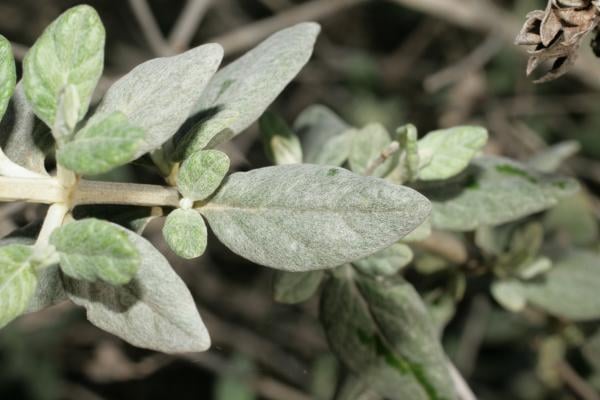
Leaf
Pierre Bonnet, Tela Botanica · CC BY-SA 2.0
Chaste tree
Vitex agnus-castus L.
Also known as: Chasteberry, Monk's pepper
Family: Lamiaceae
1 to 3 m tall
Gardens, riverbanks, dry, free-draining soils
Flowering: July – September
Full sun
Hardy to -15°C
❓ How do you recognise this plant?
Its small dried berries were long used as a substitute for pepper, hence its nickname.
🍃 Leaves
Deciduous, palmate with 5-7 narrow leaflets, grey-green, aromatic
🌸 Flowers
Long upright spikes of small mauve to blue-violet flowers, fragrant
🍎 Fruits
Small round brown drupes, peppery in taste
🪵 Bark
Grey-brown stems, square when young
🗺️ Distribution
Mediterranean, western Asia; found on riverbanks and beaches in southern France, also widely cultivated.
🐝 Value for pollinators
Long blue-violet clusters very rich in nectar in late summer, very attractive to bees and butterflies.
✂️ Horticultural uses
Planted as a specimen or in borders for its late flowering and peppery scent.
⚠️ Possible toxicity
No known acute toxicity from contact or occasional ingestion; the fruits (used in herbal medicine under the name chaste tree/vitex) have a hormonal action and are not recommended during pregnancy/breastfeeding or with a history of hormone-dependent cancer, and may interact with certain medicines.
🌿 Other Lamiaceae to discover


ℹ️ Educational profile — do not use it to judge whether a plant is edible or safe.
🌱 This database is constantly evolving — species and information are added and corrected regularly. Spotted a mistake? Report it below.
© Floraneo — profile content is protected; reproduction without permission is prohibited. Photos remain under their own licence (see the credit shown on each photo).