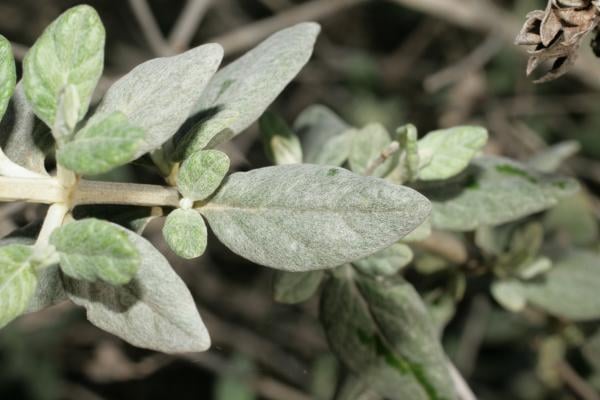
Leaf
Forest and Kim Starr, Wikimedia · CC BY-SA 3.0
English lavender
Lavandula angustifolia Mill.
Also known as: Common lavender, True lavender, Lavender
Family: Lamiaceae
0.3 to 0.8 m tall
Garrigue and dry slopes of Provence, widely cultivated
Flowering: June – August
Full sun
Very hardy, to -20°C
❓ How do you recognise this plant?
The emblematic scent of Provence, recognisable even with your eyes closed.
🍃 Leaves
Narrow, grey and downy, very aromatic
🌸 Flowers
Small blue-violet flowers in upright spikes at the ends of long stems
🍎 Fruits
Tiny nutlets
🪵 Bark
Low woody stems forming a compact clump
🗺️ Distribution
Western Mediterranean mountains (Provence); widely cultivated in southern France, notably in Provence.
🐝 Value for pollinators
Extremely nectar-rich summer flowering, one of the favourite plants of bees and butterflies, the basis of lavender honey.
✂️ Horticultural uses
Planted in borders, edgings or as a large-scale crop for its essential oil and dried flowers.
⚠️ Possible toxicity
No known toxicity.
🌱 Known cultivars
Hidcote
The best-selling cultivar of English lavender: compact, dense habit (about 25-30 cm), very deep dark violet spikes, silvery grey foliage; selected by Major Lawrence Johnston in his garden at Hidcote.
Munstead
Selected in the early 20th century by the garden designer Gertrude Jekyll; earlier blue-violet flowering than 'Hidcote' and better cold hardiness, with a slightly looser habit.
🌿 Other Lamiaceae to discover


ℹ️ Educational profile — do not use it to judge whether a plant is edible or safe.
🌱 This database is constantly evolving — species and information are added and corrected regularly. Spotted a mistake? Report it below.
© Floraneo — profile content is protected; reproduction without permission is prohibited. Photos remain under their own licence (see the credit shown on each photo).