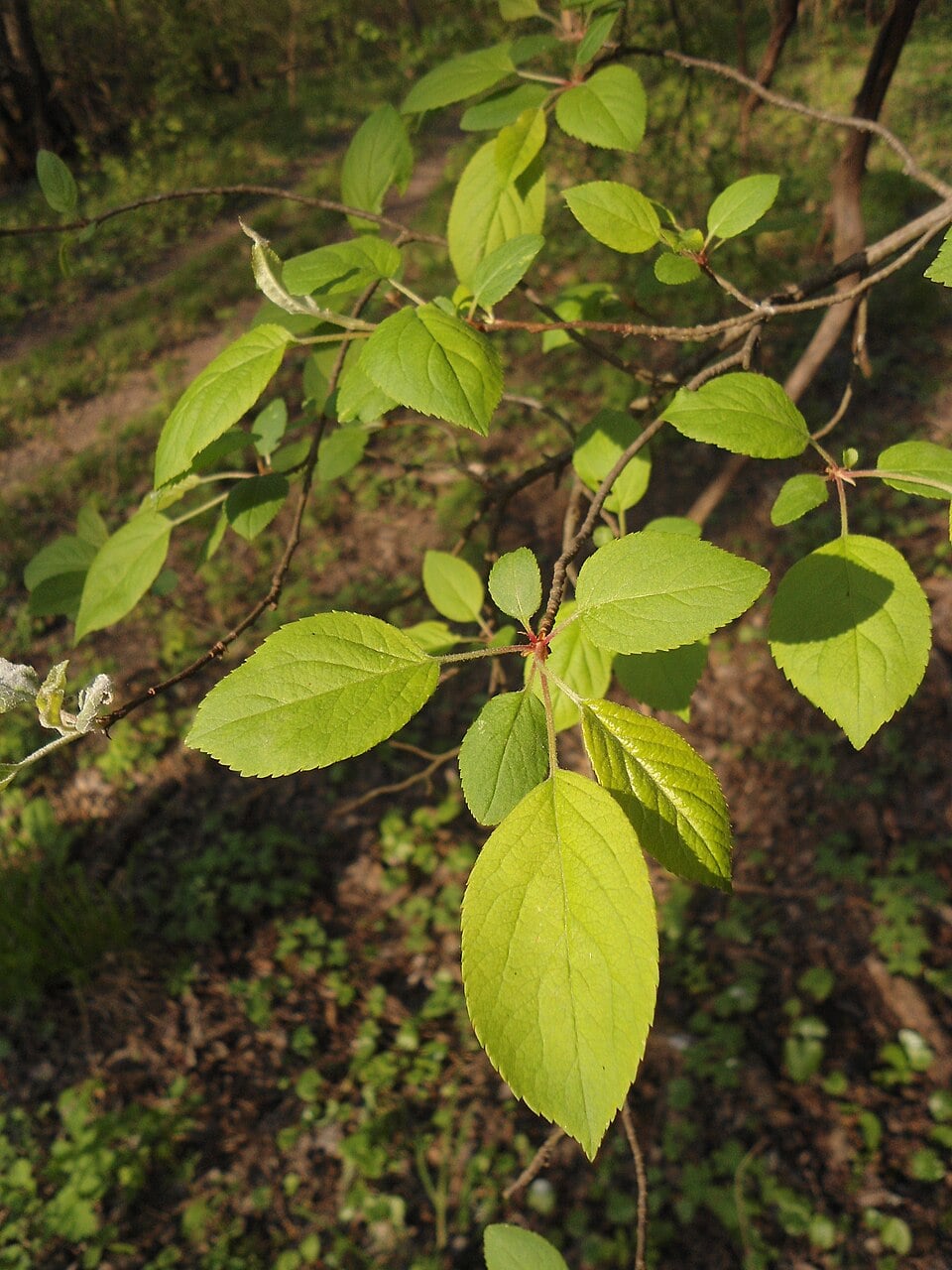
Leaf
James St. John, wikimedia · CC BY-SA 2.0
Canadian serviceberry
Amelanchier canadensis (L.) Medik.
Also known as: Juneberry, Shadbush
Family: Rosaceae
3 to 6 m tall
Planted in hedges and garden borders
Flowering: April, before or with the leaves
Full sun
Part shade
Very hardy, to about -30°C
❓ How do you recognise this plant?
Serviceberry offers three decorative highlights in the year: early white flowering in spring, sweet fruits in summer, and blazing foliage in autumn. Compare several characters rather than the size of the shrub alone: leaves, hairiness, flowers and fruits. Amelanchier species can show variation and hybrids.
🍃 Leaves
Ovate, finely toothed, downy when young, taking on fine orange to red tints in autumn
🌸 Flowers
White, star-shaped, grouped in upright racemes, appearing early in spring
🍎 Fruits
Small purple-black berry when ripe, sweet, resembling a small blueberry
🪵 Bark
Grey, smooth, streaked with fine vertical lines
🗺️ Distribution
Native to North America; widely grown in France as an ornamental shrub
🐝 Value for pollinators
Early nectar-rich flowering, important for the first bees of spring; fruits much appreciated by birds
✂️ Horticultural uses
Ornamental shrub with several points of interest: spring flowering, edible fruits, autumn colour
⚠️ Possible toxicity
Berries edible; no known toxicity
⚠️ Look-alike species
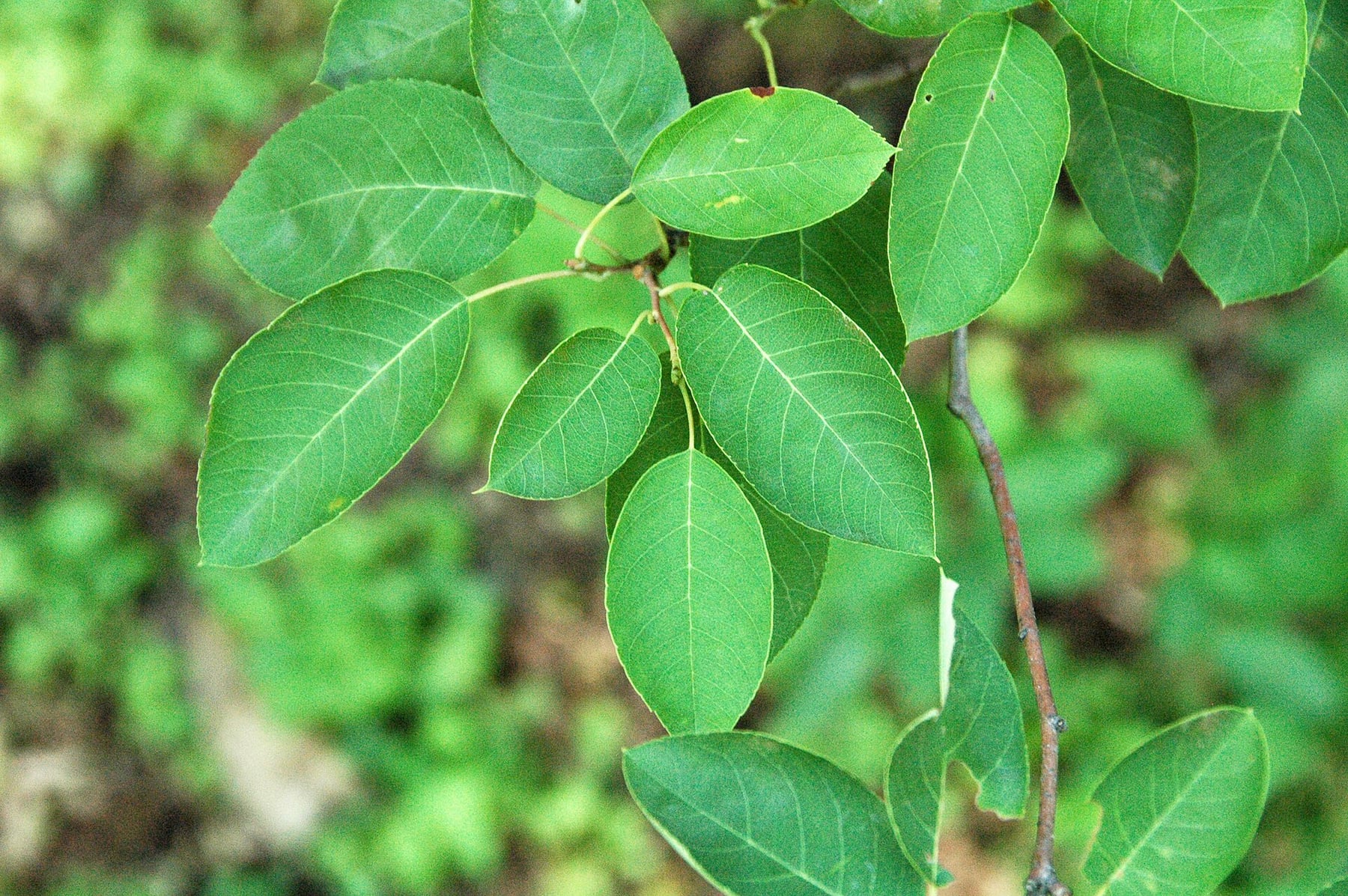
Canadian serviceberry
Amelanchier canadensis
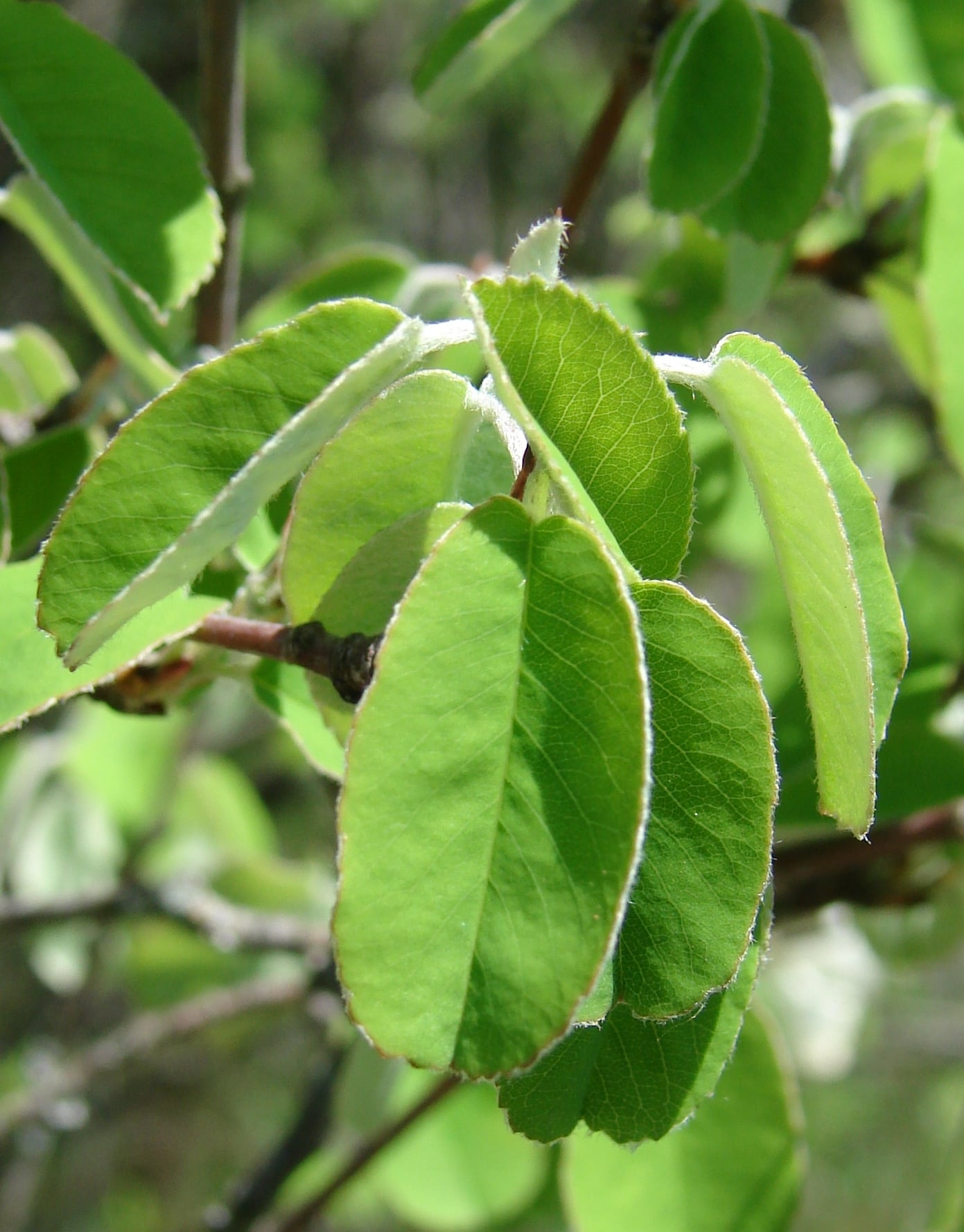
Snowy mespilus
Amelanchier ovalis
Compare several characters rather than the size of the shrub alone: leaves, hairiness, flowers and fruits. Amelanchier species can show variation and hybrids.
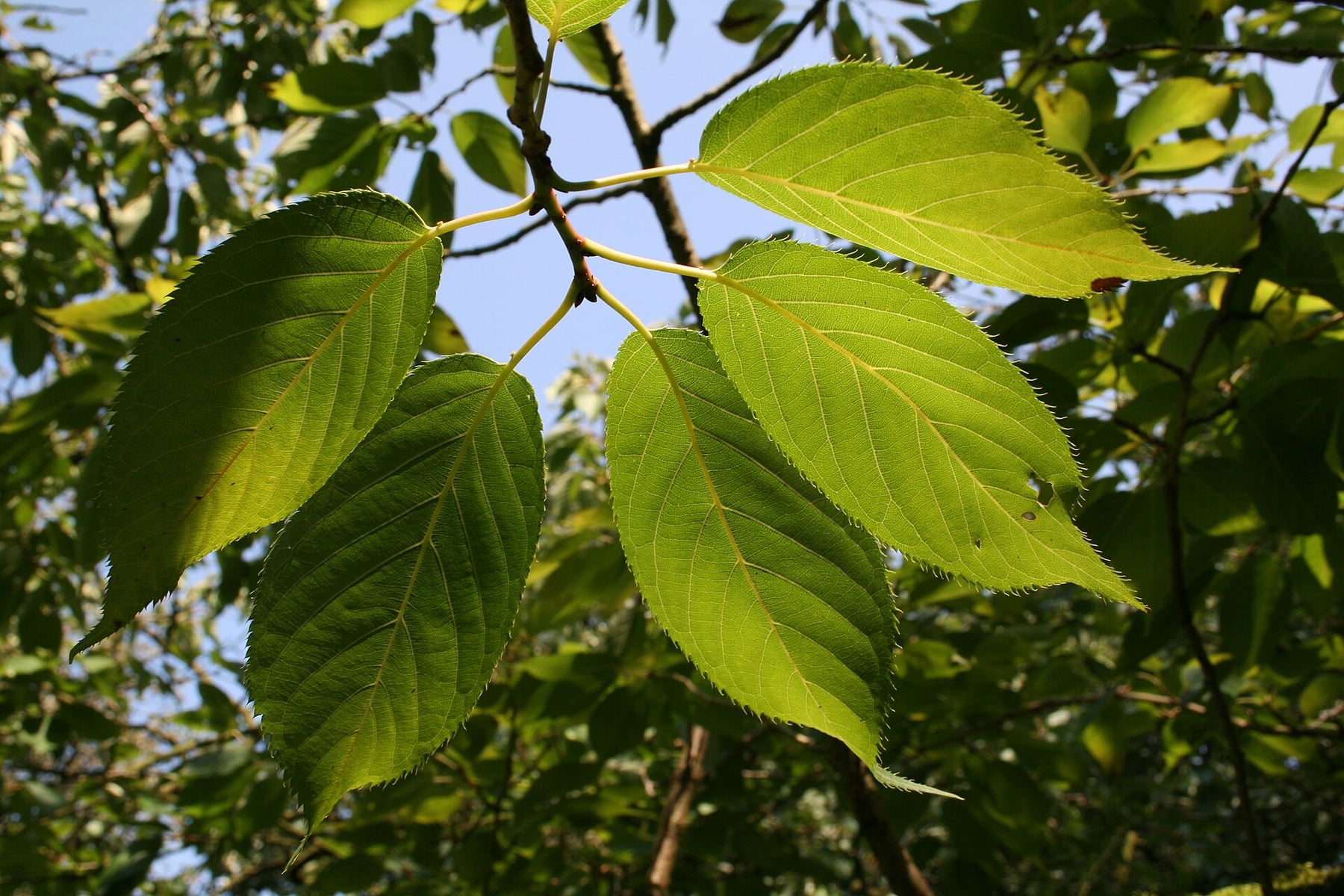
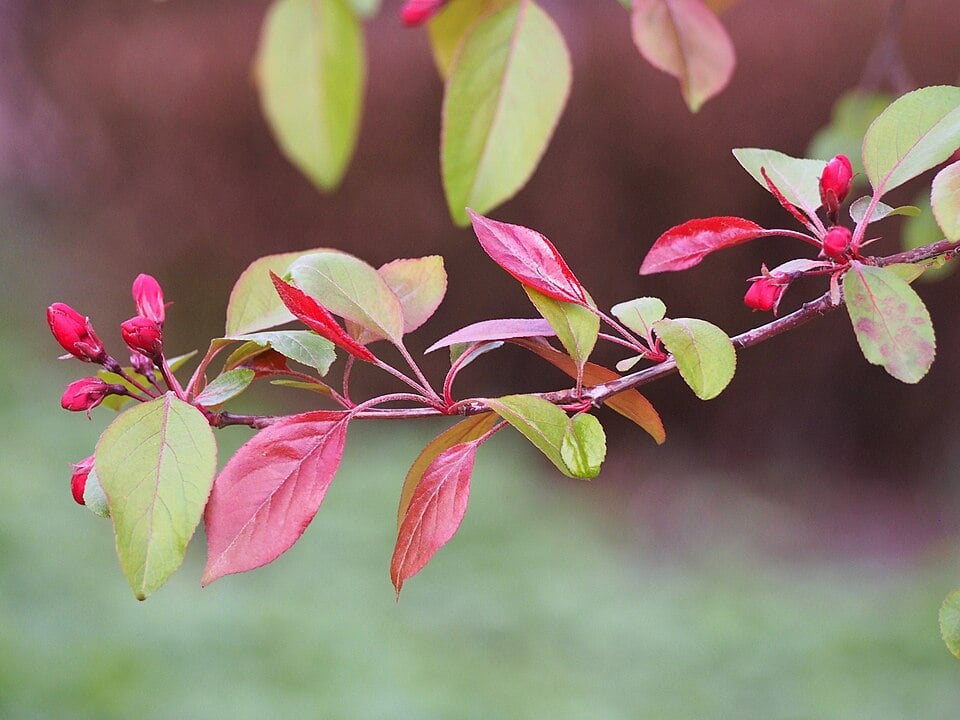
🌿 Other Rosaceae to discover
ℹ️ Educational profile — do not use it to judge whether a plant is edible or safe.
🌱 This database is constantly evolving — species and information are added and corrected regularly. Spotted a mistake? Report it below.
© Floraneo — profile content is protected; reproduction without permission is prohibited. Photos remain under their own licence (see the credit shown on each photo).