Leaf
Joanna Boisse, Wikimedia · CC BY-SA 4.0
- 20 to 80 cm tall, sometimes up to 1 m
- Peat bogs, damp heaths and acid mountain grassland (Alps, Pyrenees, Jura, Vosges, Massif Central) and northern Europe, on poor, acid soil
- Full sun, Part shade
- Very hardy, to -30°C
In flower from May to June
2 months❓ How do you recognise this plant?
Its blue berry looks like a bilberry, but the flesh is greenish-white and the juice almost colourless: it does not stain the fingers like a bilberry does. Bog bilberry has round brown twigs, untoothed, bluish, matt leaves and berries with greenish-white flesh and colourless juice; bilberry has green, angular twigs, bright green, finely toothed leaves, solitary globular flowers and berries whose juice stains purple.
🍃 Leaves
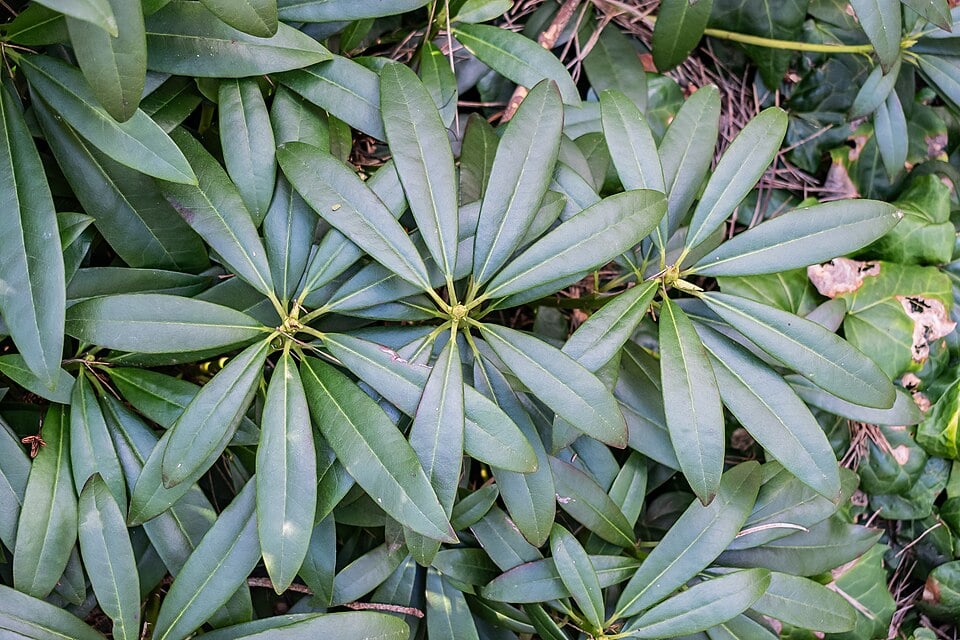
Deciduous, alternate, oval to obovate, 1 to 3 cm long, untoothed, with a rounded tip, matt blue-green on both sides, with prominent veins beneath
🌸 Flowers
Small pale pink to white urn-shaped flowers with 4 or 5 teeth, borne 1 to 3 together in the leaf axils
🍎 Fruits
Spherical blue-black berries covered with a waxy bloom, with greenish-white flesh and almost colourless juice
🪵 Bark
Round brown twigs, with bark that shreds with age
Distribution, pollinators, uses
🗺️ Distribution
Cold regions of the northern hemisphere; in France mainly in the mountains and in peat bogs
🐝 Value for pollinators
Nectar-rich flowers visited by bumblebees and bees; berries eaten by birds and small mammals
✂️ Horticultural uses
Rarely planted; a bog and acid-soil plant that needs constantly moist, lime-free soil
⚠️ Possible toxicity
Not known to be toxic
⚠️ Look-alike species
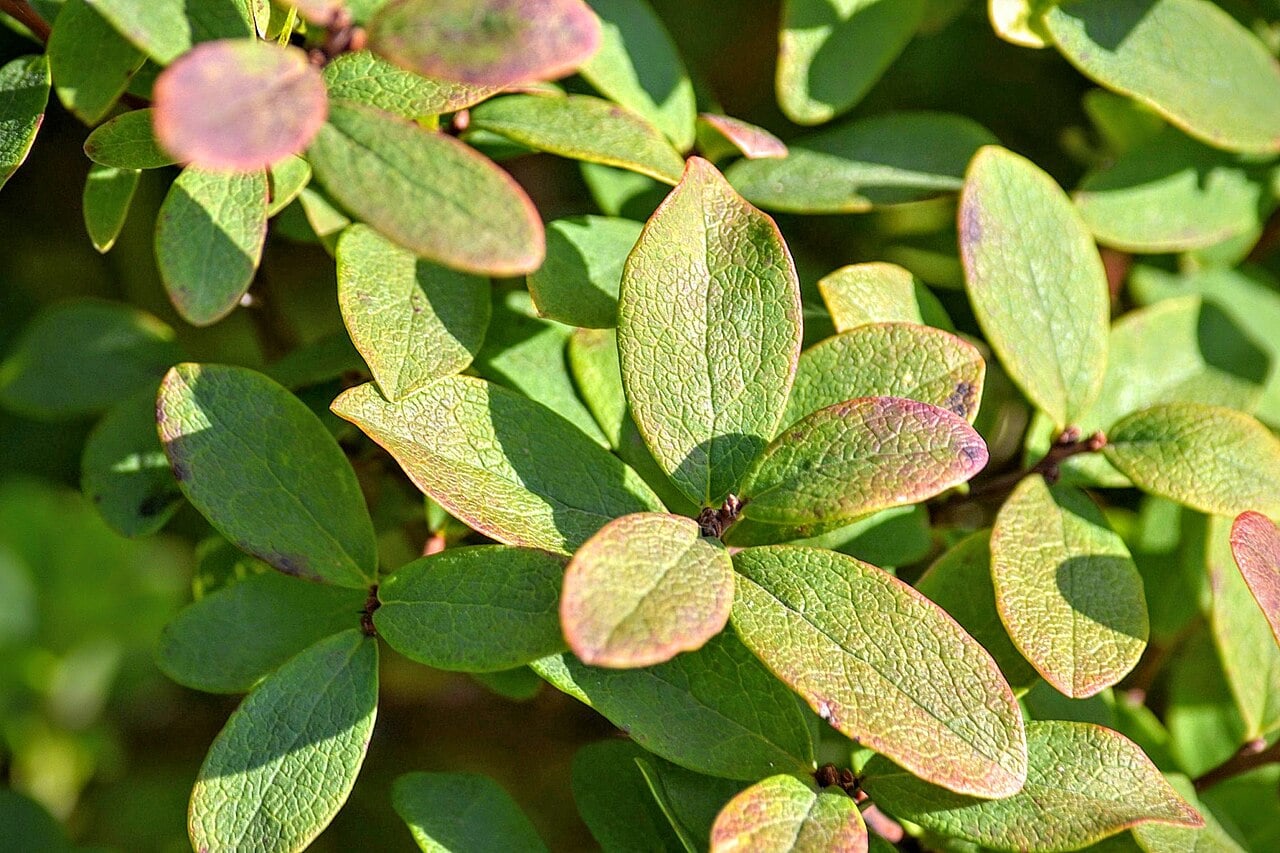
Bog bilberry
Vaccinium uliginosum
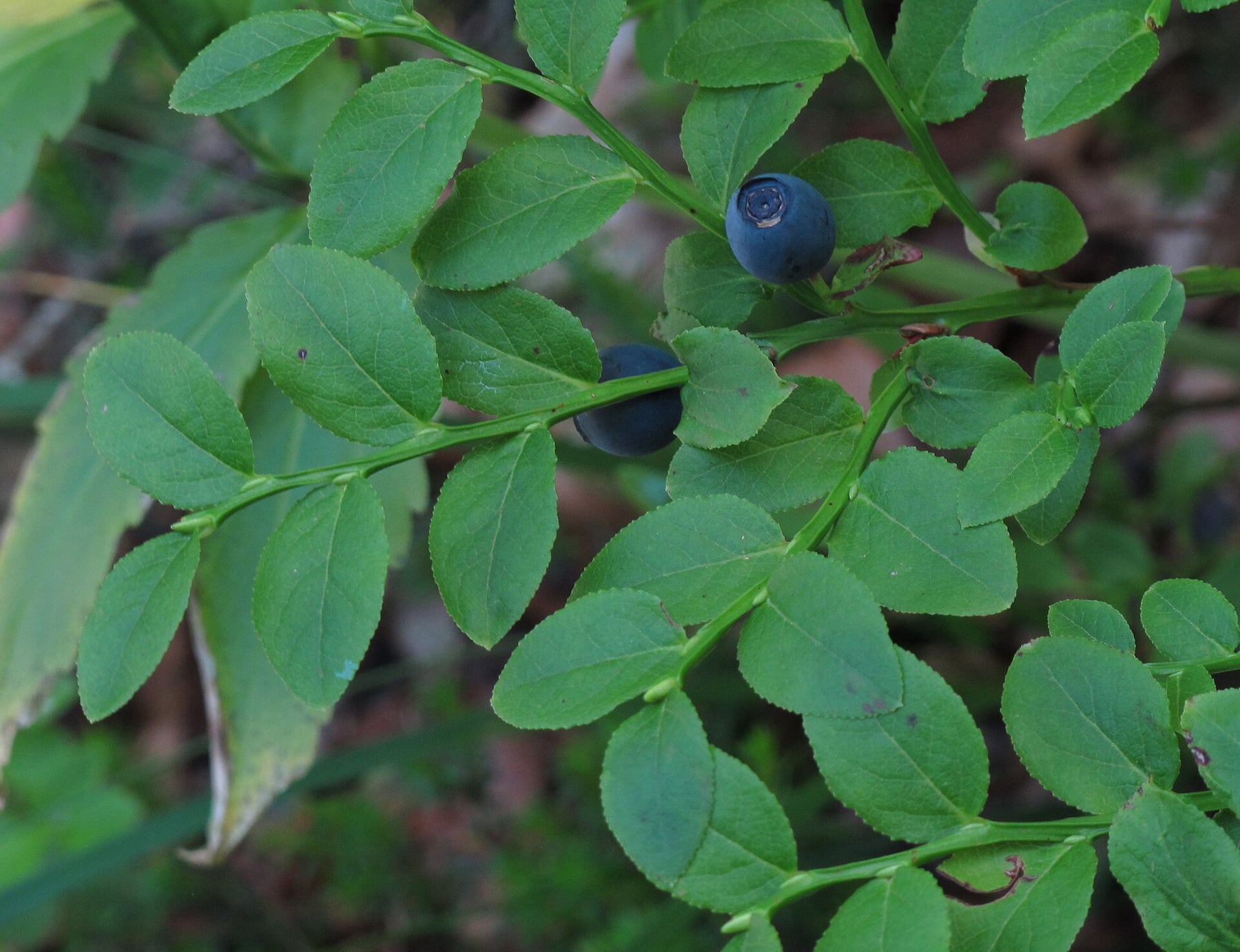
Bilberry
Vaccinium myrtillus
Bog bilberry has round brown twigs, untoothed, bluish, matt leaves and berries with greenish-white flesh and colourless juice; bilberry has green, angular twigs, bright green, finely toothed leaves, solitary globular flowers and berries whose juice stains purple.
🌿 Other Ericaceae to discover
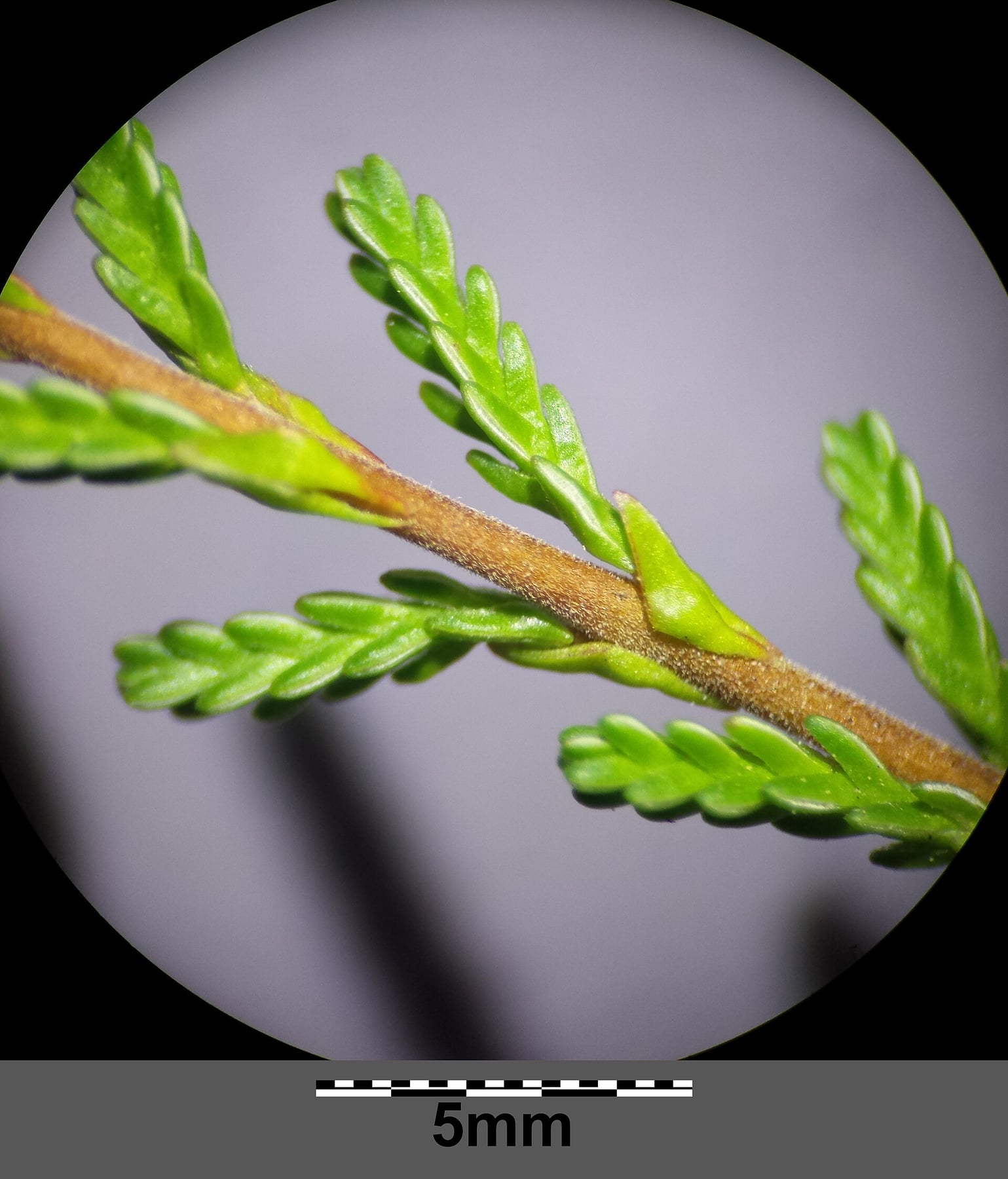
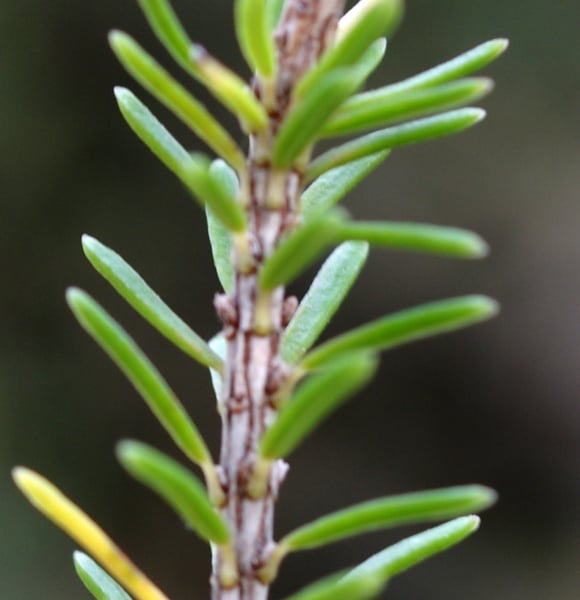
ℹ️ Educational profile — do not use it to judge whether a plant is edible or safe.
🌱 This database is constantly evolving — species and information are added and corrected regularly. Spotted a mistake? Report it below.
© Floraneo — profile content is protected; reproduction without permission is prohibited. Photos remain under their own licence (see the credit shown on each photo).