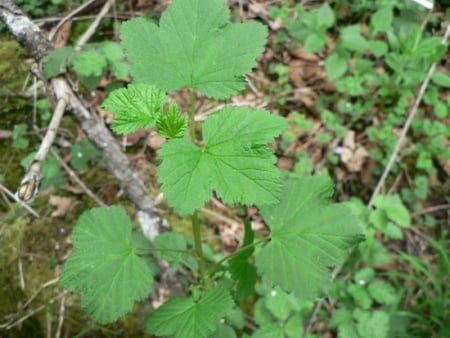
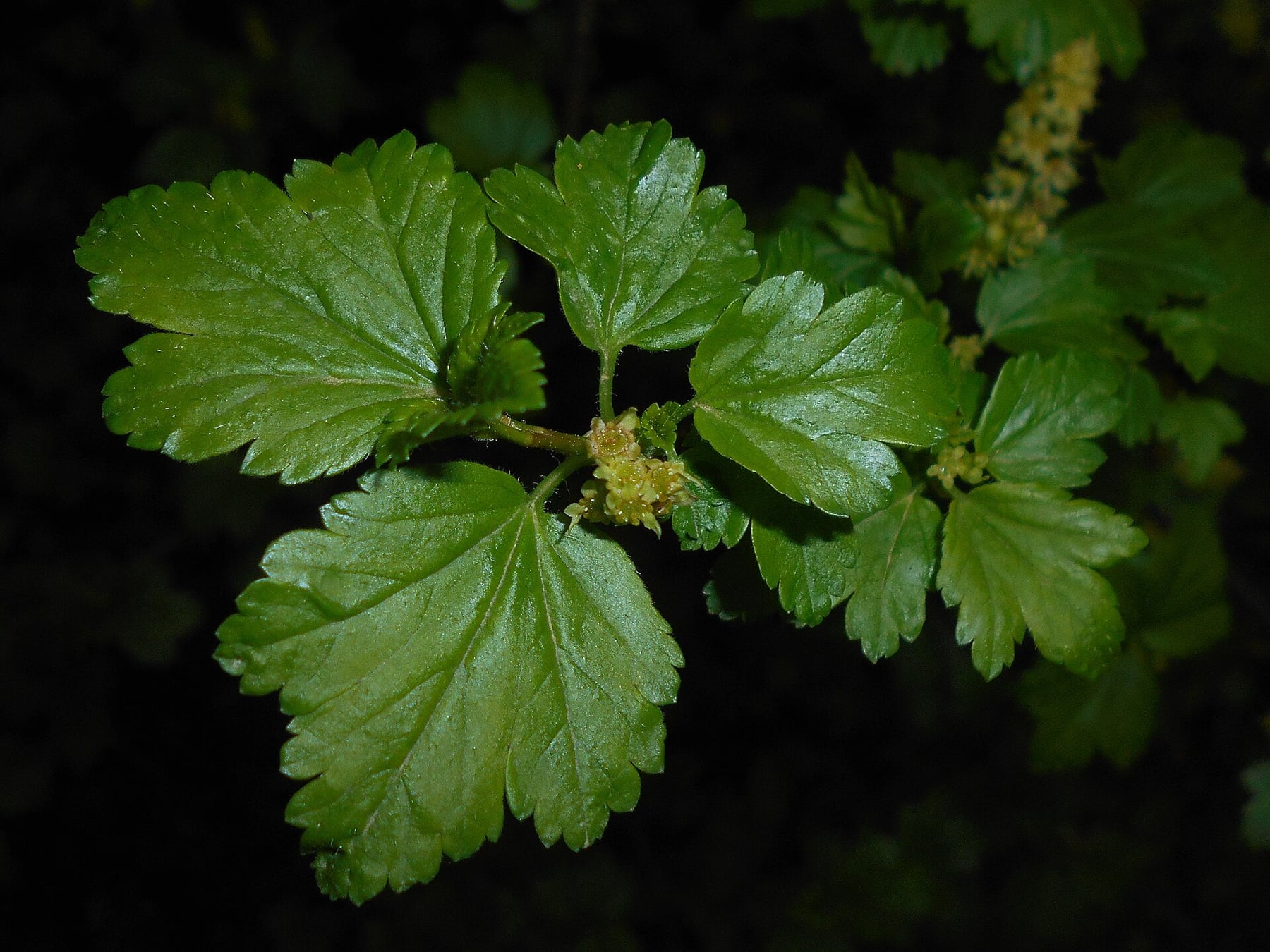
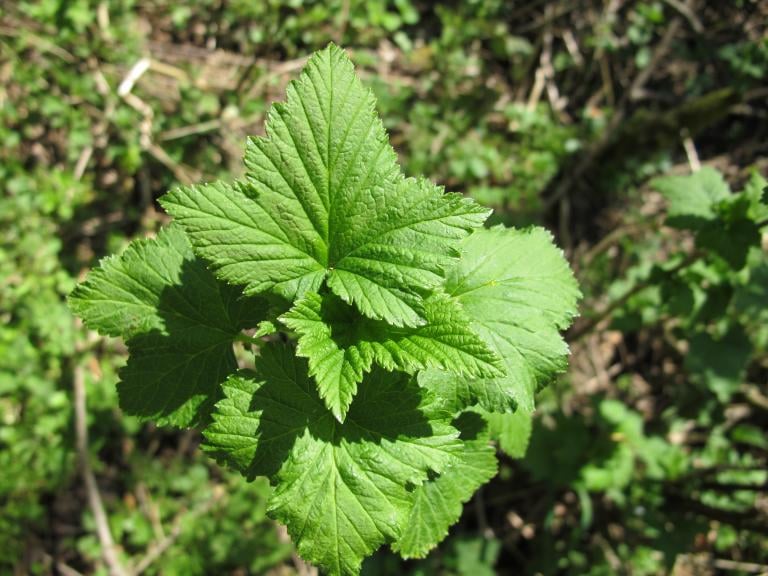
Leaf
Hugues Tinguy, Tela Botanica · CC BY-SA 2.0

Blackcurrant

Ribes nigrum L.
Also known as: Black currant
Telling currants and gooseberries apart ›
  • 1 to 1.5 m tall
  • Moist hedgerows, often cultivated
  • Full sun, Part shade
  • Very hardy, to -25°C

In flower from April to May

2 months
See what flowers in:April ›May ›

❓ How do you recognise this plant?

Very distinctive, strong smell when the leaves are crushed, immediately recognisable. Redcurrant has spineless twigs like blackcurrant, but its bright red fruits in pendulous clusters clearly distinguish it; blackcurrant leaves are recognised by the characteristic resinous smell they give off when crushed.

Learn to recognise it

Citrus, grapes and summer fruit. This plant is in the lesson “Citrus, grapes and summer fruit”, with 11 others.
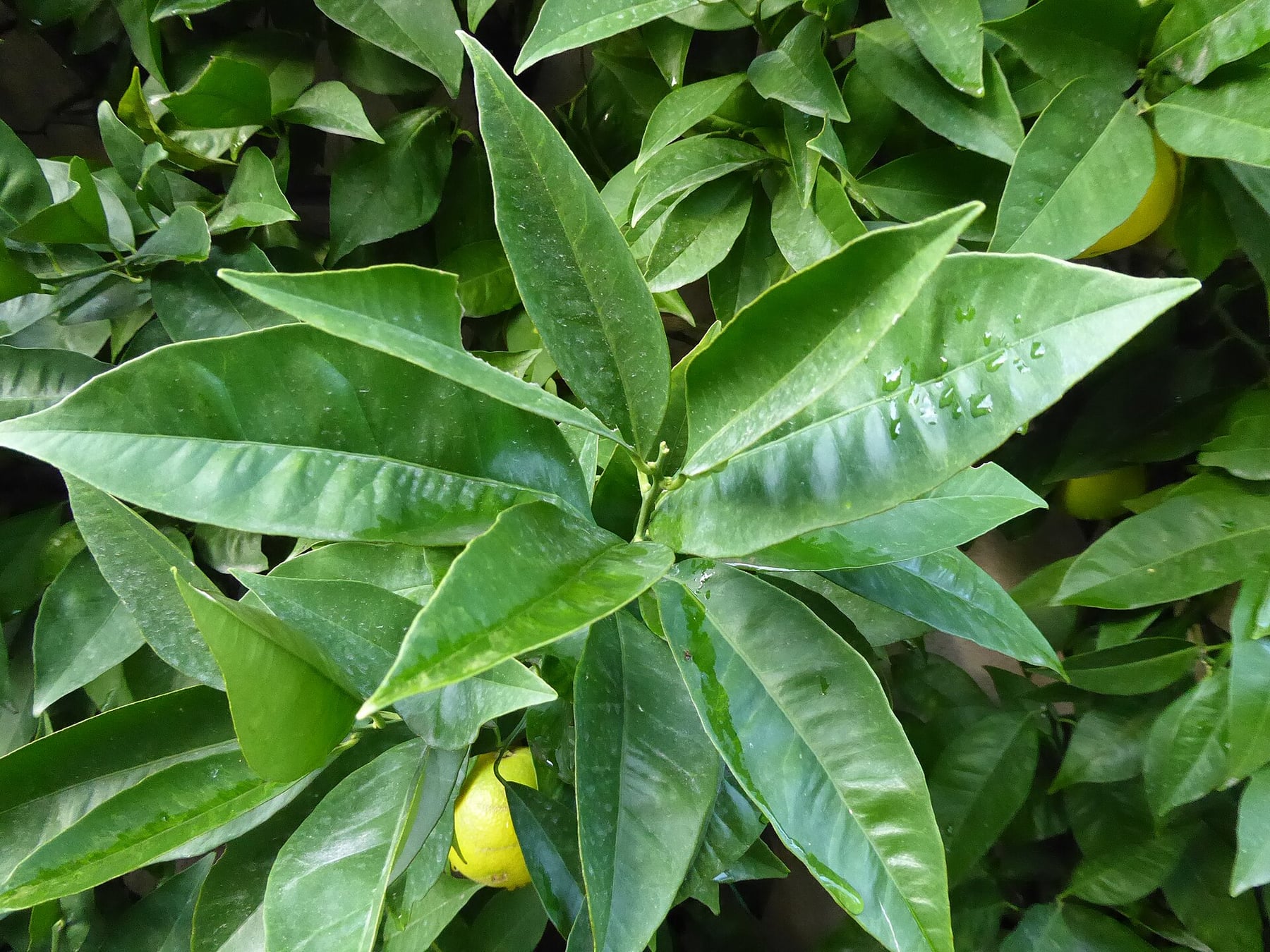
Blackcurrant
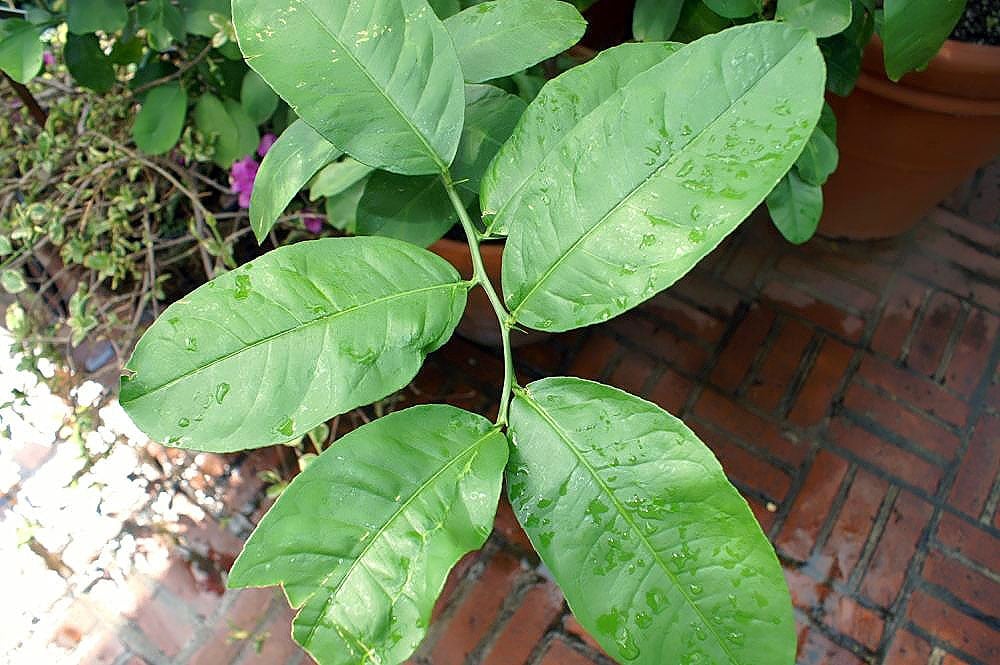
Lemon
Sweet orange
Grapevine
Kiwifruit
+7
🍃 Leaves
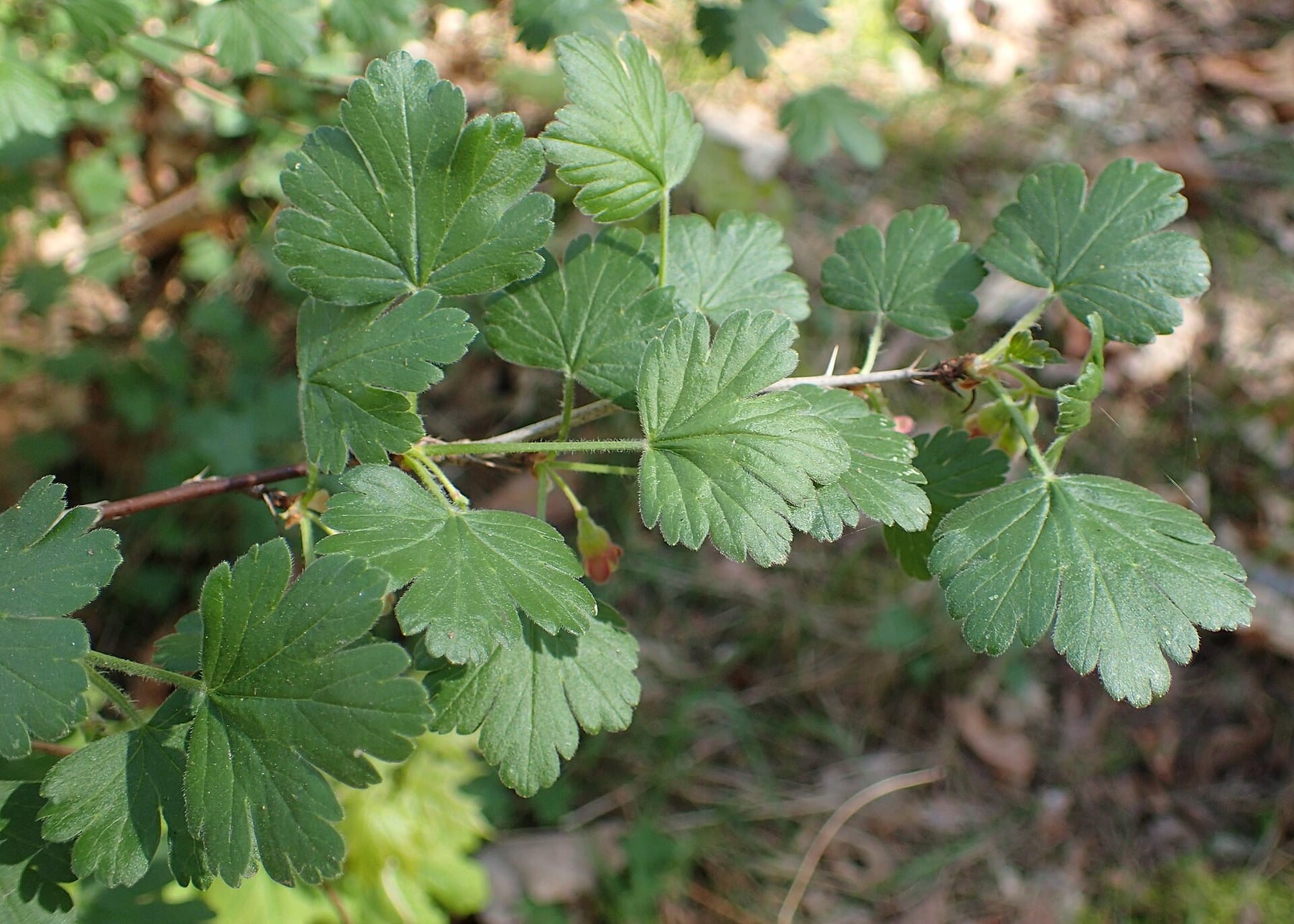
Palmate, 3 to 5 lobes, very aromatic and fragrant when crushed
🌸 Flowers
Small greenish bells tinged with pink
🍎 Fruits
Black berries in clusters, highly aromatic
🪵 Bark
Brownish-grey, without spines
Distribution, pollinators, uses
🗺️ Distribution
Europe, Asia; cultivated throughout France, sometimes subspontaneous on moist woodland edges.
🐝 Value for pollinators
Inconspicuous but nectar-rich flowers, visited by bees in spring.
✂️ Horticultural uses
Grown in the fruit and vegetable garden for its berries rich in vitamin C.

⚠️ Possible toxicity

No known toxicity; fruits edible, aromatic leaves used in herbal tea.

⚠️ Look-alike species

Blackcurrant
Blackcurrant
Ribes nigrum
Redcurrant
Redcurrant
Ribes rubrum

Redcurrant has spineless twigs like blackcurrant, but its bright red fruits in pendulous clusters clearly distinguish it; blackcurrant leaves are recognised by the characteristic resinous smell they give off when crushed.
See the full comparison →
Blackcurrant
Blackcurrant
Ribes nigrum
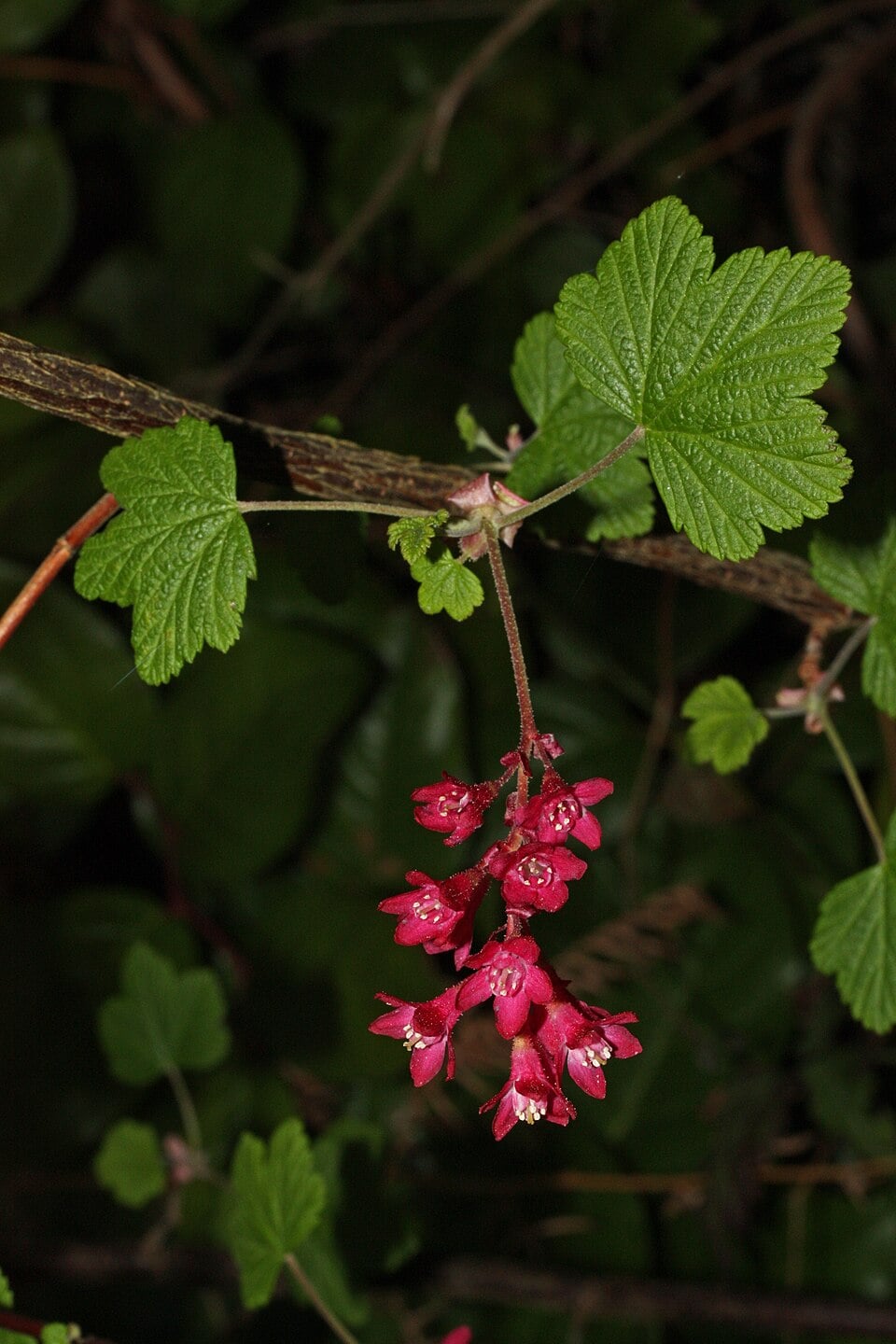
Flowering currant
Flowering currant
Ribes sanguineum

Blackcurrant has inconspicuous greenish bells and very fragrant black berries prized in cooking, whereas flowering currant has bright pink to red flowers clearly visible in April and small bland blue-black berries, of no culinary interest despite a similar aromatic palmate foliage.

See the full comparison →

ℹ️ Educational profile — do not use it to judge whether a plant is edible or safe.

🌱 This database is constantly evolving — species and information are added and corrected regularly. Spotted a mistake? Report it below.

© Floraneo — profile content is protected; reproduction without permission is prohibited. Photos remain under their own licence (see the credit shown on each photo).