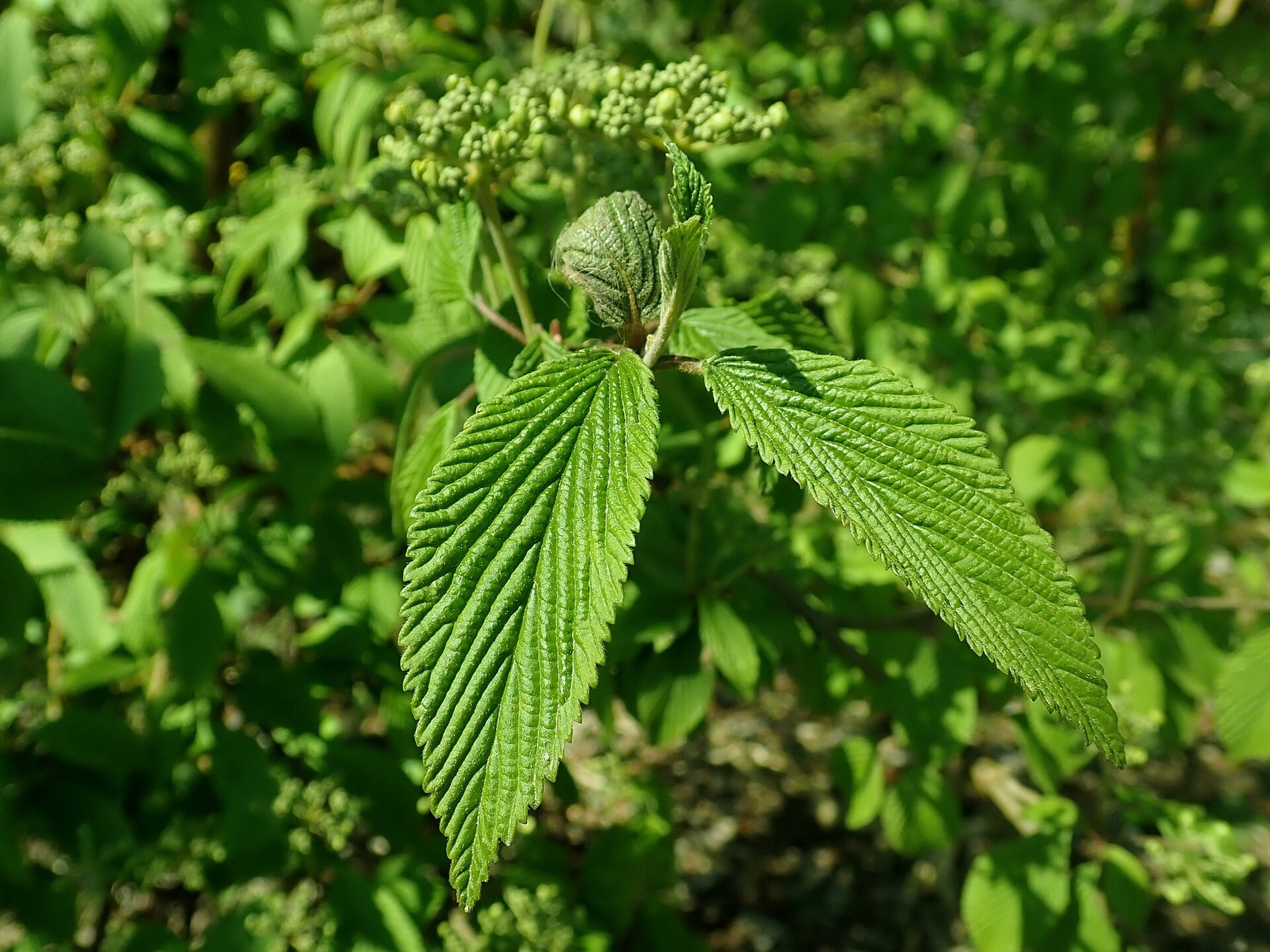
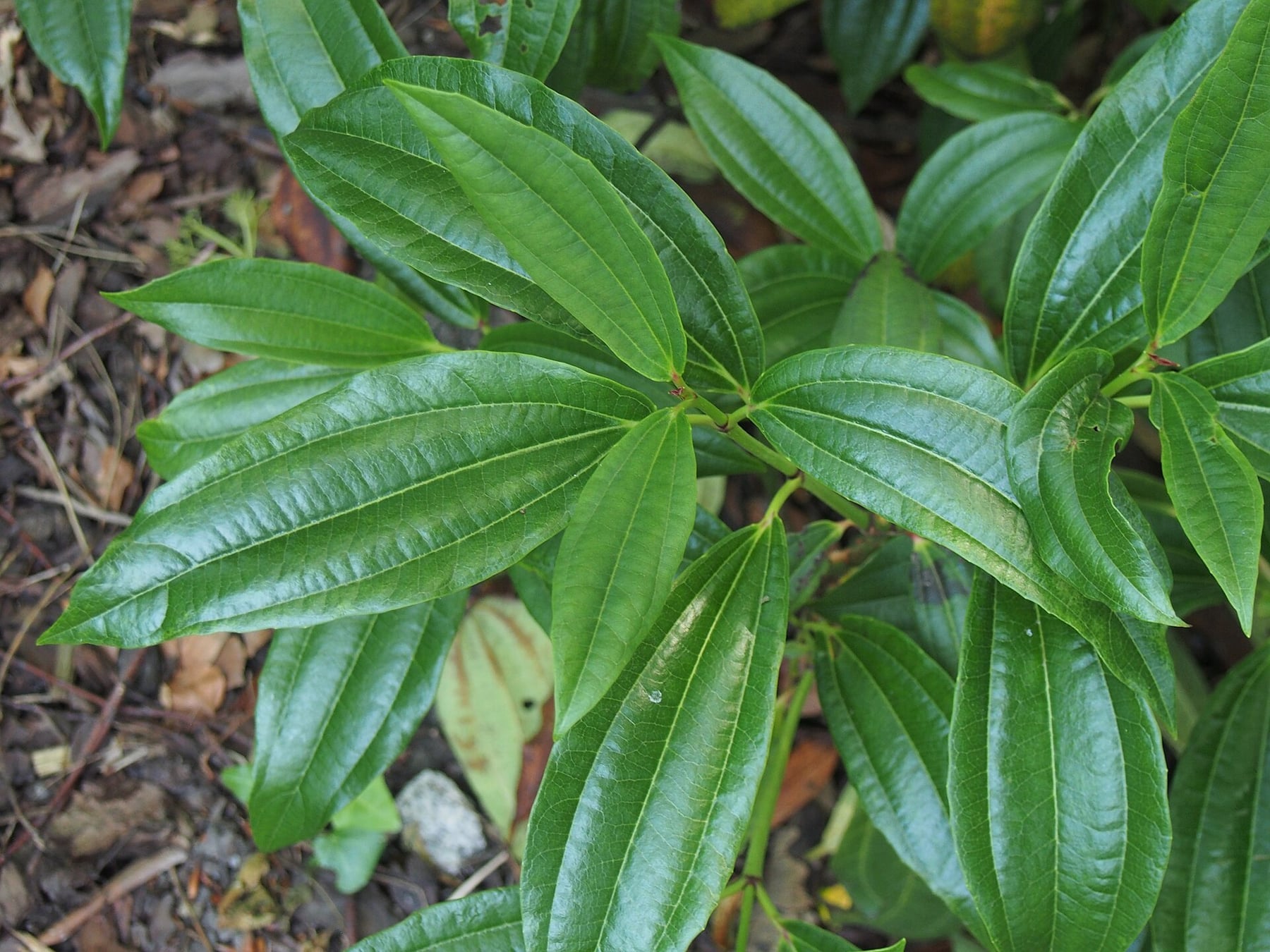
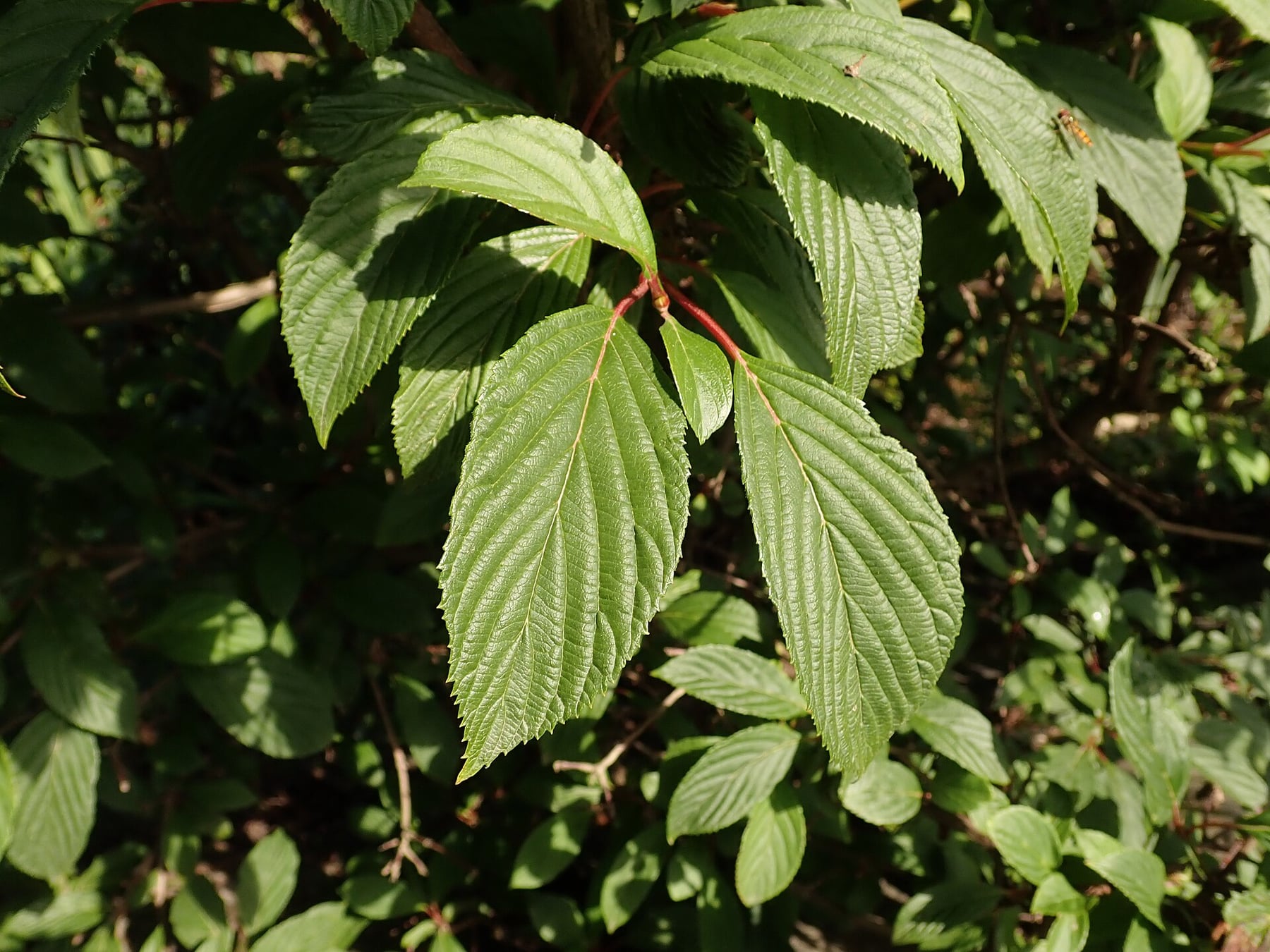
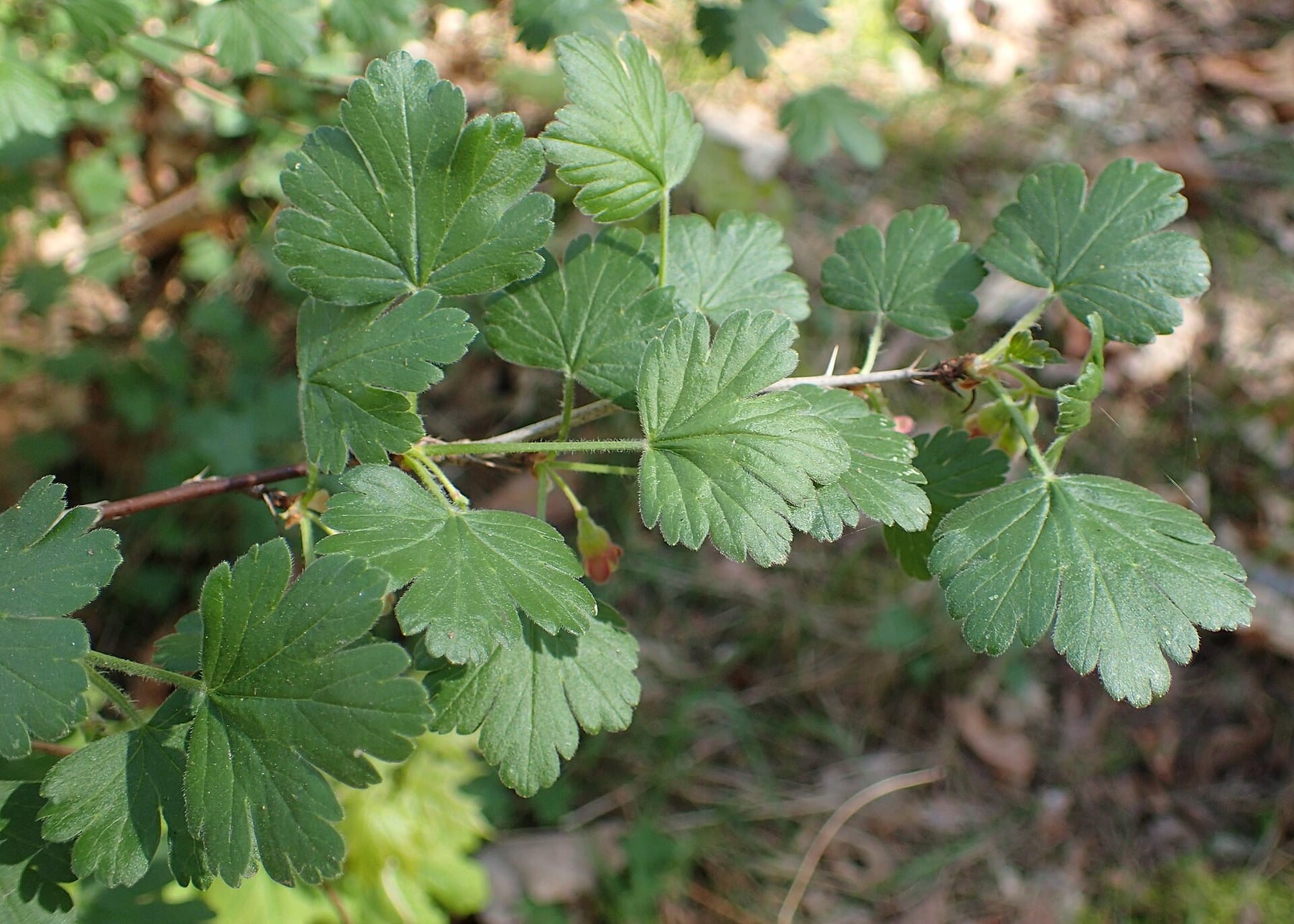
Its clusters of small red berries recall those of the redcurrant, but they are bland and of no culinary interest — alpine currant is above all planted as a hedging shrub, not as a soft fruit. Alpine currant resembles redcurrant in its thornless habit and small red berries, but its greenish-yellow flowers are gathered in upright (not pendent) racemes, its leaves are smaller and not aromatic when crushed, and above all its berries are bland and of no culinary interest, unlike those of the redcurrant.
Learn to recognise it
Viburnums, dogwoods and berry shrubs. This plant is in the lesson “Viburnums, dogwoods and berry shrubs”, with 10 others.
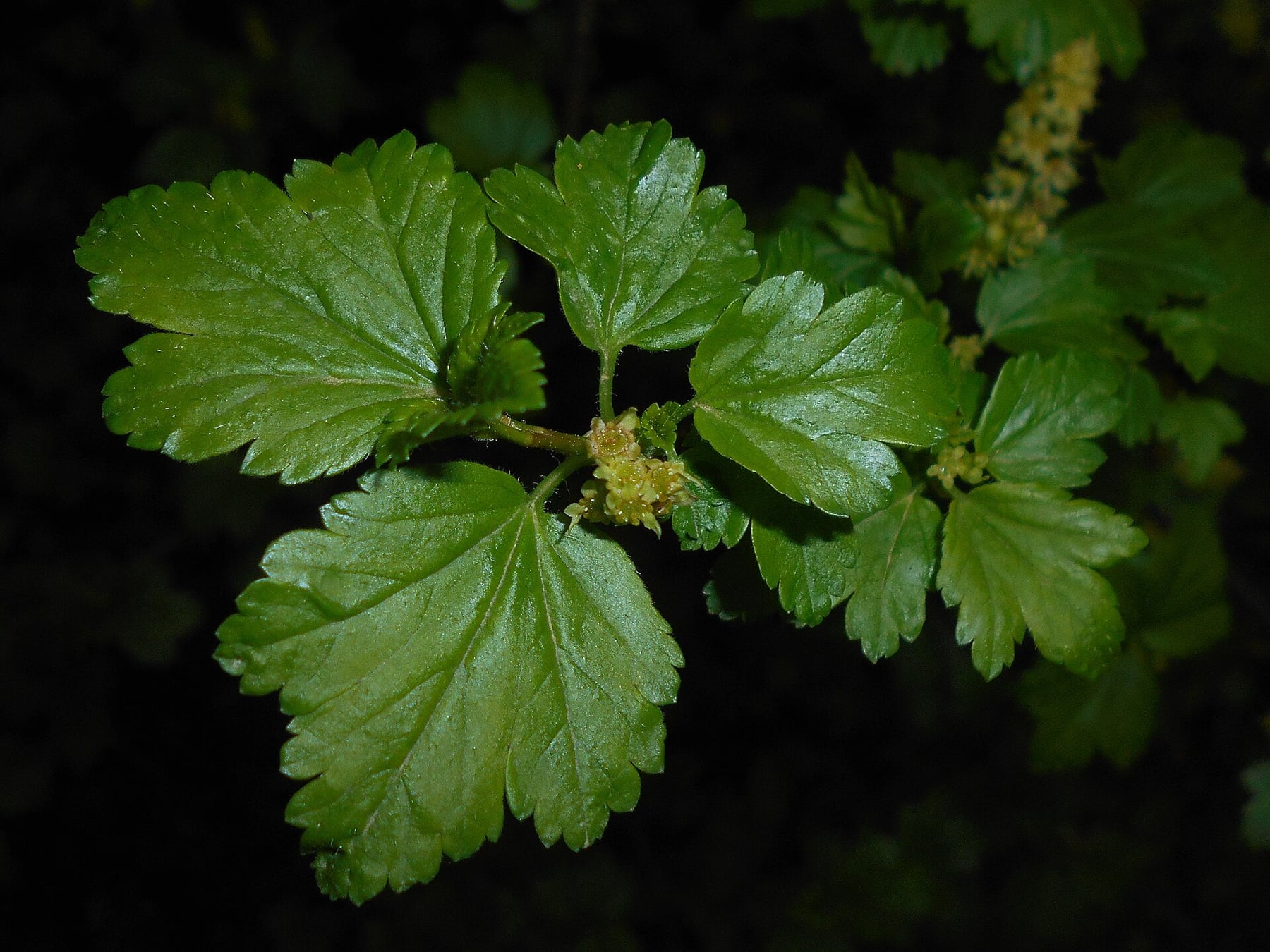
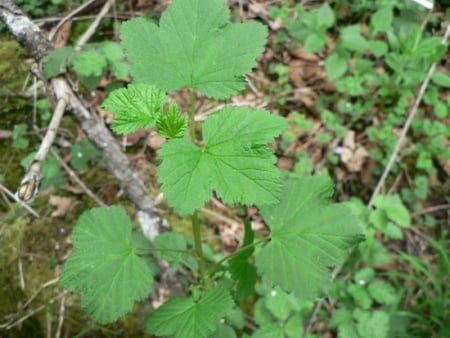
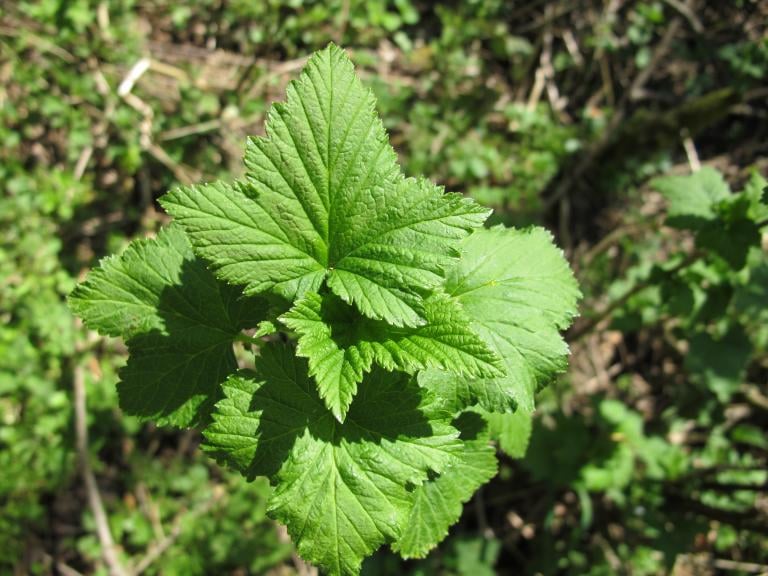
Small (3 to 5 cm), palmate, 3 to 5 toothed lobes, almost hairless, satiny, not aromatic when crushed unlike blackcurrant
🌸 Flowers
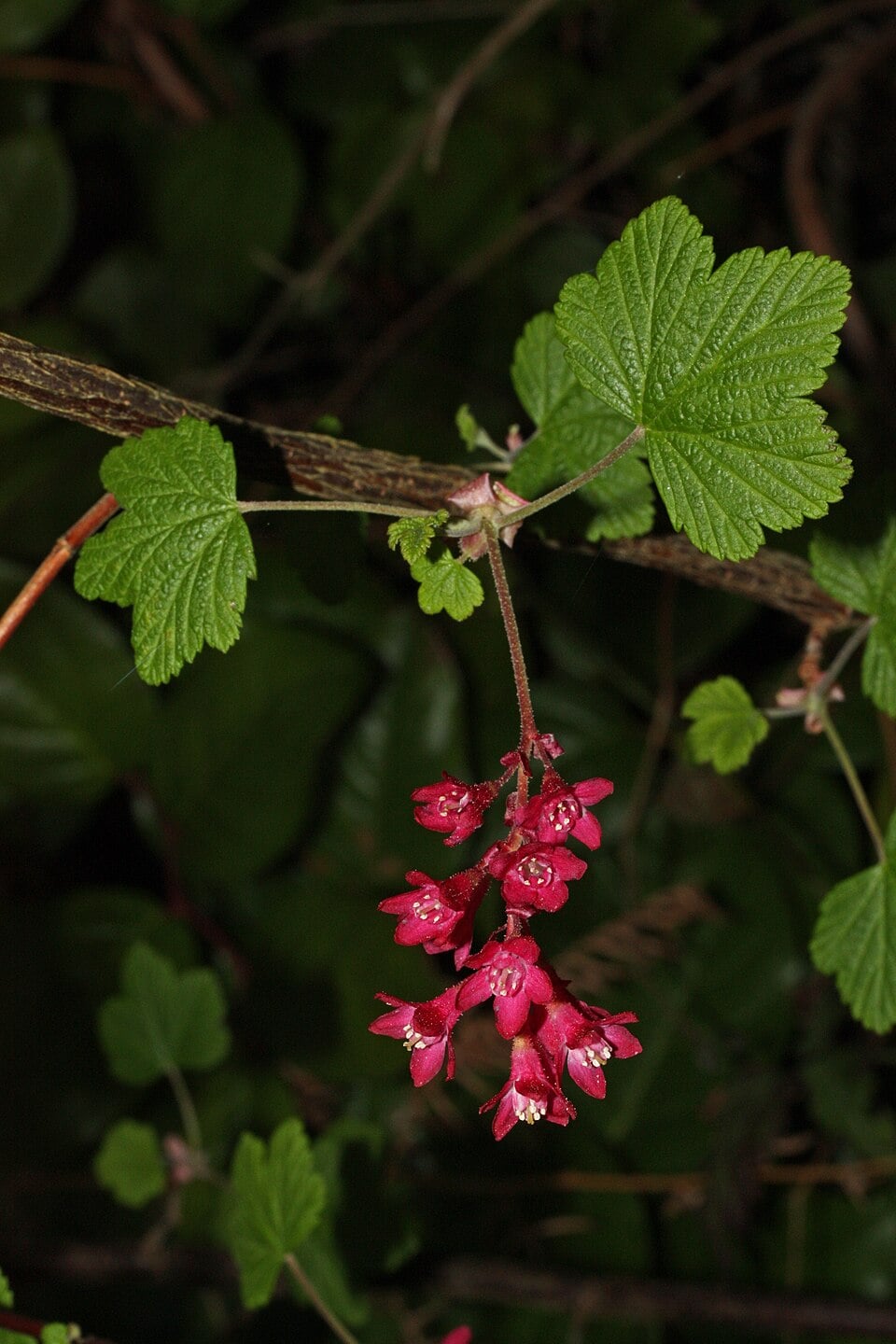
Small, greenish-yellow, gathered in upright racemes (unlike the pendent racemes of the redcurrant); dioecious plant, male flowers with more stamens than female flowers
🍎 Fruits
Small smooth, shiny red berries, in groups of 2-3 in upright racemes, edible but bland and insipid
🪵 Bark
Grey-brown, thornless
Distribution, pollinators, uses▾
🗺️ Distribution
Europe; in France occurring wild in woods and rocks of the East, Centre and South-East (mountains), absent as a native from the North and West; very widely planted everywhere in clipped urban hedges
🐝 Value for pollinators
Early nectar-rich flowering, visited by bees despite inconspicuous flowers
✂️ Horticultural uses
Much used as a low clipped hedge in towns for its toughness and shade tolerance, unlike fruiting currants grown for their fruit
⚠️ Possible toxicity
No known toxicity; berries edible but insipid, of no culinary interest
Alpine currant resembles redcurrant in its thornless habit and small red berries, but its greenish-yellow flowers are gathered in upright (not pendent) racemes, its leaves are smaller and not aromatic when crushed, and above all its berries are bland and of no culinary interest, unlike those of the redcurrant.