Orchards and gardens, especially in a Mediterranean climate
Flowering: February – March, very early
Full sun
Hardy to about -20°C, but sensitive to late frosts on its early flowers
❓ How do you recognise this plant?
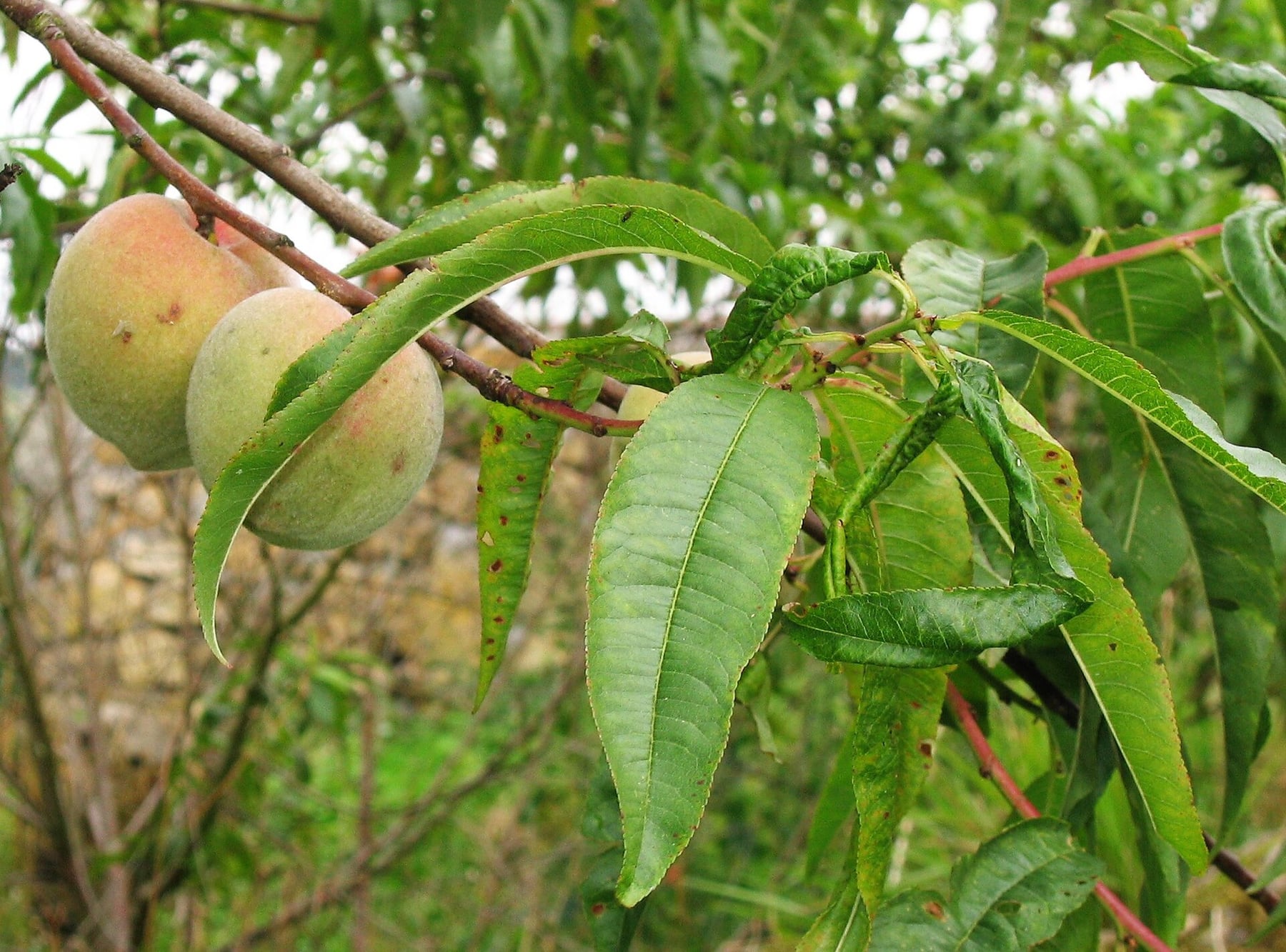
The apricot flowers so early (from February) that it is particularly exposed to late frosts, which often destroy a good part of the crop. Before the leaves appear, it is hard to tell these two early-flowering Prunus apart. The apricot generally flowers a little earlier (from February) with white, barely pinkish flowers borne almost stalkless against the wood, whereas the peach flowers in March-April with pinker flowers borne on a short green pedicel.
🍃 Leaves
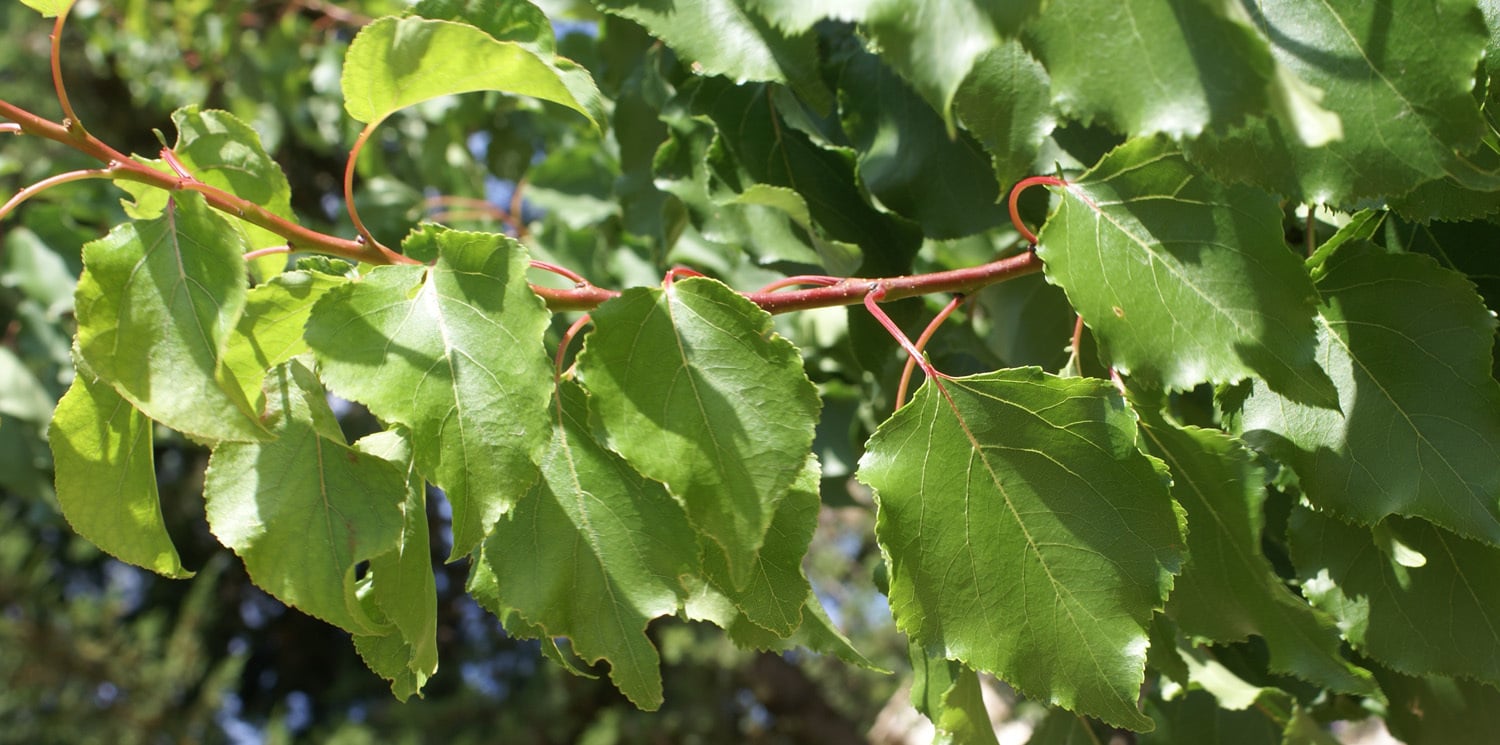
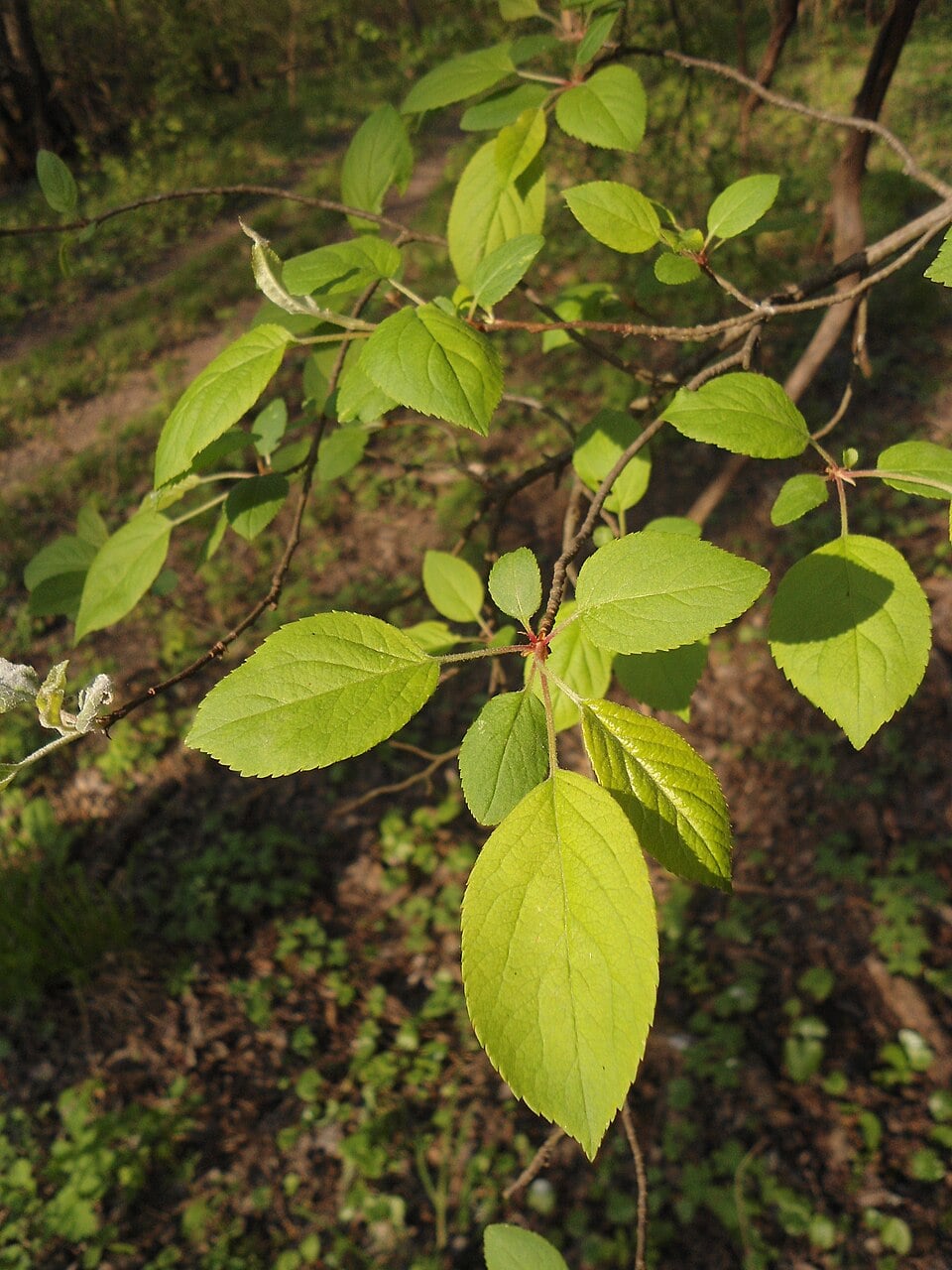
Ovate to heart-shaped at the base, finely toothed, reddish petiole
🌸 Flowers
White to pinkish, single, appearing before the leaves
🍎 Fruits
Downy orange drupe (apricot) with a smooth stone
🪵 Bark
Reddish-brown, peeling in scales with age
🗺️ Distribution
Native to central Asia; grown in France especially in the south-east
🐝 Value for pollinators
Very early flowering, which can provide a resource for pollinating insects when few other flowers are available.
✂️ Horticultural uses
Orchard fruit tree, valued in mild, dry climates
⚠️ Possible toxicity
Flesh of the fruit edible. The kernels inside the stone contain cyanogenic compounds and should not be eaten in large quantities.
Before the leaves appear, it is hard to tell these two early-flowering Prunus apart. The apricot generally flowers a little earlier (from February) with white, barely pinkish flowers borne almost stalkless against the wood, whereas the peach flowers in March-April with pinker flowers borne on a short green pedicel.
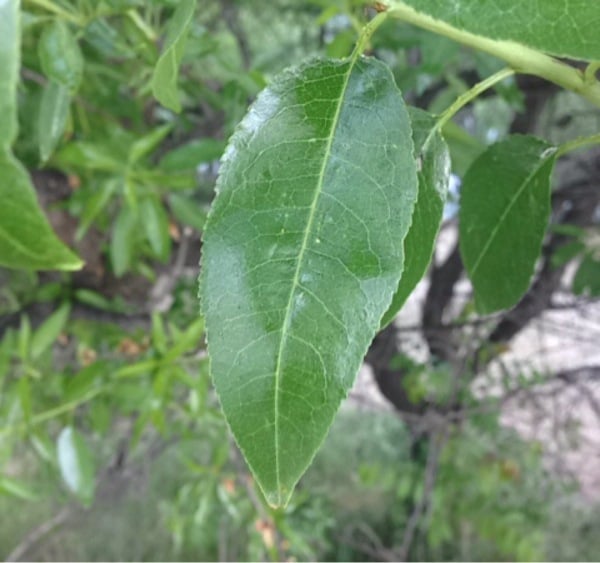
Two of the very first trees to flower in late winter, often from January-February, before the leaves. The almond has larger flowers with narrow petals notched at the tip, whereas those of the apricot are smaller and rounded, borne directly on the twigs. The bark also helps to separate them: reddish-brown and scaly on the apricot, grey-brown and cracking on the almond.