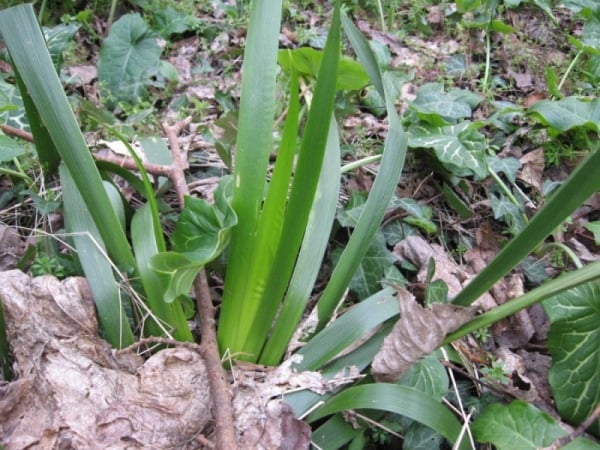
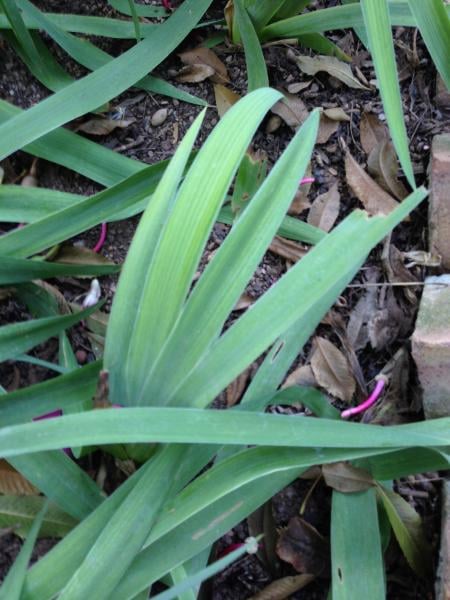
Leaf
Mathieu Menand, Tela Botanica · CC BY-SA 2.0

Stinking iris

Iris foetidissima L.
Also known as: Gladwyn iris, Roast beef plant
Family: Iridaceae
30 to 60 cm tall
Woodland understorey, shady gardens, all soils
Flowering: May – July
Part shade
Shade
Hardy to -15°C

❓ How do you recognise this plant?

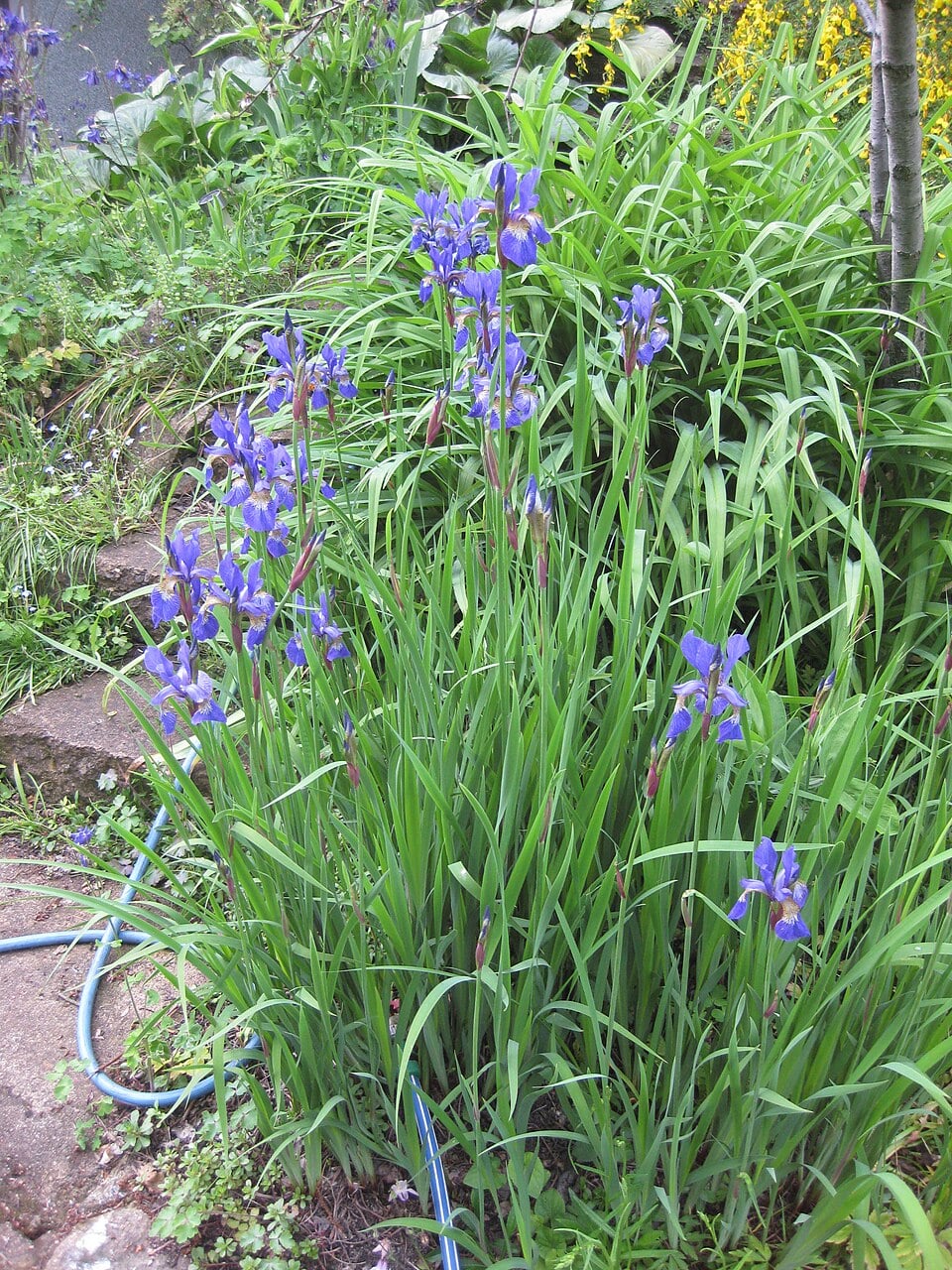
Its inconspicuous flowers go unnoticed, but its capsules split open in winter to reveal spectacular bright orange seeds. Without a beard or bright colours, these two irises look alike in flower: dull blue-violet colouring, slender drooping petals. Stinking iris grows in the shade of woodland, gives off an unpleasant smell when crushed and is recognised above all in winter by its bright orange seeds in open capsules, whereas Siberian iris has narrow, upright foliage, in a sunny, damp position.
🍃 Leaves
Evergreen, fan-shaped, glossy dark green, unpleasant smell when crushed
🌸 Flowers
Inconspicuous flowers, dull blue-violet or yellowish
🍎 Fruits
Capsules splitting open to reveal very decorative bright orange seeds in winter
🪵 Bark
Dense clump, creeping rhizome
🗺️ Distribution
Western and southern Europe; found in open woods and limestone hedges, mainly in Atlantic and southern France.
🐝 Value for pollinators
Inconspicuous flowers with little nectar, of lesser ecological interest than other irises.
✂️ Horticultural uses
Shady borders, woodland; grown mainly for its bright orange seeds persisting in winter in the open capsules.

⚠️ Possible toxicity

Rhizome and seeds toxic if ingested; foliage gives off an unpleasant smell when crushed.

⚠️ Look-alike species

Stinking iris
Stinking iris
Iris foetidissima
Siberian iris
Siberian iris
Iris sibirica

Without a beard or bright colours, these two irises look alike in flower: dull blue-violet colouring, slender drooping petals. Stinking iris grows in the shade of woodland, gives off an unpleasant smell when crushed and is recognised above all in winter by its bright orange seeds in open capsules, whereas Siberian iris has narrow, upright foliage, in a sunny, damp position.

ℹ️ Educational profile — do not use it to judge whether a plant is edible or safe.

🌱 This database is constantly evolving — species and information are added and corrected regularly. Spotted a mistake? Report it below.

© Floraneo — profile content is protected; reproduction without permission is prohibited. Photos remain under their own licence (see the credit shown on each photo).