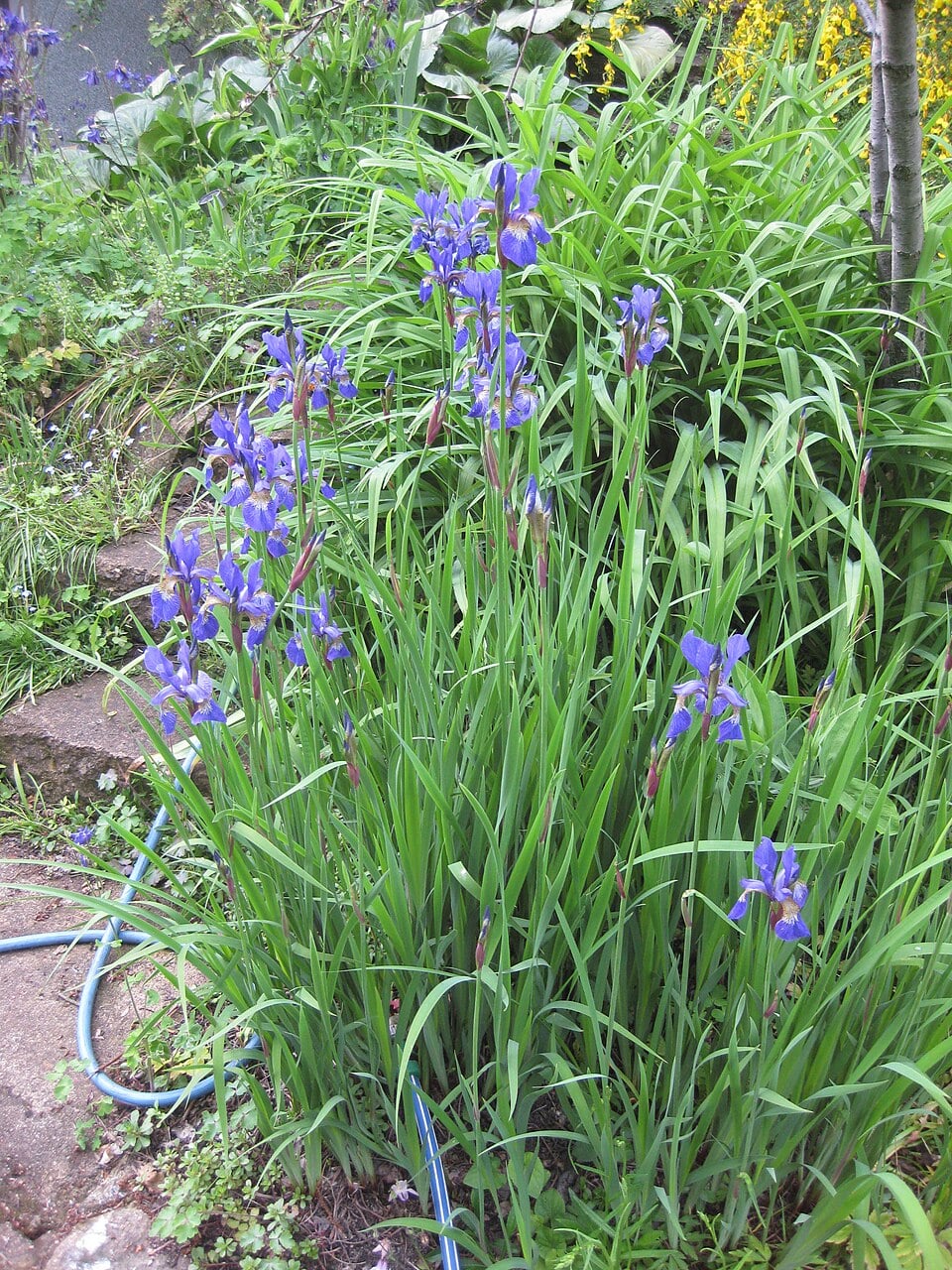
Unlike the bearded iris, it enjoys damp soils and readily grows at the edge of a pond. Without a beard or bright colours, these two irises look alike in flower: dull blue-violet colouring, slender drooping petals. Siberian iris has narrow, upright foliage, in a sunny, damp position, whereas stinking iris grows in the shade of woodland, gives off an unpleasant smell when crushed and is recognised above all in winter by its bright orange seeds in open capsules.
🍃 Leaves
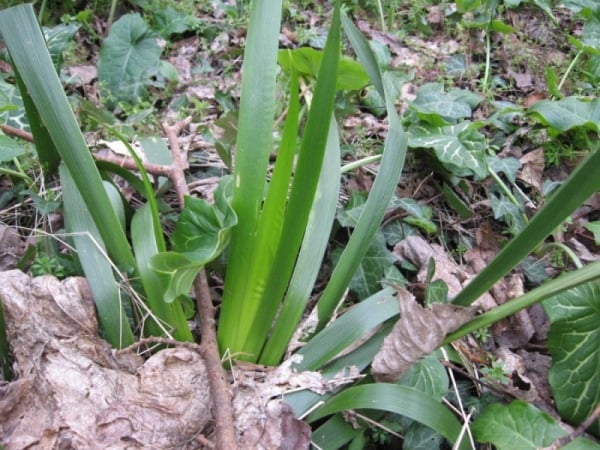
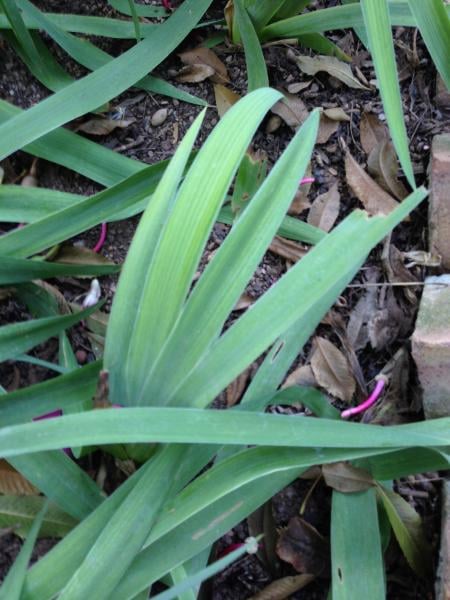
Slender, linear, upright, bright green
🌸 Flowers
Blue-violet flowers, slenderer and more graceful than the bearded iris
🍎 Fruits
Elongated 3-celled capsules
🪵 Bark
Dense clump of creeping rhizomes
🗺️ Distribution
Central and eastern Europe, Asia; rare and localised in damp meadows in France, widely grown in gardens.
🐝 Value for pollinators
Large blue-violet flowers visited by bees and bumblebees in spring.
✂️ Horticultural uses
Pond margins, damp borders; graphic, fine foliage and elegant flowering.
⚠️ Possible toxicity
Rhizome slightly toxic if ingested, as in other irises; may cause digestive upset.
Without a beard or bright colours, these two irises look alike in flower: dull blue-violet colouring, slender drooping petals. Siberian iris has narrow, upright foliage, in a sunny, damp position, whereas stinking iris grows in the shade of woodland, gives off an unpleasant smell when crushed and is recognised above all in winter by its bright orange seeds in open capsules.
Both flower at the same time and show similar violet shades, but their structure differs: bearded iris has large bearded flowers (a tuft of hairs on the drooping petals) borne on a fleshy rhizome half out of the ground, with broad fan-shaped foliage, whereas Siberian iris has no beard, fine linear foliage, and prefers moist to damp soils.