Leaf
Pierre Bonnet, Tela Botanica · CC BY-SA 2.0
Bearded iris
Iris germanica L.
Also known as: German iris, Tall bearded iris
Family: Iridaceae
50 to 90 cm tall
Gardens, borders, edgings, free-draining soils
Flowering: May – June
Full sun
Hardy to -25°C
❓ How do you recognise this plant?
Its rhizome grows half out of the ground and must be exposed to the sun to flower well. Both flower at the same time and show similar violet shades, but their structure differs: bearded iris has large bearded flowers (a tuft of hairs on the drooping petals) borne on a fleshy rhizome half out of the ground, with broad fan-shaped foliage, whereas Siberian iris has no beard, fine linear foliage, and prefers moist to damp soils.
🍃 Leaves
Long, fan-shaped, grey-green, sheathing
🌸 Flowers
Large flowers with 3 upright petals and 3 bearded drooping petals, very varied colours
🍎 Fruits
Large 3-celled capsules containing many seeds
🪵 Bark
Fleshy rhizome creeping on the soil surface
🗺️ Distribution
Native to the Mediterranean basin; widely cultivated and sometimes naturalised throughout France.
🐝 Value for pollinators
Large flowers rich in nectar, adapted to big bumblebees that push in under the drooping floral parts.
✂️ Horticultural uses
Perennial borders, edgings; countless cultivars in varied colours, one of the most widely grown garden irises.
⚠️ Possible toxicity
Rhizome toxic if ingested (digestive irritant); may cause contact dermatitis in sensitive people.
⚠️ Look-alike species
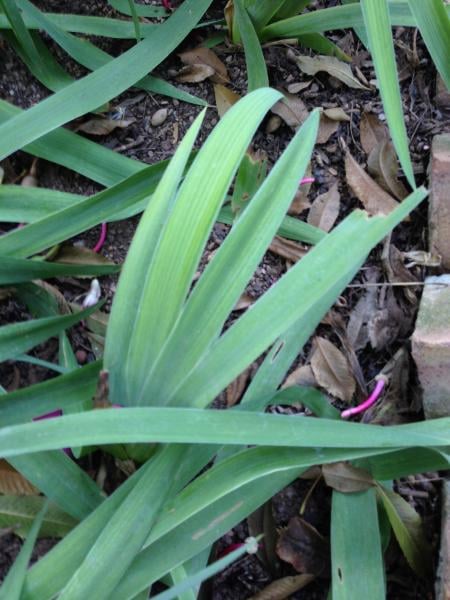
Bearded iris
Iris germanica
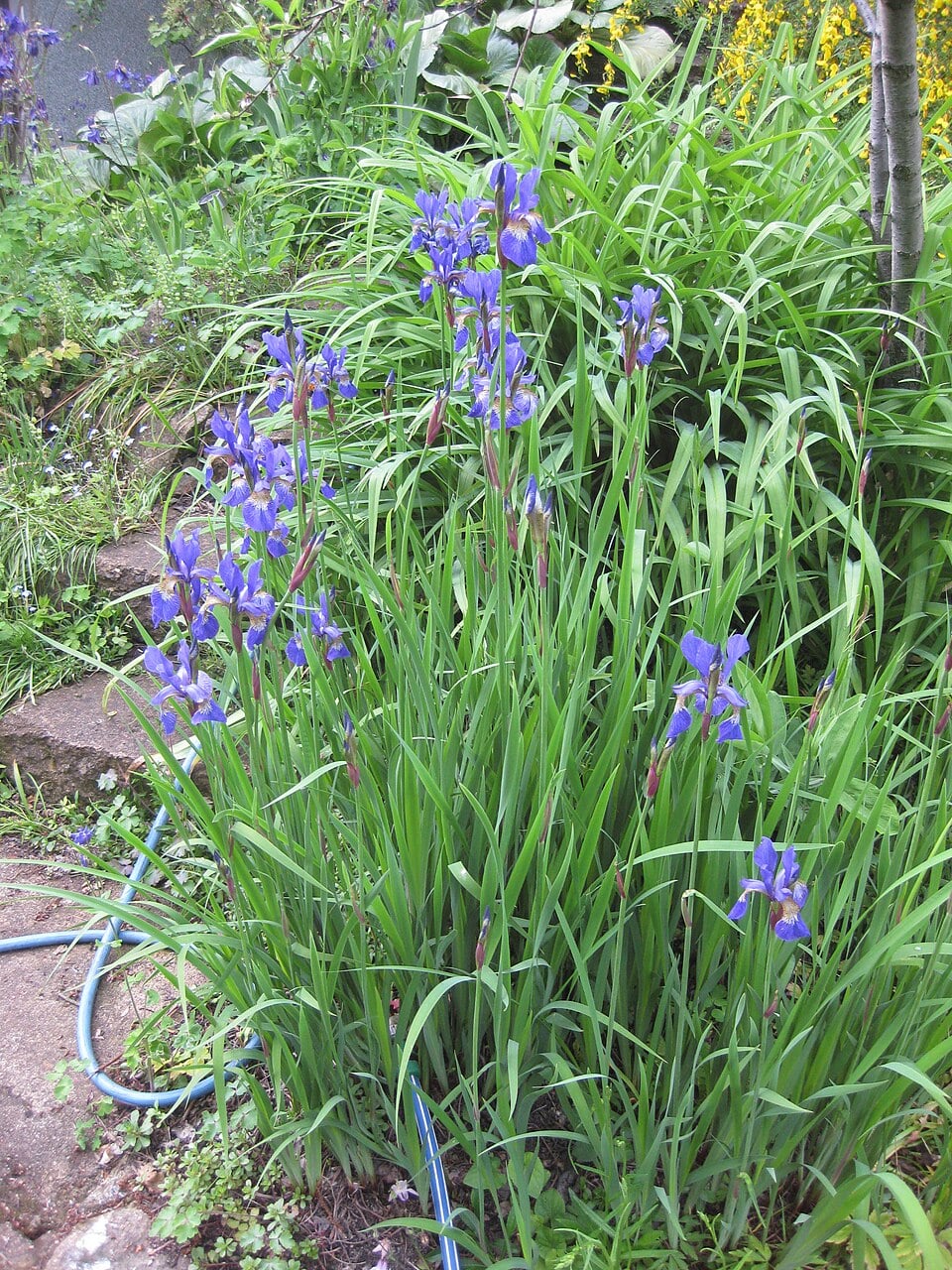
Siberian iris
Iris sibirica
Both flower at the same time and show similar violet shades, but their structure differs: bearded iris has large bearded flowers (a tuft of hairs on the drooping petals) borne on a fleshy rhizome half out of the ground, with broad fan-shaped foliage, whereas Siberian iris has no beard, fine linear foliage, and prefers moist to damp soils.
🌿 Other Iridaceae to discover


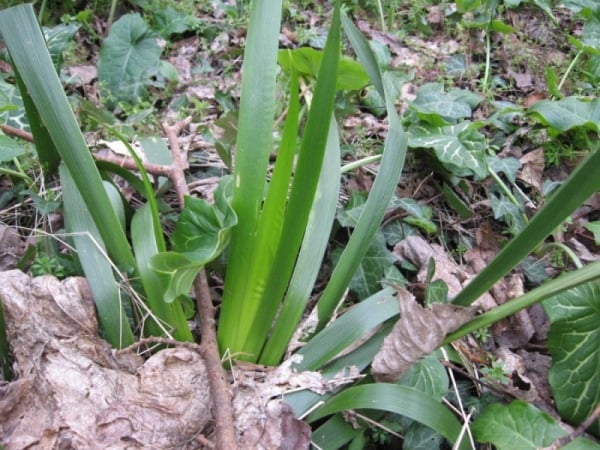
ℹ️ Educational profile — do not use it to judge whether a plant is edible or safe.
🌱 This database is constantly evolving — species and information are added and corrected regularly. Spotted a mistake? Report it below.
© Floraneo — profile content is protected; reproduction without permission is prohibited. Photos remain under their own licence (see the credit shown on each photo).