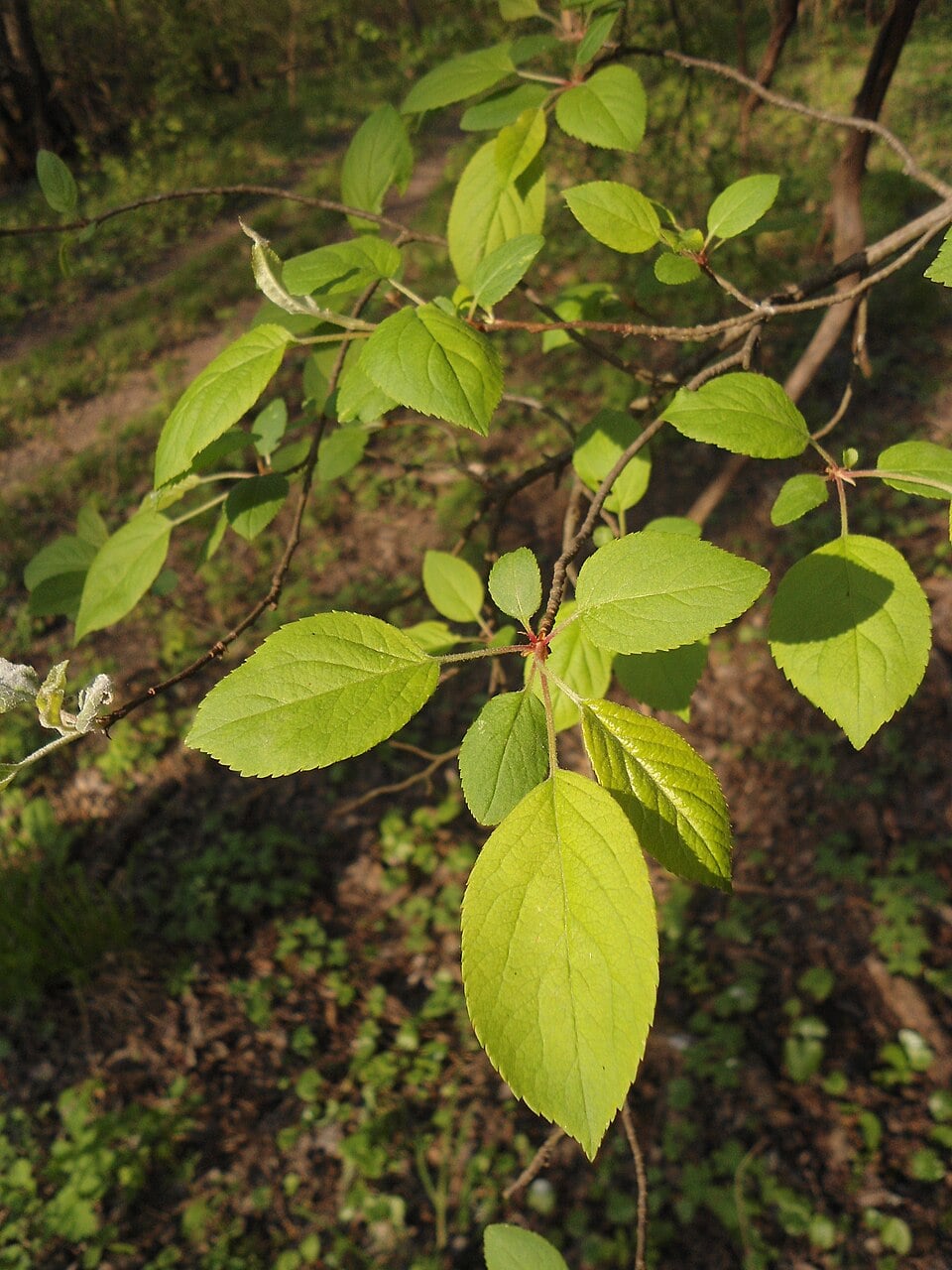
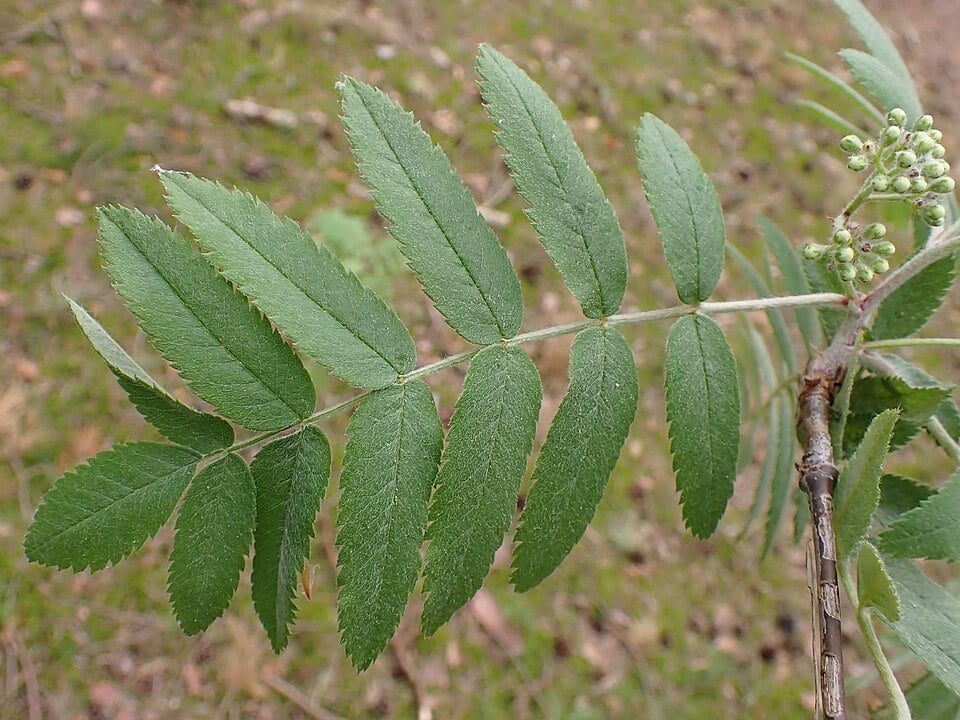
Leaf
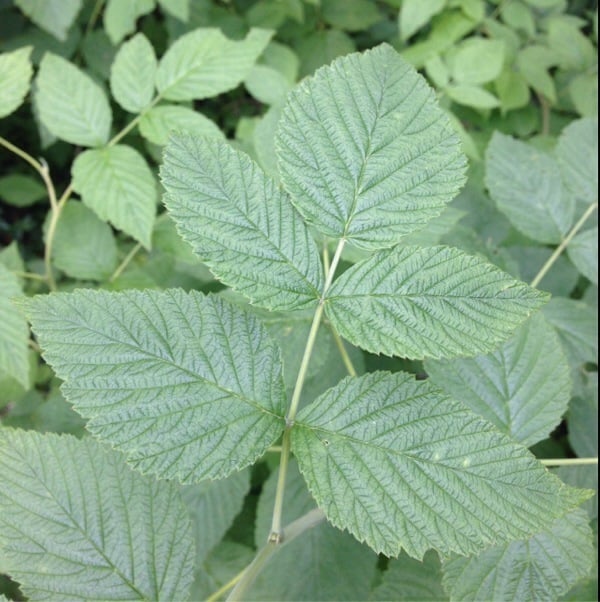
Daniel BarthÉlÉmy, Tela Botanica · CC BY-SA 2.0

Raspberry

Rubus idaeus L.
Also known as: Wild raspberry, European red raspberry
Family: Rosaceae
1 to 2 m tall
Forest clearings, woodland edges, often cultivated
Flowering: May – June
Full sun
Part shade
Very hardy, to -25°C

❓ How do you recognise this plant?

The fruit comes away hollow, leaving the receptacle on the stem — unlike the blackberry of the bramble. Turn the leaf over: the underside of the raspberry is distinctly white and felted (cottony to the touch), whereas that of the bramble stays pale green to greyish, never as white — a reliable clue all year round, even without fruit. The bramble also has arching stems with large hooked prickles and fruits that keep their receptacle, whereas the raspberry has thinner, less aggressively prickly stems, and its fruit comes away easily from its receptacle.
🍃 Leaves
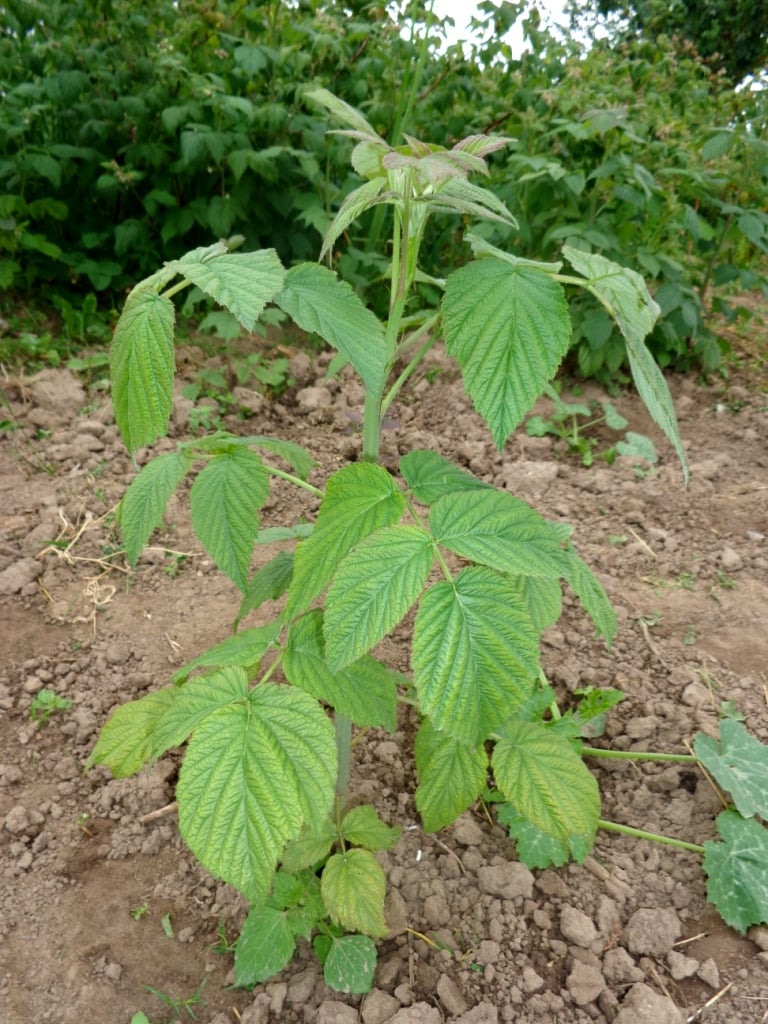
Compound, 3 to 5 toothed leaflets, white and felted beneath
🌸 Flowers
Small, white, with upright, barely open petals
🍎 Fruits
Red raspberries, coming away hollow from their receptacle
🪵 Bark
Upright stems covered with fine straight prickles
🗺️ Distribution
Europe, Asia; cultivated throughout France, also wild in the mountains and in clearings.
🐝 Value for pollinators
Very nectar-rich white flowers, among the favourites of honey bees for honey production.
✂️ Horticultural uses
Grown in the fruit garden for its raspberries.

⚠️ Possible toxicity

No known toxicity; edible fruits, leaves used in herbal tea.

⚠️ Look-alike species

Raspberry
Raspberry
Rubus idaeus
Bramble
Bramble
Rubus fruticosus

Turn the leaf over: the underside of the raspberry is distinctly white and felted (cottony to the touch), whereas that of the bramble stays pale green to greyish, never as white — a reliable clue all year round, even without fruit. The bramble also has arching stems with large hooked prickles and fruits that keep their receptacle, whereas the raspberry has thinner, less aggressively prickly stems, and its fruit comes away easily from its receptacle.

ℹ️ Educational profile — do not use it to judge whether a plant is edible or safe.

🌱 This database is constantly evolving — species and information are added and corrected regularly. Spotted a mistake? Report it below.

© Floraneo — profile content is protected; reproduction without permission is prohibited. Photos remain under their own licence (see the credit shown on each photo).