Leaf
Salicyna, Wikimedia · CC BY-SA 4.0
Pfitzer juniper
Juniperus × pfitzeriana (Späth) P.A.Schmidt
Family: Cupressaceae
1 to 1.5 m tall with a spread of 3 to 5 m
Roundabouts, car parks, commercial areas, banks and low hedges in gardens and public green spaces throughout France
Flowering: March - April (inconspicuous flowering, in the form of small cones)
Full sun
Part shade
Very hardy, to -25°C
❓ How do you recognise this plant?
This conifer with a drooping, fan-shaped habit is so often planted on French roundabouts and in car parks that it has become almost invisible, so familiar is it. Common juniper, wild on heathland and dry grassland, grows as an upright or prostrate bush, whereas Pfitzer juniper is a spreading, drooping cultivar widely planted as a low hedge or on roundabouts.
🍃 Leaves
Evergreen, scale-like, grey-green to bluish depending on the cultivar, arranged in a fan on spreading stems in drooping sheaves
🌸 Flowers
Inconspicuous; small round cones on female plants
🍎 Fruits
Fleshy blue-black cones when ripe, resembling small berries
🪵 Bark
Greyish-brown, peeling in thin strips with age
🗺️ Distribution
Garden hybrid between Juniperus chinensis and Juniperus sabina, raised in Germany (Späth nursery) in the late 19th century, today one of the most widely planted hedge conifers in gardens and green spaces in France
🐝 Value for pollinators
Of little interest to pollinators (wind-pollinated)
✂️ Horticultural uses
Very widely planted as a low hedge, ground cover or in borders for its easy-care spreading fan-shaped habit, practically unavoidable in public landscaping
⚠️ Possible toxicity
Foliage and cones toxic if eaten, as in Juniperus sabina, one of its parents
⚠️ Look-alike species
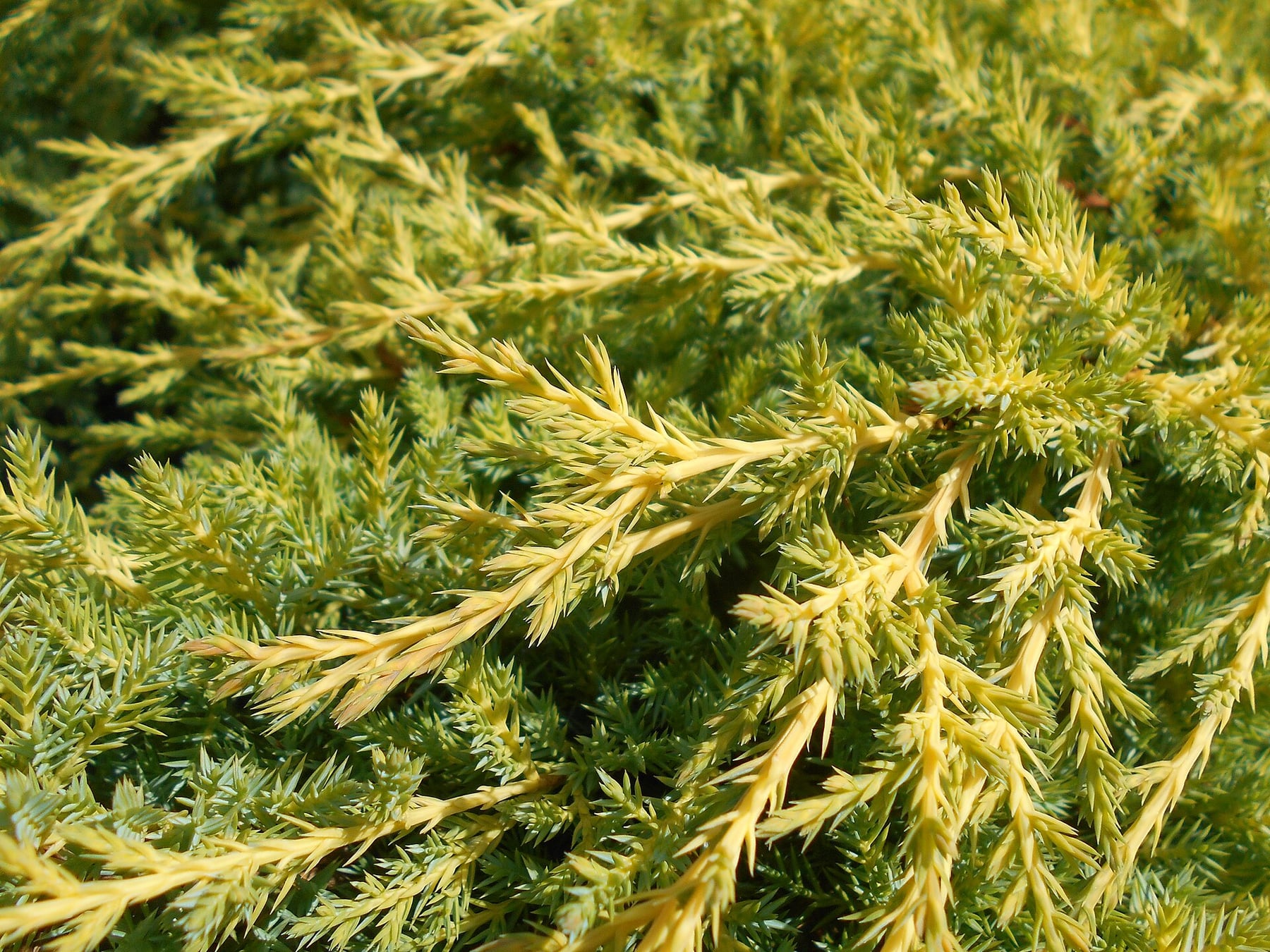
Pfitzer juniper
Juniperus × pfitzeriana
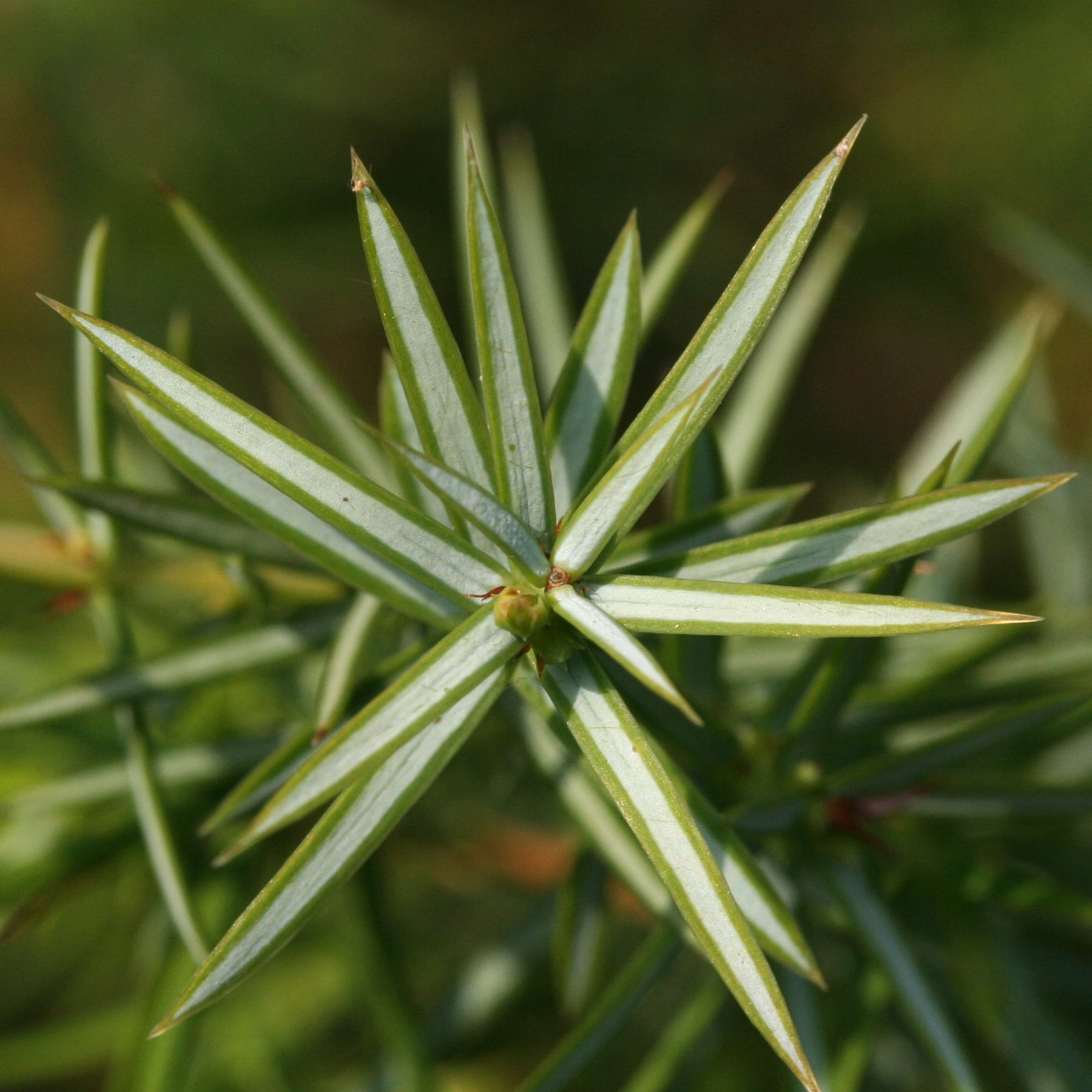
Common juniper
Juniperus communis
Common juniper, wild on heathland and dry grassland, grows as an upright or prostrate bush, whereas Pfitzer juniper is a spreading, drooping cultivar widely planted as a low hedge or on roundabouts.
🌿 Other Cupressaceae to discover


ℹ️ Educational profile — do not use it to judge whether a plant is edible or safe.
🌱 This database is constantly evolving — species and information are added and corrected regularly. Spotted a mistake? Report it below.
© Floraneo — profile content is protected; reproduction without permission is prohibited. Photos remain under their own licence (see the credit shown on each photo).