Leaf
John De Vos, Tela Botanica · CC BY-SA 2.0
Common juniper
Juniperus communis L.
Also known as: Juniper
Family: Cupressaceae
1 to 5 m tall, very variable, sometimes prostrate in the mountains
Heathland, dry grassland, garrigue
Flowering: April – May
Full sun
Part shade
Very hardy, to -29°C
❓ How do you recognise this plant?
Its bluish berries, used to flavour gin, take two years to ripen on the shrub. Pfitzer juniper is a spreading, drooping cultivar, widely planted as a low hedge or on roundabouts, whereas wild common juniper grows as an upright or prostrate bush on dry grassland and heathland.
🍃 Leaves
Prickly needles in whorls of 3, white line on the upper surface
🌸 Flowers
Inconspicuous, sexes separate on different plants
🍎 Fruits
Small blue-black berries covered with bloom, taking two years to ripen
🪵 Bark
Reddish-brown, peeling in thin strips
🗺️ Distribution
Europe, Asia, North America (circumboreal range); common in France on chalk grassland, heathland and in the mountains.
🐝 Value for pollinators
Dioecious, wind-pollinated species, of little use to pollinating insects, but its berries feed many birds.
✂️ Horticultural uses
Planted in rock gardens, low hedges or as a specimen; many dwarf or creeping cultivars.
⚠️ Possible toxicity
No known toxicity for the berries, used in cooking and to flavour gin.
⚠️ Look-alike species
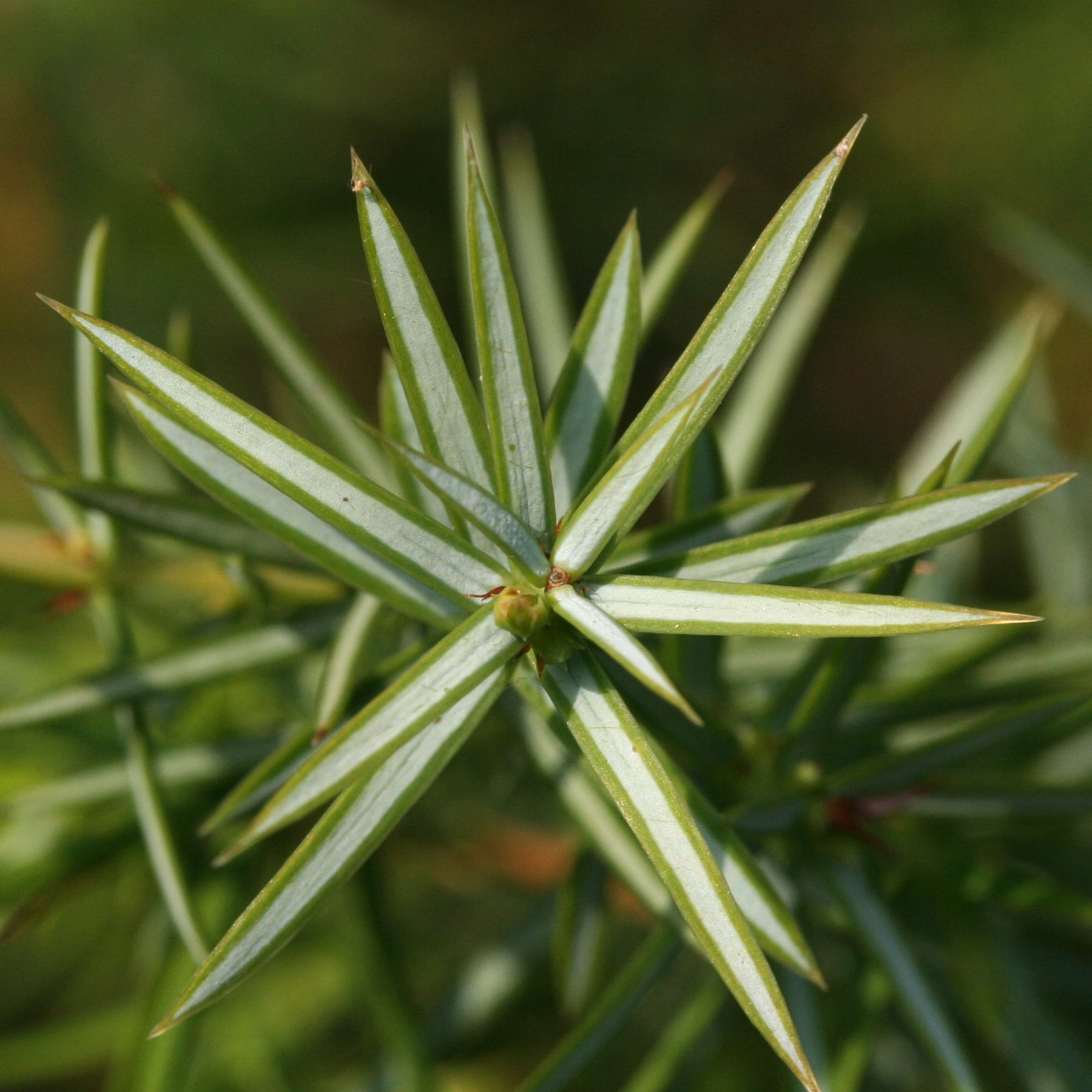
Common juniper
Juniperus communis
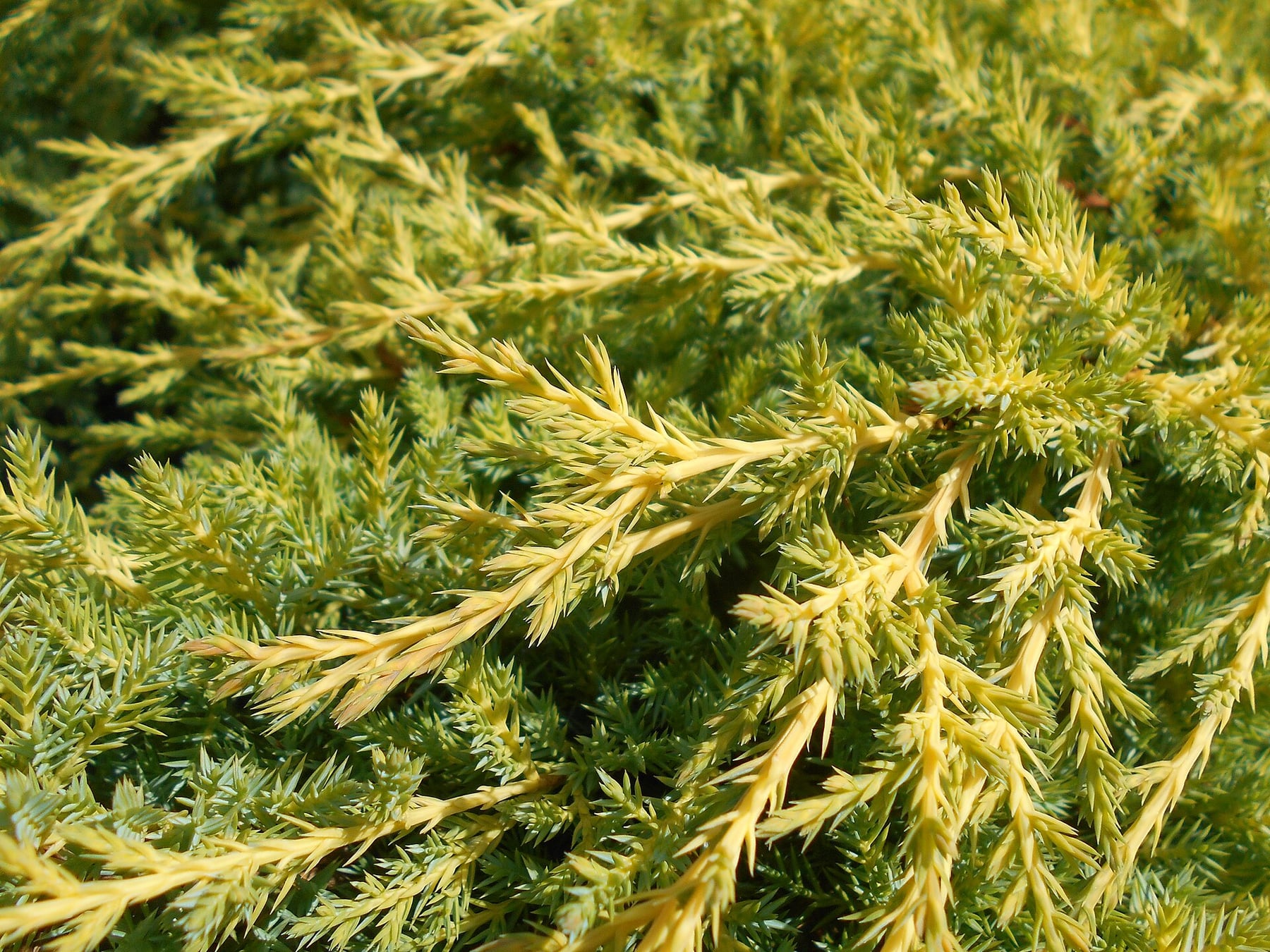
Pfitzer juniper
Juniperus × pfitzeriana
Pfitzer juniper is a spreading, drooping cultivar, widely planted as a low hedge or on roundabouts, whereas wild common juniper grows as an upright or prostrate bush on dry grassland and heathland.
🌿 Other Cupressaceae to discover


ℹ️ Educational profile — do not use it to judge whether a plant is edible or safe.
🌱 This database is constantly evolving — species and information are added and corrected regularly. Spotted a mistake? Report it below.
© Floraneo — profile content is protected; reproduction without permission is prohibited. Photos remain under their own licence (see the credit shown on each photo).