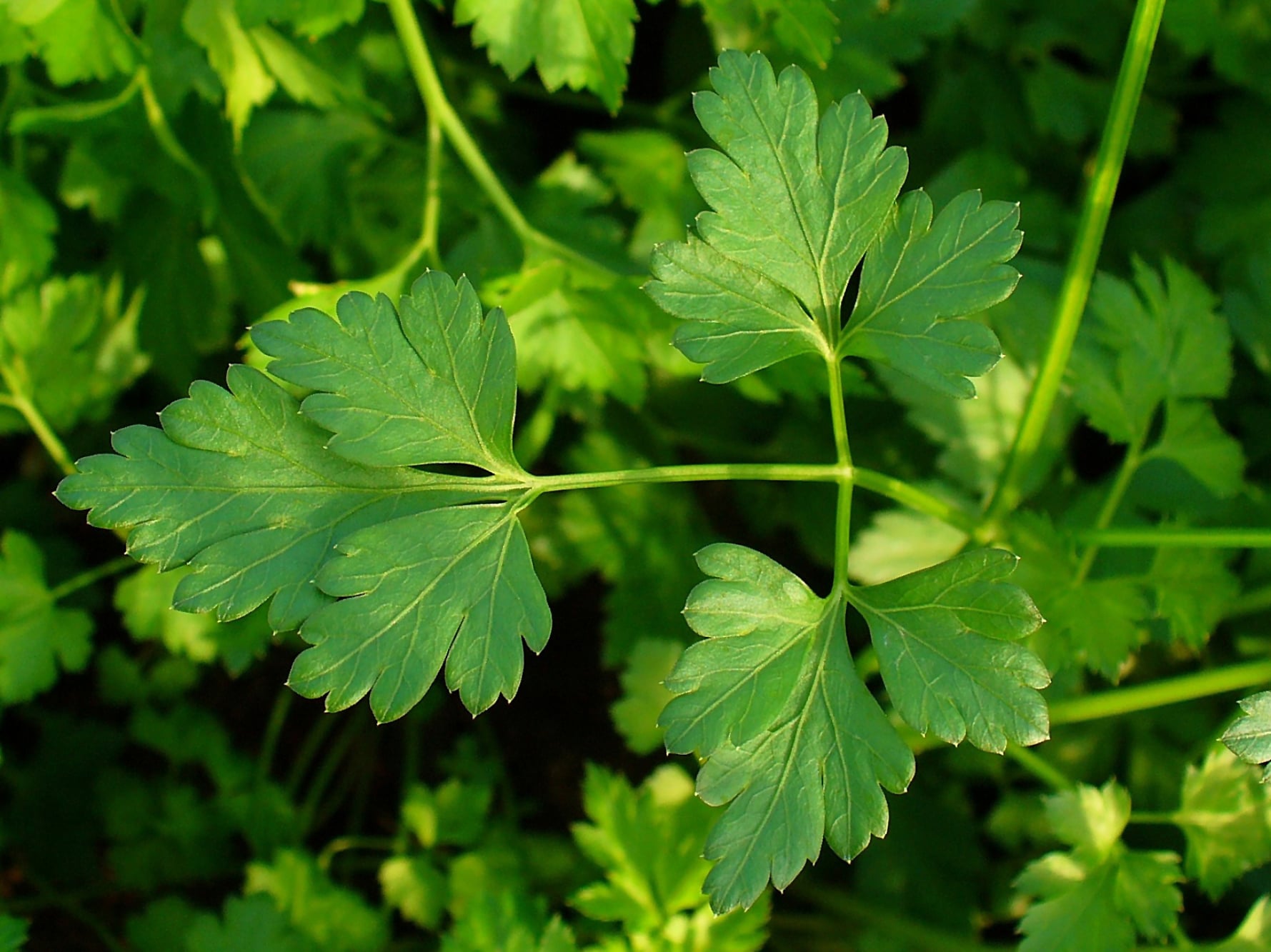
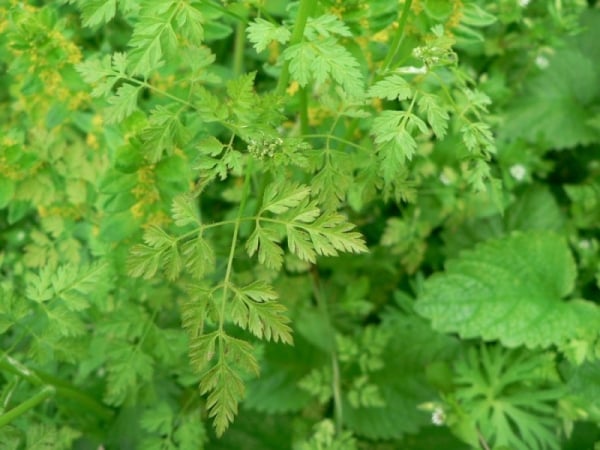
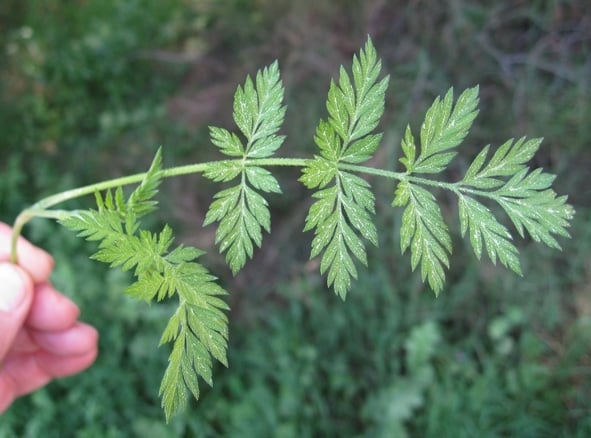
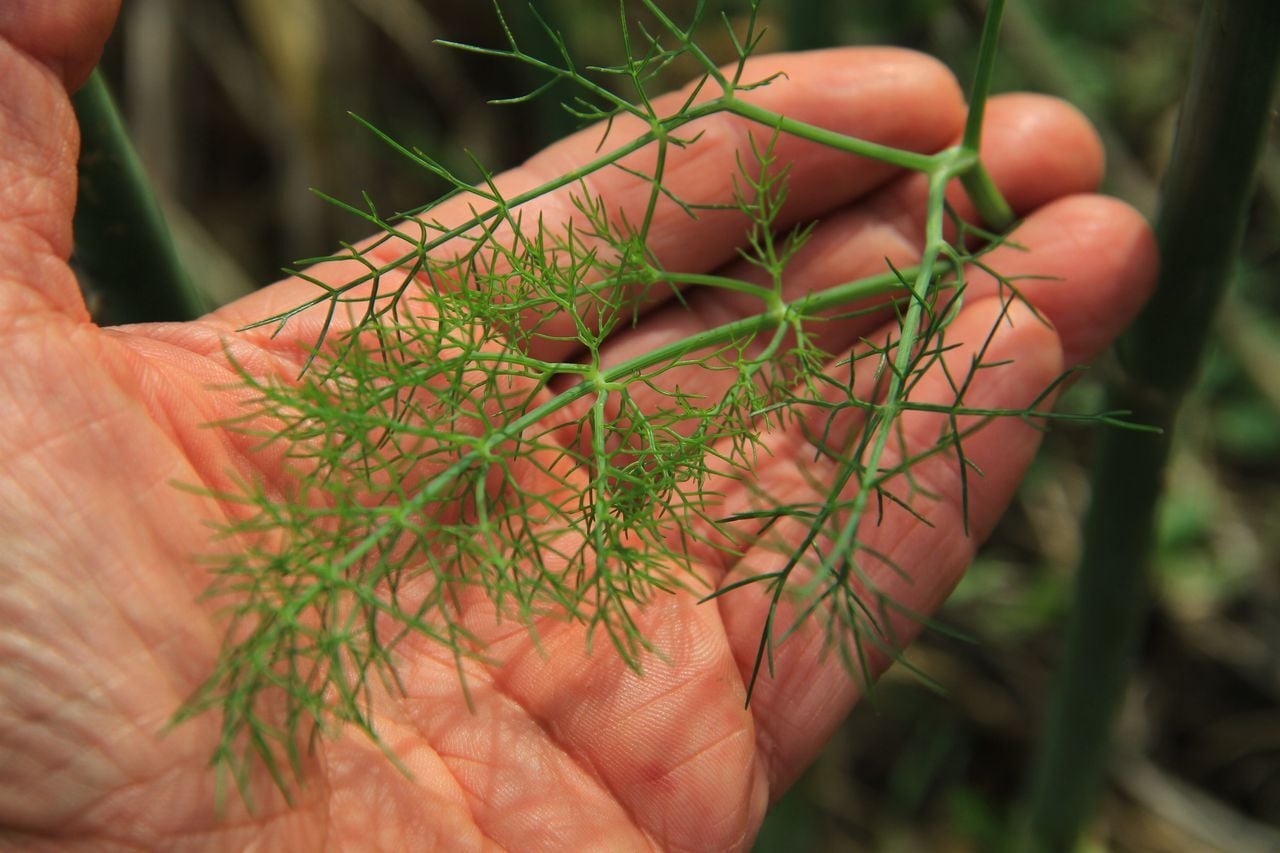
Leaf
H. Zell, Wikimedia · CC BY-SA 3.0

Parsley

Petroselinum crispum (Mill.) Fuss
Family: Apiaceae
20 to 30 cm as a rosette, up to 80 cm in flower
Grown in vegetable gardens and herb gardens
Flowering: June – August (2nd year)
Full sun
Fairly hardy, withstands light frosts

❓ How do you recognise this plant?

Parsley is biennial: it forms a rosette of leaves in the 1st year (the stage harvested for cooking), then flowers and sets seed in the 2nd year before dying. Aromatic, divided green foliage fairly similar within the Apiaceae. Parsley has firmer, glossier leaves, whereas chervil has finer, more tender, paler green leaves with an aniseed scent.
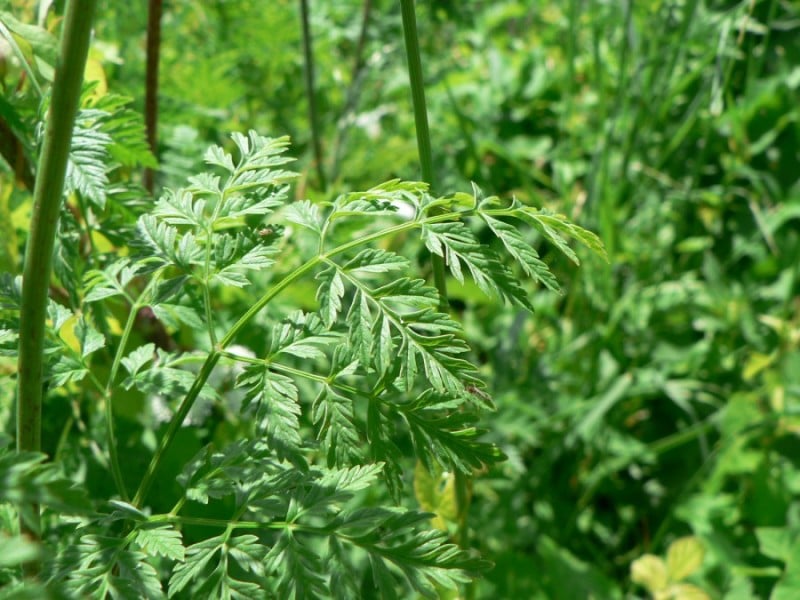
🍃 Leaves
Divided, flat or curled depending on variety, bright green, very aromatic
🌸 Flowers
Small, greenish-yellow, grouped in umbels, appearing in the 2nd year
🍎 Fruits
Small, oval, ribbed achene, typical of the Apiaceae
🪵 Bark
Hollow, ridged herbaceous stem, upright in the 2nd year when it runs to seed
🗺️ Distribution
Grown throughout France; one of the most widely used culinary herbs
🐝 Value for pollinators
Umbels rich in nectar in the 2nd year, appreciated by many pollinating and beneficial insects
✂️ Horticultural uses
Culinary herb grown in the vegetable garden for its fresh leaves, two main forms: flat-leaved parsley and curly parsley

⚠️ Possible toxicity

No known toxicity in normal culinary use

⚠️ Look-alike species

Parsley
Parsley
Petroselinum crispum
Chervil
Chervil
Anthriscus cerefolium

Aromatic, divided green foliage fairly similar within the Apiaceae. Parsley has firmer, glossier leaves, whereas chervil has finer, more tender, paler green leaves with an aniseed scent.

Parsley
Parsley
Petroselinum crispum
Poison hemlock
Poison hemlock
Conium maculatum

Cultivated parsley gives off a characteristic fresh, aromatic smell when crushed, whereas hemlock has a foul, unpleasant smell and a purple-spotted stem. Never eat a parsley-like plant found growing wild without absolute certainty of its identification.
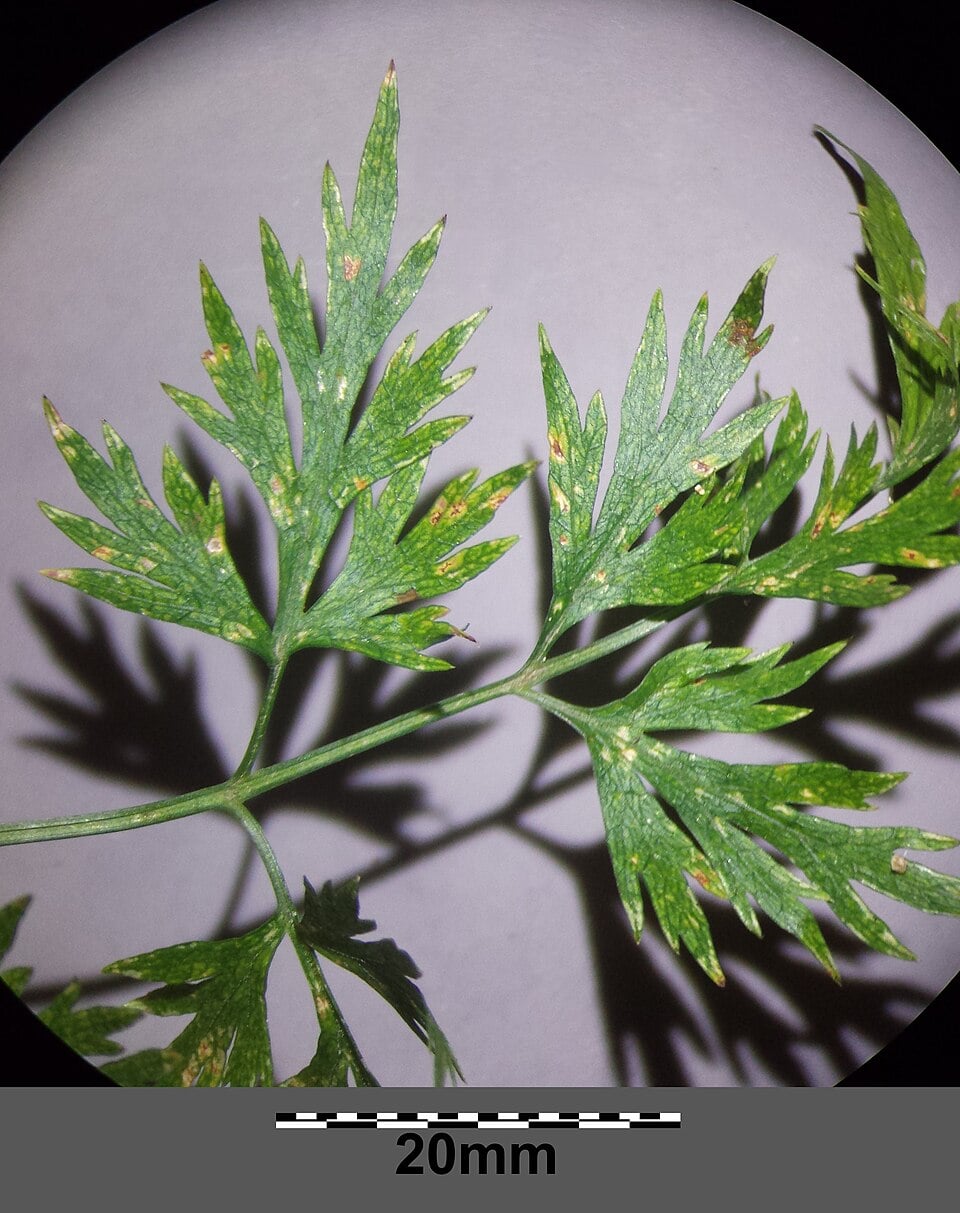
Parsley
Parsley
Petroselinum crispum
Fool's parsley
Fool's parsley
Aethusa cynapium

Fool's parsley gives off a foul smell when crushed, very different from the fresh smell of parsley, and bears long, drooping bracts beneath each umbel. Never eat a parsley-like plant found growing wild without absolute certainty of its identification.

ℹ️ Educational profile — do not use it to judge whether a plant is edible or safe.

🌱 This database is constantly evolving — species and information are added and corrected regularly. Spotted a mistake? Report it below.

© Floraneo — profile content is protected; reproduction without permission is prohibited. Photos remain under their own licence (see the credit shown on each photo).