Its reddish-purple blotches at the base of the stem and its foul smell when crushed are good clues for not confusing it with wild carrot or parsley, but no single feature is a guarantee: if in the slightest doubt, never eat it. Hemlock has a hairless (smooth) stem, often blotched reddish-purple at the base, and a foul smell when crushed, whereas wild carrot has a hairy stem and a carrot smell. These are good clues, but none is a guarantee on its own: if in the slightest doubt, never eat a wild member of the carrot family (Apiaceae).
🍃 Leaves
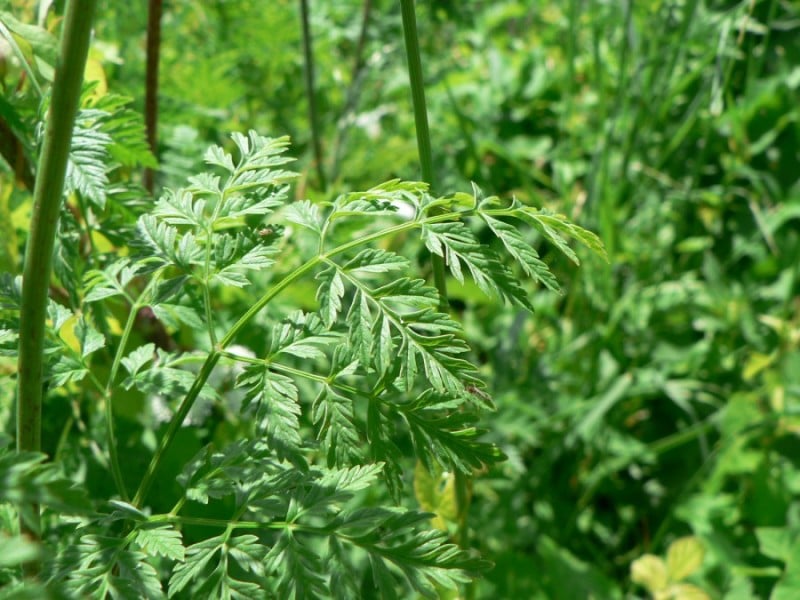
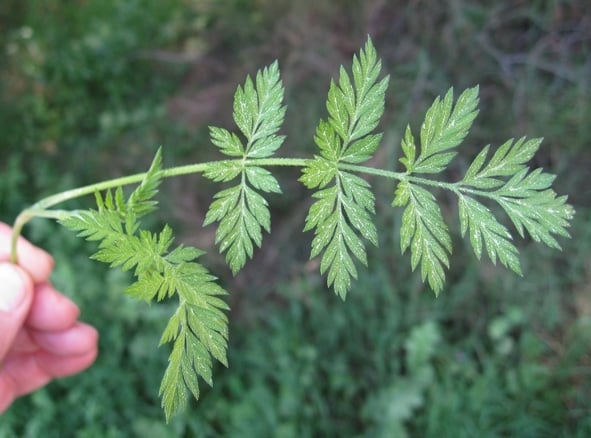
Alternate, finely divided (3 to 4 times pinnate), bright green, hairless, giving off a foul smell when crushed
🌸 Flowers
Small white flowers in compound umbels
🍎 Fruits
Small ribbed fruits, grey-green when ripe
🪵 Bark
Biennial plant with a hollow, grooved, hairless (smooth) stem, blotched reddish-purple at the base
🗺️ Distribution
Europe, western Asia, North Africa; very common throughout France on waste ground and along roadsides
🐝 Value for pollinators
White umbels visited by various insects, but a plant to be excluded from any harvesting or use
✂️ Horticultural uses
No horticultural use; a weed to be eliminated from around vegetable gardens and grazed pastures because of its extreme toxicity
⚠️ Possible toxicity
Extremely toxic, potentially fatal even at a low dose. All parts contain powerful alkaloids (coniine and related compounds), most concentrated in the seeds and roots. Never consume or handle without absolute certainty of identification.
Hemlock has a hairless (smooth) stem, often blotched reddish-purple at the base, and a foul smell when crushed, whereas wild carrot has a hairy stem and a carrot smell. These are good clues, but none is a guarantee on its own: if in the slightest doubt, never eat a wild member of the carrot family (Apiaceae).
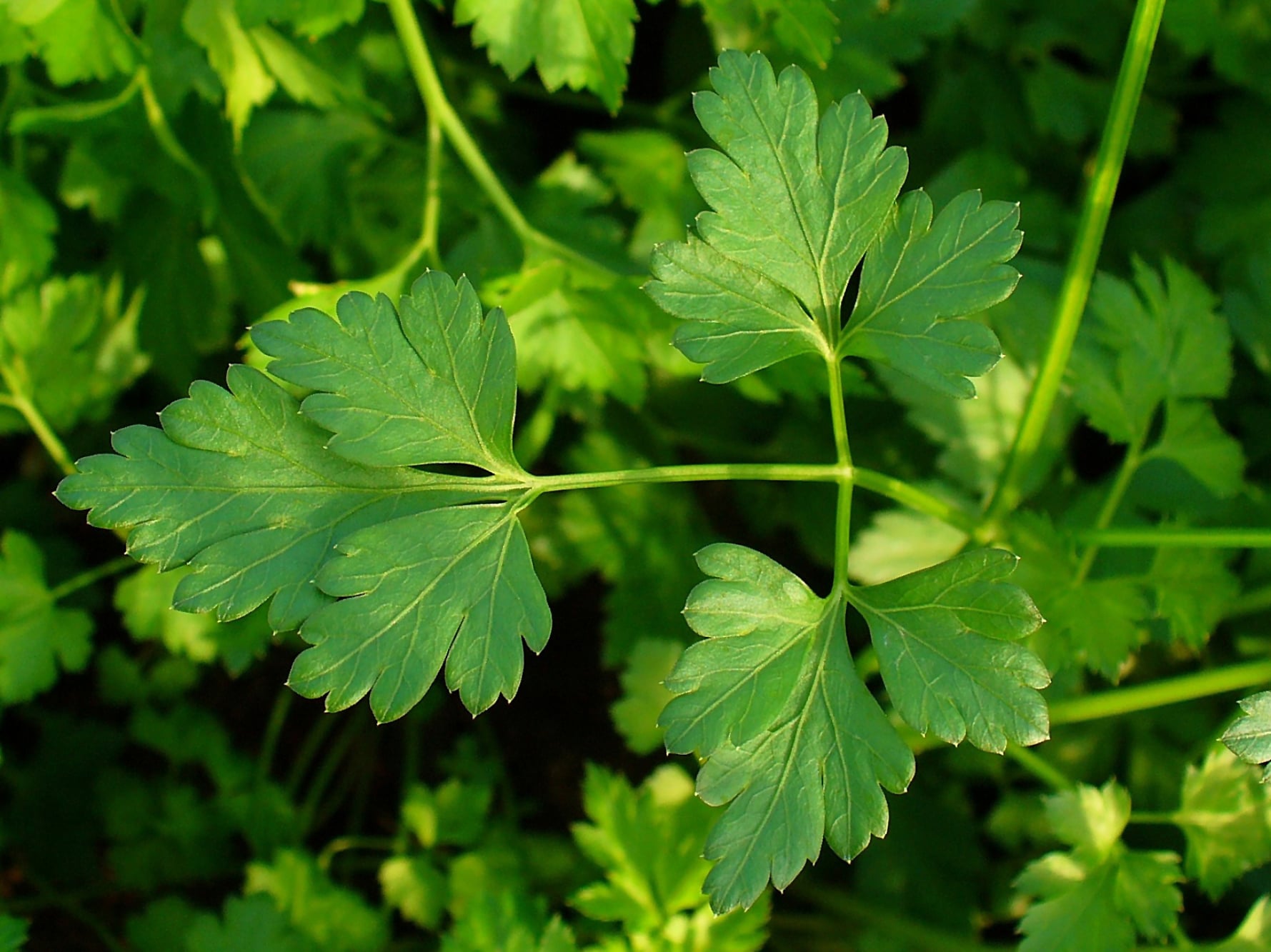
Cultivated parsley gives off a characteristic fresh, aromatic smell when crushed, whereas hemlock has a foul, unpleasant smell and a purple-blotched stem. Never eat a parsley-like plant found in the wild without absolute certainty of identification.