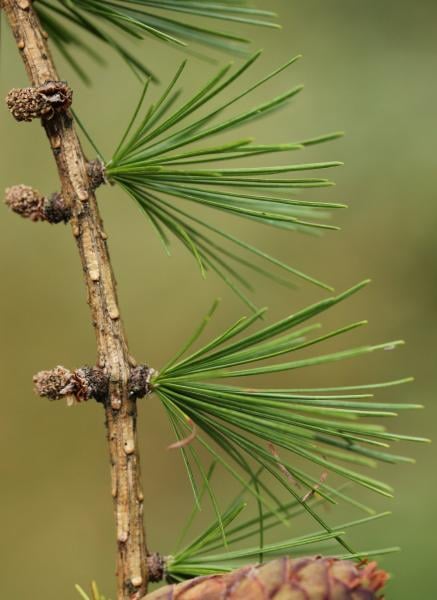
Leaf
Joan Simon, Wikimedia · CC BY-SA 2.0
Mountain pine
Pinus uncinata Ramond ex DC.
Also known as: Pyrenean mountain pine
Family: Pinaceae
Up to 20 m tall, often twisted and stunted near the upper treeline
Mountain forests and heaths (subalpine zone, 1200-2600 m) of the Pyrenees, the Alps, the Jura and the Massif Central
Flowering: May - June
Full sun
Hardy to -30°C
❓ How do you recognise this plant?
Its cones with hook-shaped, recurved scales give it its name, and its wind-twisted trunk often marks the treeline in the mountains. Scots pine has characteristic orange bark in the upper trunk and cones without hooks, whereas Spanish mountain pine, a mountain tree, keeps grey to brown bark over its whole height and has cones whose scales end in a small recurved hook.
🍃 Leaves
Evergreen needles, in pairs, short, thick, dark green
🌸 Flowers
Monoecious species: yellowish male cones and reddish female cones borne on the same tree
🍎 Fruits
Brown, woody, asymmetrical cones with distinctly hook-shaped recurved scales, the feature that gives the species its name
🪵 Bark
Grey to reddish-brown, thick and fissured on old trees
🗺️ Distribution
Pyrenees, Alps, Jura and Massif Central, in pure stands in the subalpine zone
🐝 Value for pollinators
Wind-pollinated (anemophilous), of no particular interest to pollinators
✂️ Horticultural uses
Little planted in gardens; sometimes used as a bonsai for its wind-tortured habit
⚠️ Look-alike species
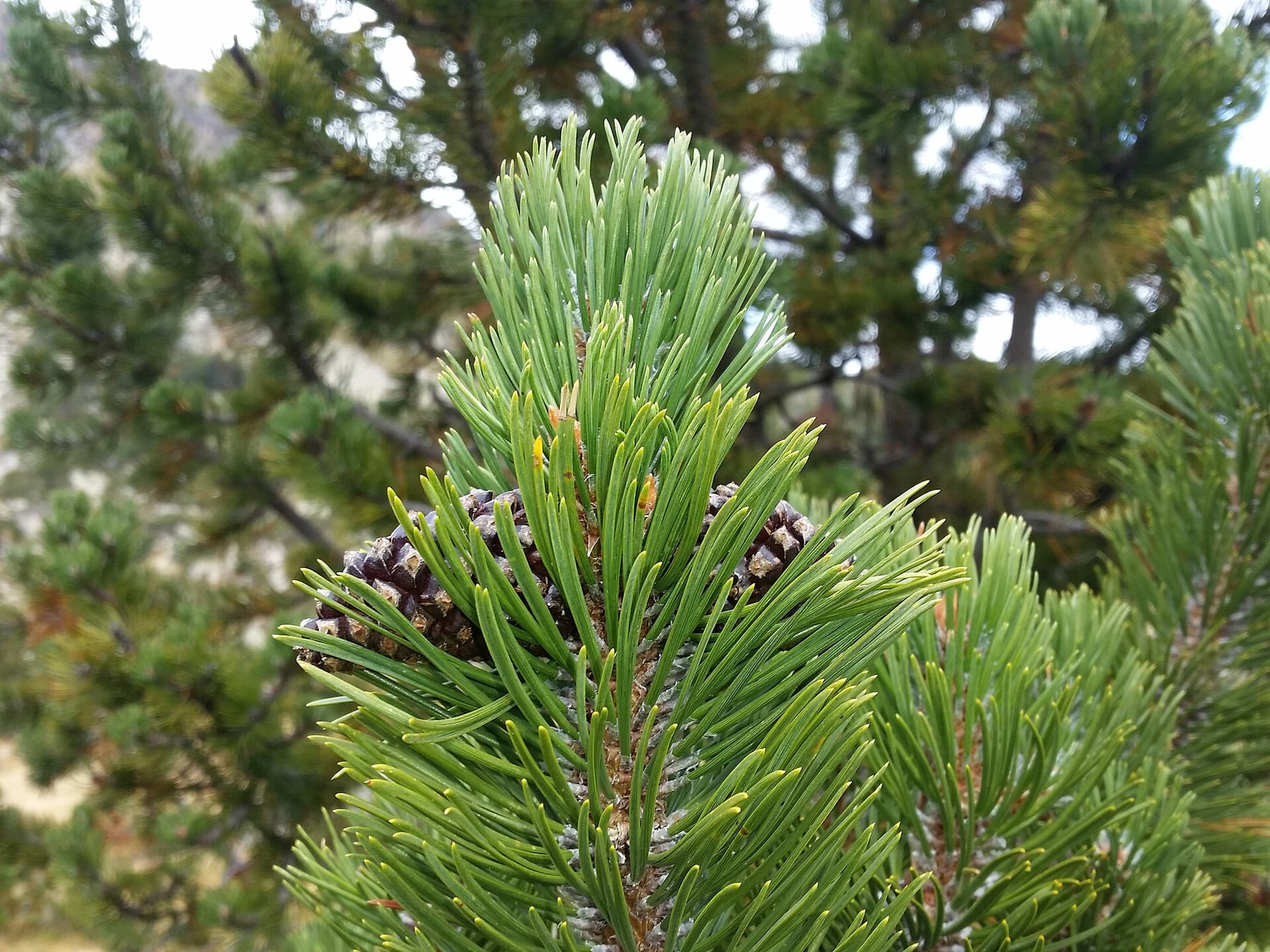
Mountain pine
Pinus uncinata
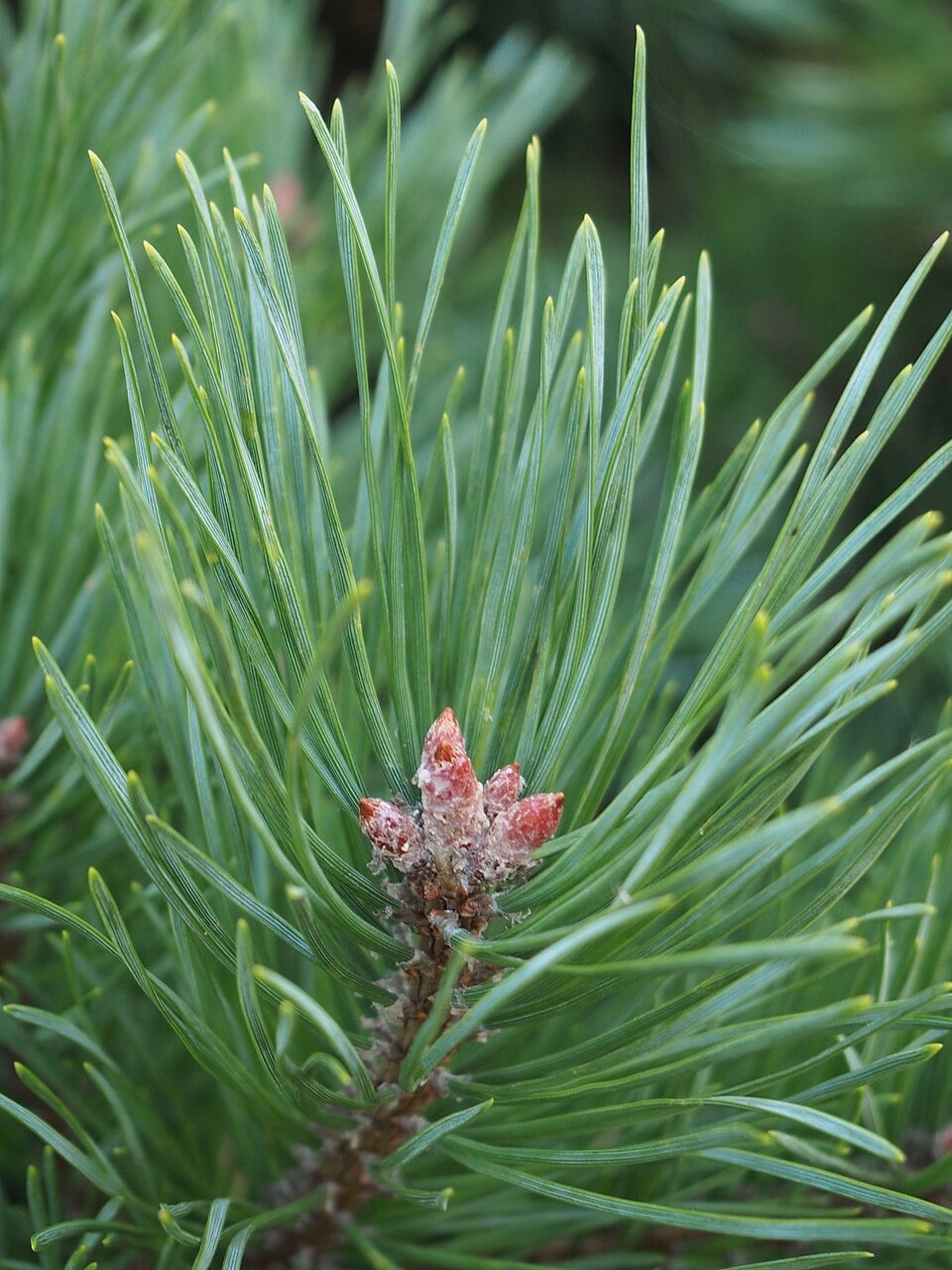
Scots pine
Pinus sylvestris
Scots pine has characteristic orange bark in the upper trunk and cones without hooks, whereas Spanish mountain pine, a mountain tree, keeps grey to brown bark over its whole height and has cones whose scales end in a small recurved hook.
🌿 Other Pinaceae to discover
ℹ️ Educational profile — do not use it to judge whether a plant is edible or safe.
🌱 This database is constantly evolving — species and information are added and corrected regularly. Spotted a mistake? Report it below.
© Floraneo — profile content is protected; reproduction without permission is prohibited. Photos remain under their own licence (see the credit shown on each photo).