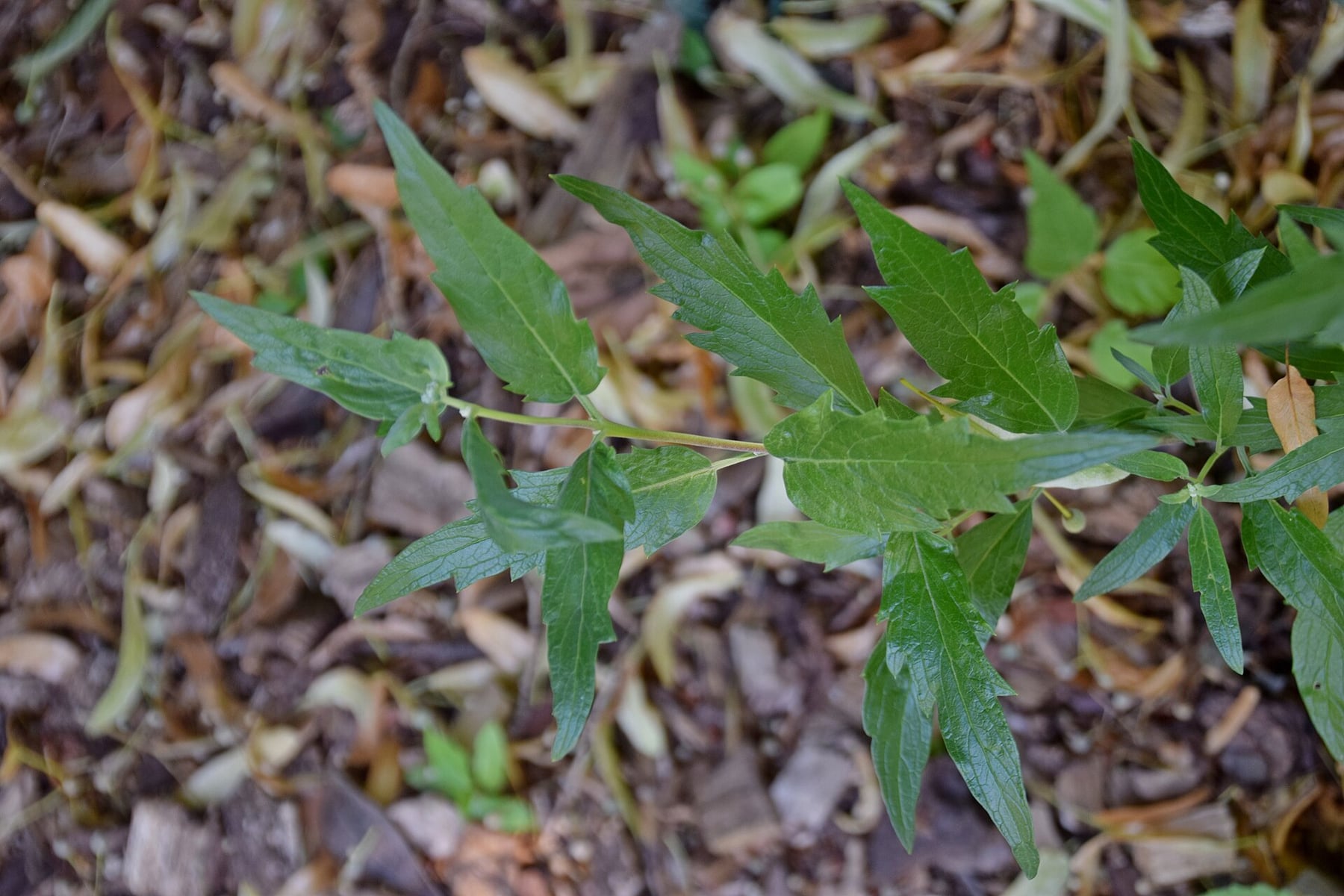
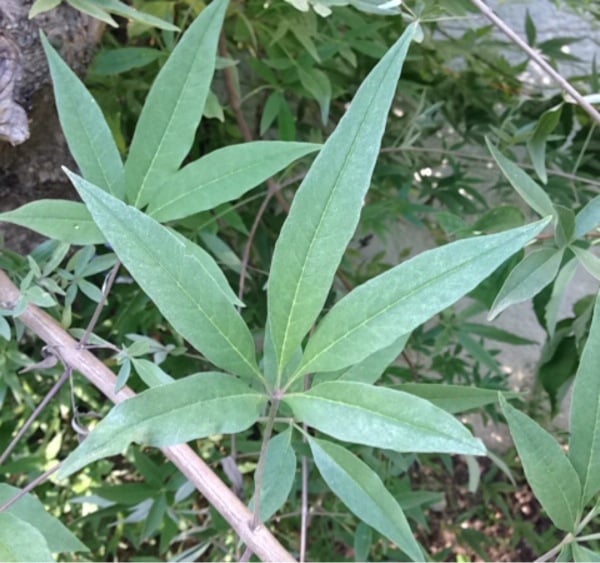
It is called "cardiaca" because it was traditionally used against palpitations and anxiety: the plant was said to ease the heart of nervous people. Motherwort has deeply lobed leaves, dark green on both faces, on a square stem, and pink two-lipped flowers in whorls; mugwort has lobed leaves that are dark green above but white-felted beneath, on a round stem, and tiny reddish-brown flowerheads.
🍃 Leaves
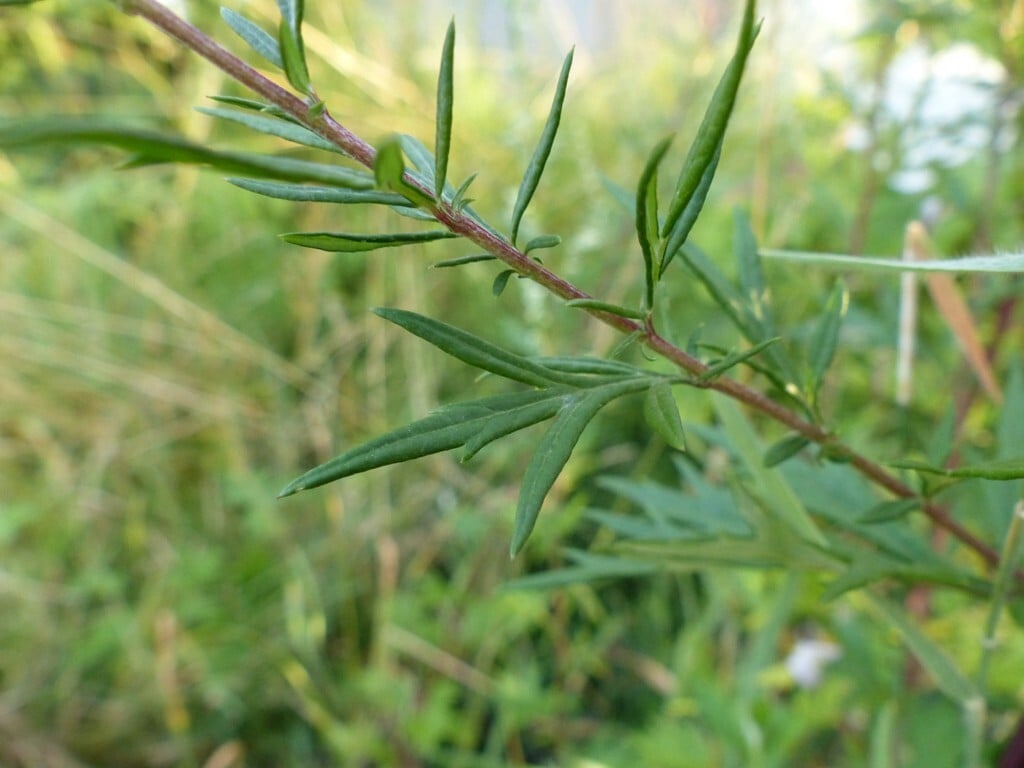
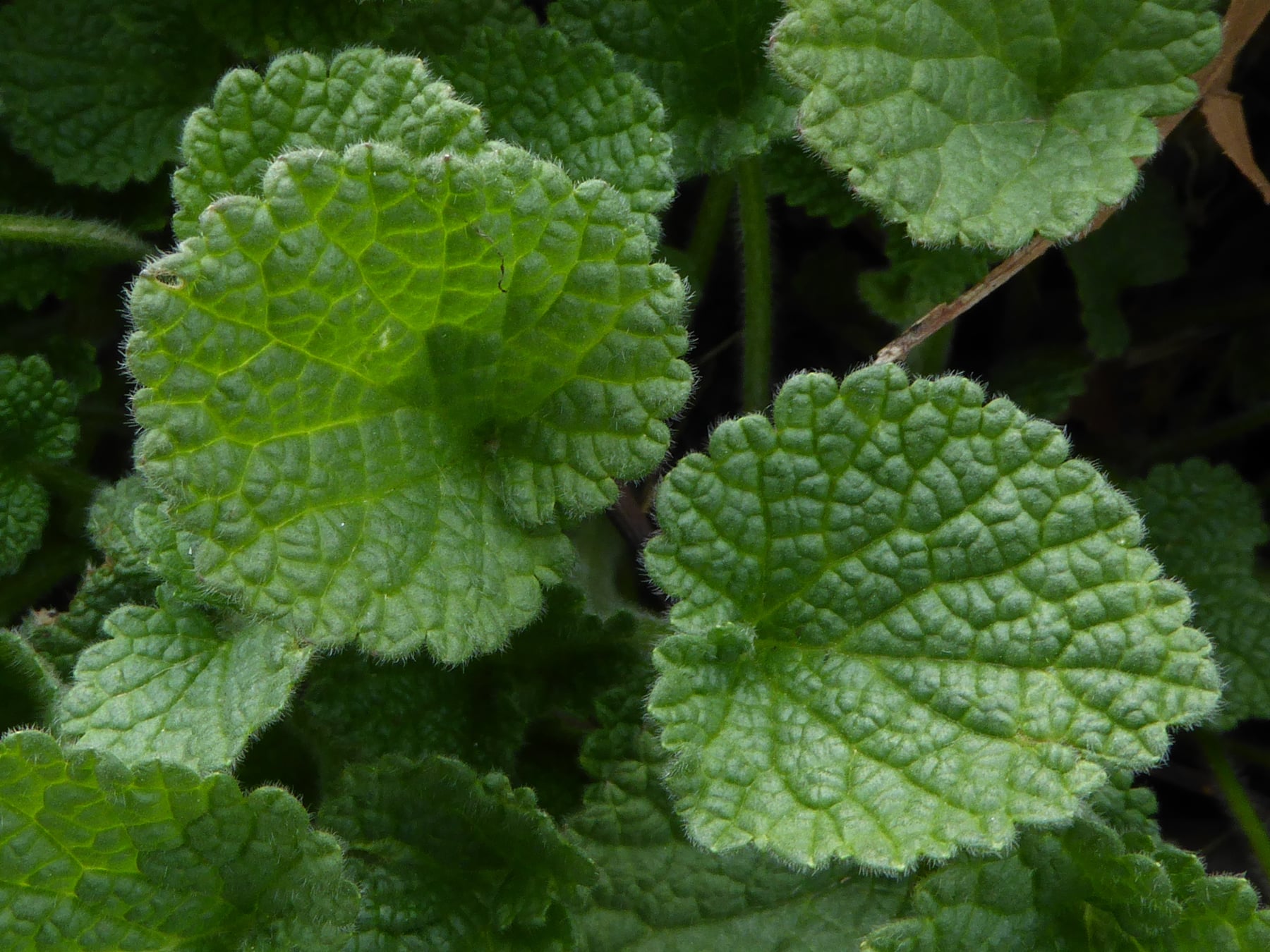
Opposite, dark green, the lower ones deeply divided into 3 to 5 pointed lobes, the upper ones smaller and three-lobed
🌸 Flowers
Small two-lipped pink flowers 10 to 12 mm long, with a hairy upper lip, grouped in dense whorls in the leaf axils
🍎 Fruits
Four small brown nutlets in a calyx with spiny teeth
🌿 Stem and habit
Square, upright, branched, slightly hairy stem
Distribution, pollinators, uses▾
🗺️ Distribution
Europe and temperate Asia; naturalised in North America
🐝 Value for pollinators
Flowers visited by bumblebees and bees
✂️ Horticultural uses
An old medicinal plant (for the heart and nerves), sometimes grown in herb gardens
⚠️ Possible toxicity
Not recommended for pregnant women (effect on the womb); medicinal use to be avoided without medical advice
Motherwort has deeply lobed leaves, dark green on both faces, on a square stem, and pink two-lipped flowers in whorls; mugwort has lobed leaves that are dark green above but white-felted beneath, on a round stem, and tiny reddish-brown flowerheads.
Motherwort has lower leaves deeply divided into pointed lobes and whorls of pink flowers with a spiny calyx; black horehound has oval leaves that are simply toothed, a foul smell and purplish-pink flowers in whorls too, but with a funnel-shaped calyx.