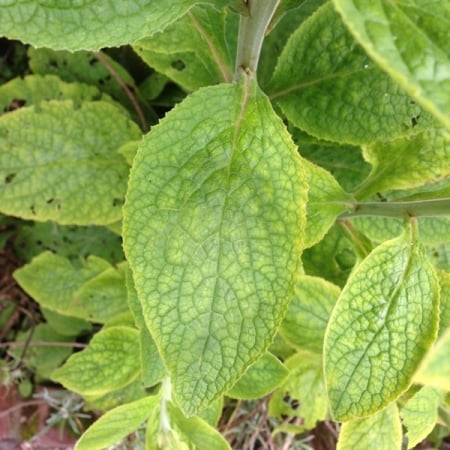
Leaf
Hervé GOËAU, Tela Botanica · CC BY-SA 2.0

Foxglove

Digitalis purpurea L.
Also known as: Common foxglove, Purple foxglove
Family: Plantaginaceae
80 cm to 1.5 m tall
Clearings, felled woodland, banks on acid soil
Flowering: June – August
Full sun
Part shade
Hardy to -15°C

❓ How do you recognise this plant?

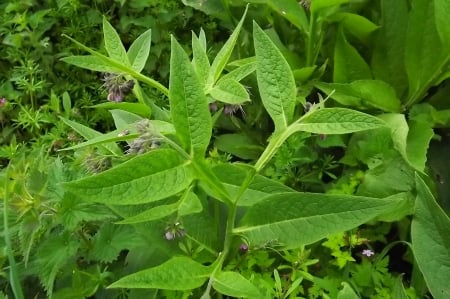
The whole plant is very toxic — it is also the source of a major heart medicine. Touch helps to tell them apart before flowering: comfrey has rough leaves, rasping like sandpaper, whereas foxglove has soft leaves, downy on the underside. Always check texture and venation before any harvesting — if in the slightest doubt, abstain: foxglove is deadly.
🍃 Leaves
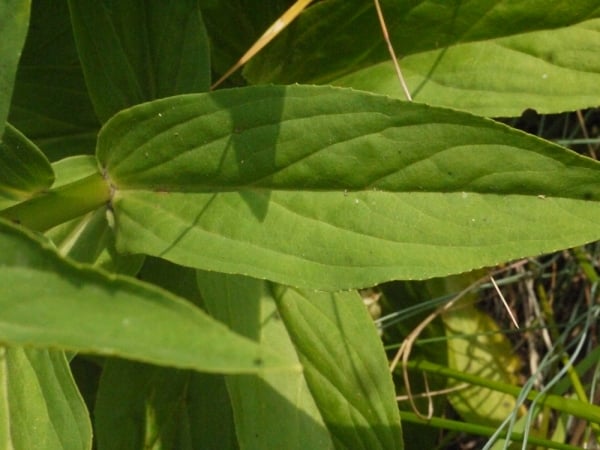
Large, ovate, puckered, downy, in a rosette in the first year
🌸 Flowers
Large purple bells spotted inside, in a long one-sided raceme
🍎 Fruits
Capsules with many small seeds
🪵 Bark
Biennial or short-lived perennial herbaceous plant, first forming a rosette of large leaves then an upright flowering spike.
🗺️ Distribution
Western Europe; very common in felled woodland, banks and acid heaths in France.
🐝 Value for pollinators
Large spikes of pink tubular flowers adapted to bumblebees, which pollinate them as they work from the bottom to the top of the spike.
✂️ Horticultural uses
Shaded borders, light woodland, naturalistic gardens; to be kept out of reach of children and animals because of its toxicity.

⚠️ Possible toxicity

Toxic in all its parts (cardiotonic glycosides such as digitoxin); ingestion can be fatal, including for livestock. Never eat.

⚠️ Look-alike species

Foxglove
Foxglove
Digitalis purpurea
Common comfrey
Common comfrey
Symphytum officinale

Touch helps to tell them apart before flowering: comfrey has rough leaves, rasping like sandpaper, whereas foxglove has soft leaves, downy on the underside. Always check texture and venation before any harvesting — if in the slightest doubt, abstain: foxglove is deadly.

Foxglove
Foxglove
Digitalis purpurea
Straw foxglove
Straw foxglove
Digitalis lutea

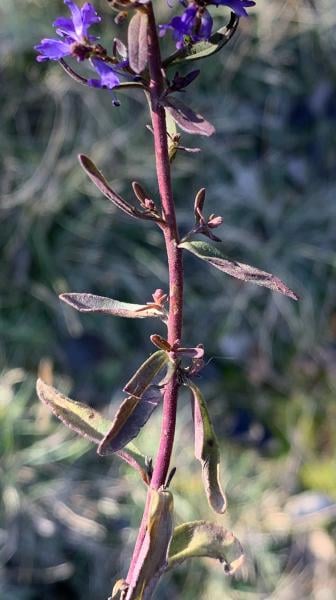
The foxglove has large pink-purple bells spotted inside, in a dense spike, whereas the straw foxglove has smaller, pale yellow flowers veined with brown, in a looser spike.

ℹ️ Educational profile — do not use it to judge whether a plant is edible or safe.

🌱 This database is constantly evolving — species and information are added and corrected regularly. Spotted a mistake? Report it below.

© Floraneo — profile content is protected; reproduction without permission is prohibited. Photos remain under their own licence (see the credit shown on each photo).