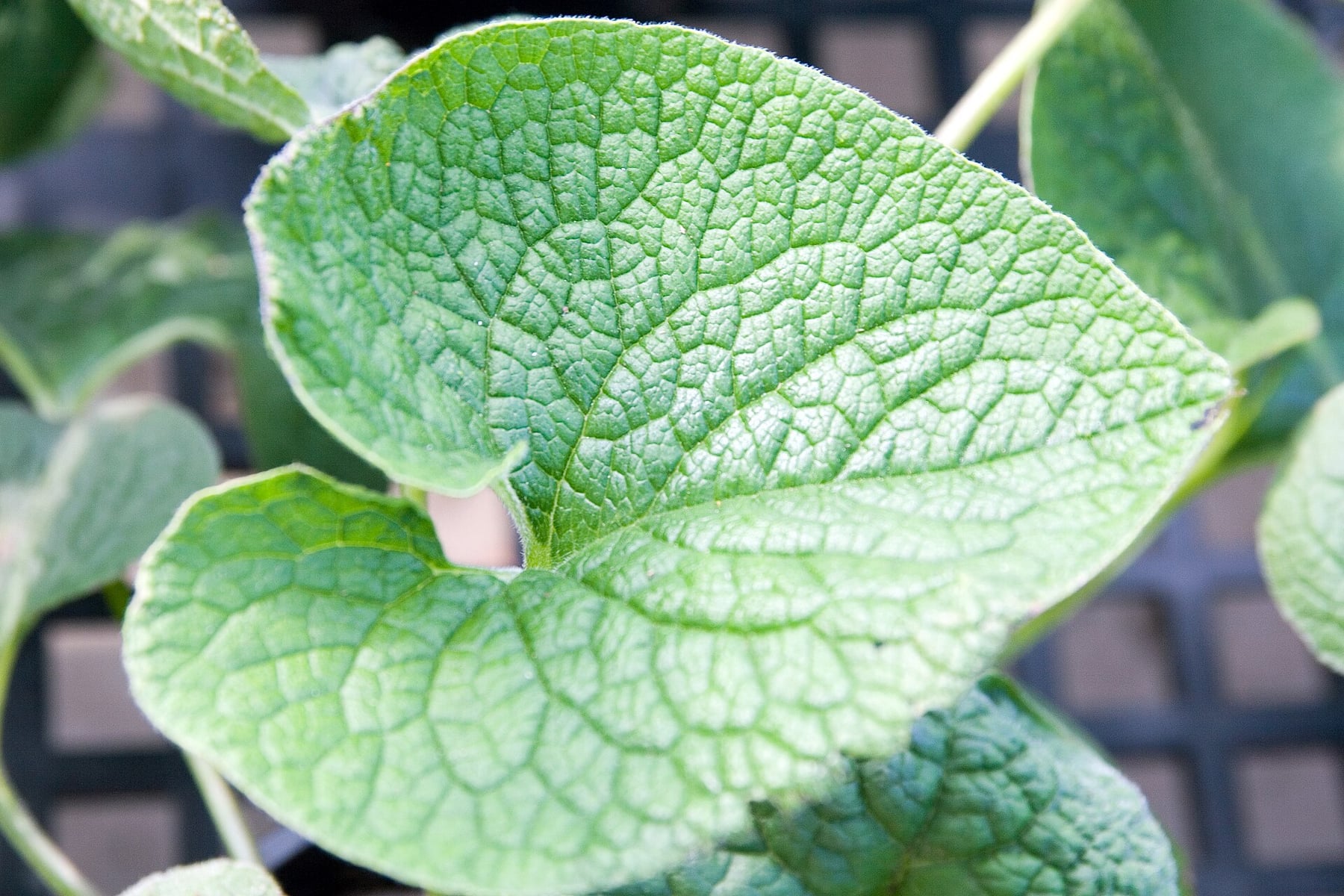
Leaf
Florent Beck, Tela Botanica · CC BY-SA 2.0
Common comfrey
Symphytum officinale L.
Also known as: Comfrey
Family: Boraginaceae
50 cm to 1.2 m tall
Riverbanks, damp meadows, ditches
Flowering: May – July
Full sun
Part shade
Very hardy, to -25°C
❓ How do you recognise this plant?
Leaves as rough as sandpaper — you feel them before you see them. Touch helps decide before flowering: comfrey has rough leaves, rasping like sandpaper, whereas foxglove has soft leaves, downy on the underside. Always check texture and venation before any harvest — if in the slightest doubt, refrain: foxglove is deadly.
🍃 Leaves
Large, lanceolate, rough to the touch, decurrent on the stem
🌸 Flowers
Pendent bells, violet, pink or cream depending on the plant
🍎 Fruits
Small shiny black achenes
🪵 Bark
Sturdy, winged herbaceous stem, very rough
🗺️ Distribution
Europe, western Asia; very common in damp places, ditches and riverbanks in France.
🐝 Value for pollinators
Drooping bell-shaped flowers, violet or cream, very rich in nectar, much visited by bumblebees.
✂️ Horticultural uses
Naturalistic gardens, pond edges; leaves traditionally used to make a fertilising liquid feed in the vegetable garden.
⚠️ Possible toxicity
Contains pyrrolizidine alkaloids that are toxic to the liver with repeated internal use; traditional external use (poultices) without equivalent risk.
⚠️ Look-alike species
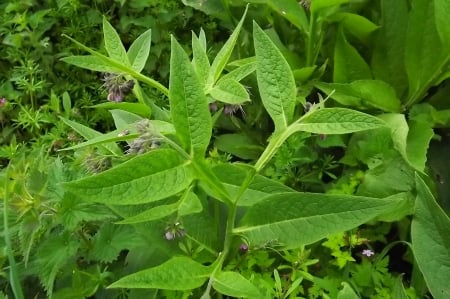
Common comfrey
Symphytum officinale
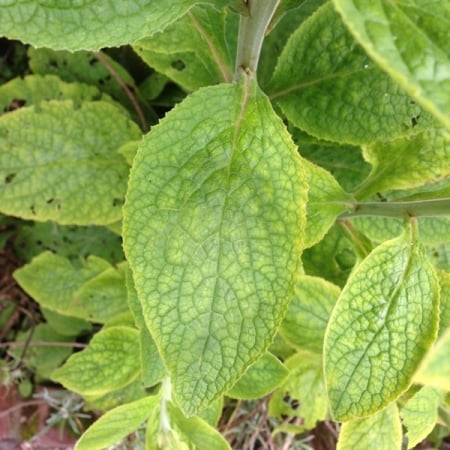
Foxglove
Digitalis purpurea
Touch helps decide before flowering: comfrey has rough leaves, rasping like sandpaper, whereas foxglove has soft leaves, downy on the underside. Always check texture and venation before any harvest — if in the slightest doubt, refrain: foxglove is deadly.
🌿 Other Boraginaceae to discover



ℹ️ Educational profile — do not use it to judge whether a plant is edible or safe.
🌱 This database is constantly evolving — species and information are added and corrected regularly. Spotted a mistake? Report it below.
© Floraneo — profile content is protected; reproduction without permission is prohibited. Photos remain under their own licence (see the credit shown on each photo).