Leaf
Liliane Roubaudi, Tela Botanica · CC BY-SA 2.0
Straw foxglove
Digitalis lutea L.
Also known as: Small yellow foxglove, Yellow foxglove
Family: Plantaginaceae
40 to 80 cm tall
Woodland edges, banks, gardens, chalky soils
Flowering: June – August
Full sun
Part shade
Hardy to -25°C
❓ How do you recognise this plant?
More discreet than the foxglove, its small pale yellow flowers open gradually from the bottom to the top of the spike. The foxglove has large pink-purple bells spotted inside, in a dense spike, whereas the straw foxglove has smaller, pale yellow flowers veined with brown, in a looser spike.
🍃 Leaves
Lanceolate, shiny, hairless, bright green
🌸 Flowers
Long upright spikes of small pale yellow bells
🍎 Fruits
Small ovoid capsules
🪵 Bark
Basal rosette in the first year, flowering stem in the second
🗺️ Distribution
Central and southern Europe; present but localised in light woodland and chalky woodland edges in France.
🐝 Value for pollinators
Pale yellow tubular flowers adapted to bumblebees, the only insects strong enough to enter the corolla.
✂️ Horticultural uses
Shaded borders, light woodland, borders; to be kept out of reach of children and animals because of its toxicity.
⚠️ Possible toxicity
Toxic in all its parts (cardiotonic glycosides such as digitalin); ingestion can cause serious heart disorders.
⚠️ Look-alike species
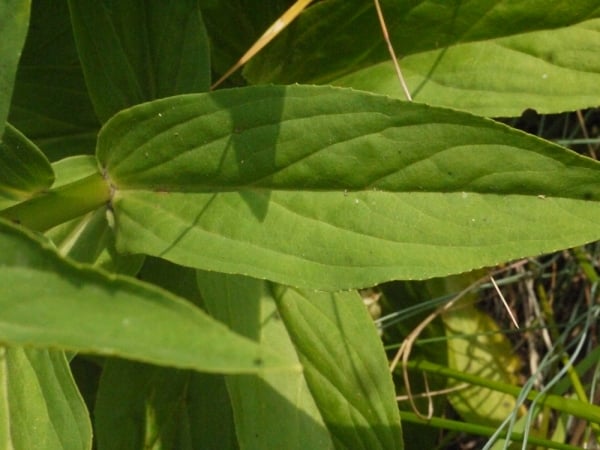
Straw foxglove
Digitalis lutea
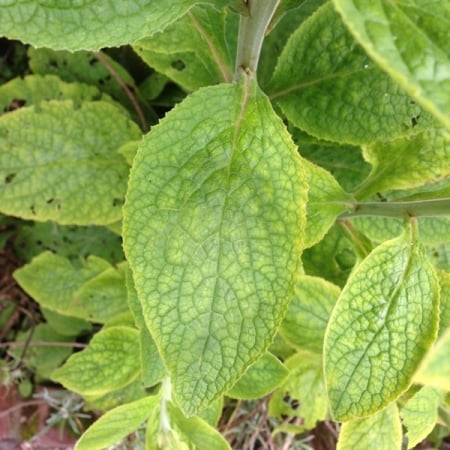
Foxglove
Digitalis purpurea
The foxglove has large pink-purple bells spotted inside, in a dense spike, whereas the straw foxglove has smaller, pale yellow flowers veined with brown, in a looser spike.
🌿 Other Plantaginaceae to discover


ℹ️ Educational profile — do not use it to judge whether a plant is edible or safe.
🌱 This database is constantly evolving — species and information are added and corrected regularly. Spotted a mistake? Report it below.
© Floraneo — profile content is protected; reproduction without permission is prohibited. Photos remain under their own licence (see the credit shown on each photo).