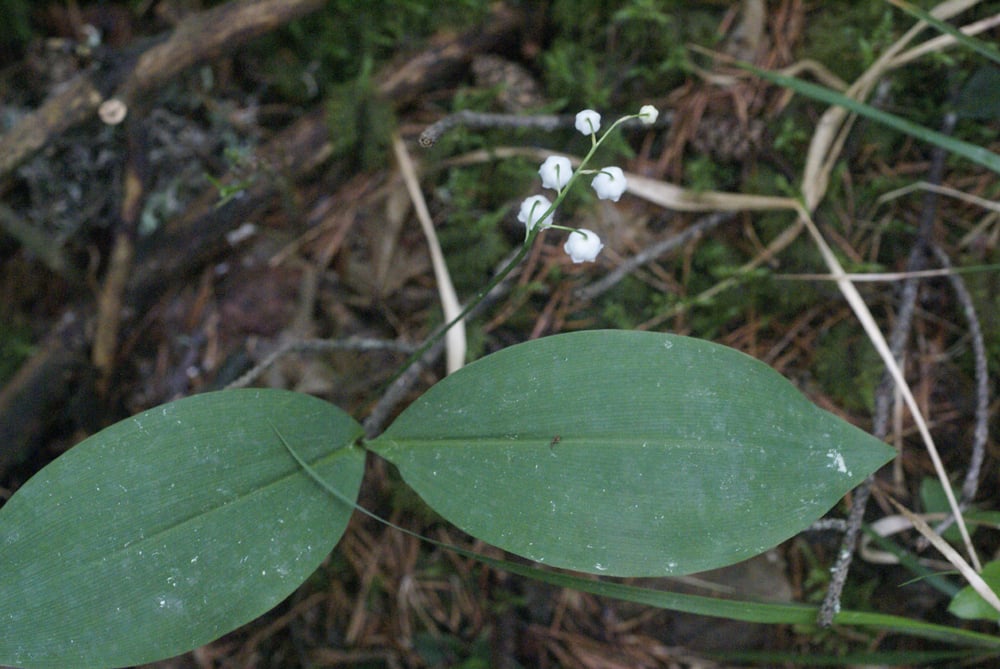
Leaf
Jean-Jacques Houdré, Tela Botanica · CC BY-SA 2.0
English bluebell
Hyacinthoides non-scripta
Also known as: Common bluebell, Bluebell, Wild hyacinth
Family: Asparagaceae
20 to 40 cm tall
Cool woodland, spring carpets
Flowering: April – May
Part shade
Shade
Very hardy, to -20°C
❓ How do you recognise this plant?
All the bells hang on the same side of the arching stem — a clear identification feature.
🍃 Leaves
Long, narrow, all basal, fleshy
🌸 Flowers
Drooping blue-violet bells, leaning to one side of the stem only
🍎 Fruits
Small capsule with black seeds
🪵 Bark
Underground bulb, herbaceous plant
🗺️ Distribution
Western Europe; common as carpets in cool woodland, especially in Atlantic France.
🐝 Value for pollinators
Fragrant blue flowers in drooping bells, visited by bumblebees and bees in spring.
✂️ Horticultural uses
Naturalising in drifts under trees and shrubs; the sheet-of-blue effect is much sought after in spring.
⚠️ Possible toxicity
Bulb and plant toxic if ingested (glycosides), like other members of the lily family; not to be confused with the cultivated hyacinth.
🌿 Other Asparagaceae to discover



ℹ️ Educational profile — do not use it to judge whether a plant is edible or safe.
🌱 This database is constantly evolving — species and information are added and corrected regularly. Spotted a mistake? Report it below.
© Floraneo — profile content is protected; reproduction without permission is prohibited. Photos remain under their own licence (see the credit shown on each photo).