Leaf
Salicyna, Wikimedia · CC BY-SA 4.0
Common thyme
Thymus vulgaris L.
Also known as: Garden thyme, Thyme
Family: Lamiaceae
10 to 30 cm tall
Garrigue, vegetable gardens, rock gardens, dry, free-draining soils
Flowering: April – June
Full sun
Hardy to -20°C
❓ How do you recognise this plant?
One of the most widely grown aromatic herbs in the world, indispensable to the Mediterranean bouquet garni. Common thyme has an upright, bushy habit with stems that are woody at the base and narrow, rolled leaves, whereas wild thyme is creeping, forming a low mat, with broader, ovate leaves.
🍃 Leaves
Evergreen, tiny, linear, grey-green, very aromatic
🌸 Flowers
Small pale pink to mauve flowers in short spikes, very rich in nectar
🍎 Fruits
Small dry achenes
🪵 Bark
Low woody stems, cushion-forming habit
🗺️ Distribution
Western Mediterranean basin; widely grown and sometimes naturalised on dry slopes in southern France.
🐝 Value for pollinators
Small mauve flowers very rich in nectar, extremely attractive to bees all summer.
✂️ Horticultural uses
Aromatic edgings, rock gardens, vegetable garden; evergreen subshrub essential to Mediterranean gardens.
⚠️ Possible toxicity
No toxicity at usual culinary doses; concentrated essential oil is not recommended for uncontrolled internal use.
⚠️ Look-alike species
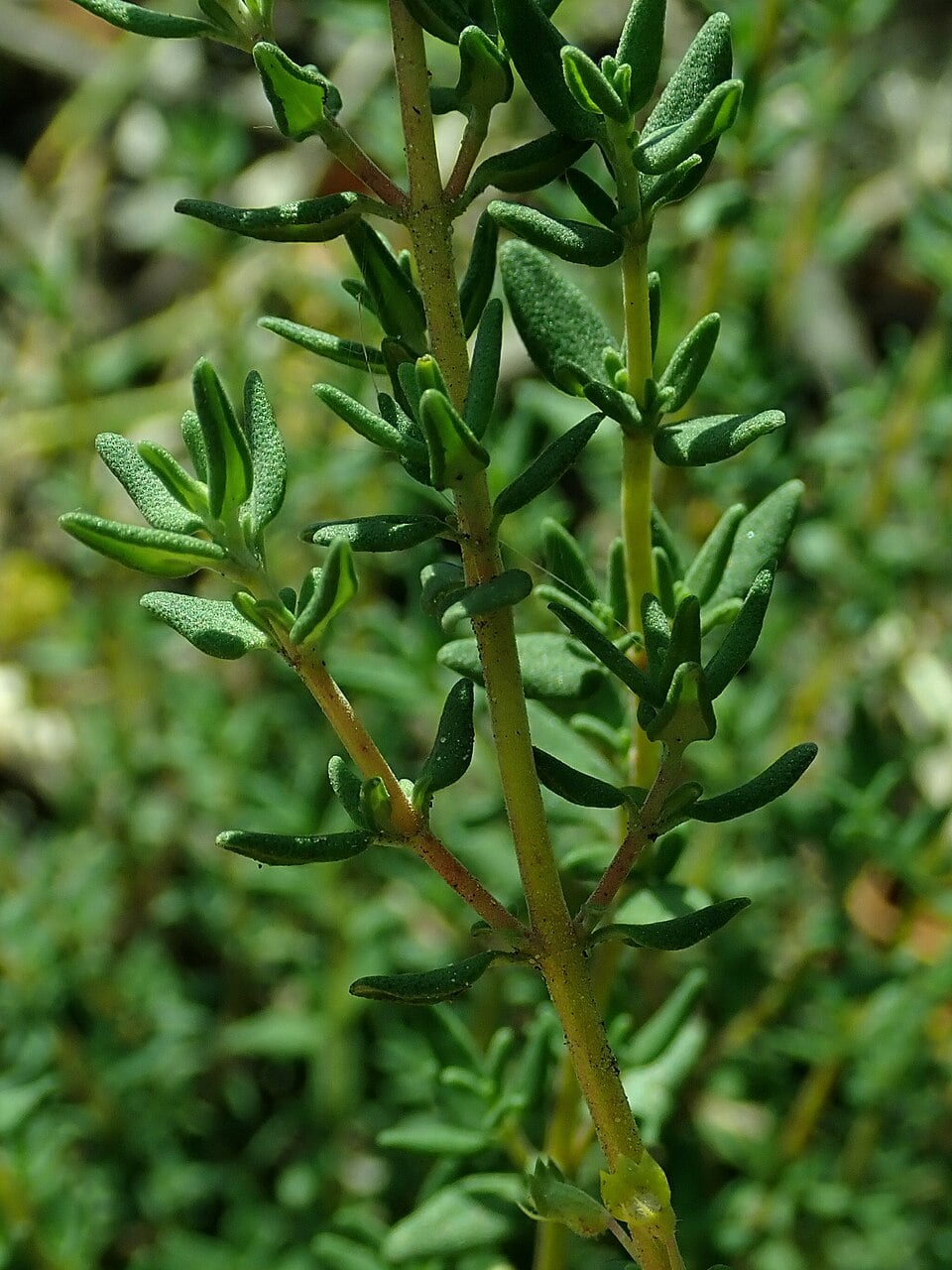
Common thyme
Thymus vulgaris
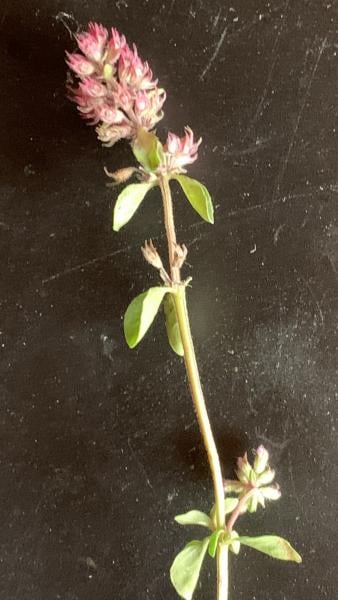
Wild thyme
Thymus serpyllum
Common thyme has an upright, bushy habit with stems that are woody at the base and narrow, rolled leaves, whereas wild thyme is creeping, forming a low mat, with broader, ovate leaves.
🌿 Other Lamiaceae to discover


ℹ️ Educational profile — do not use it to judge whether a plant is edible or safe.
🌱 This database is constantly evolving — species and information are added and corrected regularly. Spotted a mistake? Report it below.
© Floraneo — profile content is protected; reproduction without permission is prohibited. Photos remain under their own licence (see the credit shown on each photo).