Leaf
Marija Gajić · CC BY-SA 4.0
Chinese arborvitae
Platycladus orientalis (L.) Franco
Also known as: Oriental arborvitae, Chinese thuja, Oriental thuja
Family: Cupressaceae
2 to 6 m tall depending on the cultivar, sometimes more as a specimen
Planted as a specimen, in a clipped hedge or as topiary in gardens, cemeteries and parks; very common in France
Flowering: March - April (inconspicuous flowering, conifer)
Full sun
Part shade
Hardy to -15/-20°C
❓ How do you recognise this plant?
Although it is called a 'thuja', it actually belongs to a different genus (Platycladus) and is distinguished by its cones shaped like small fleshy horns. Western red cedar has foliage flattened horizontally in a fan, often marked with white beneath, and a pineapple smell when crushed, whereas Chinese arborvitae has twigs held vertically (not flattened) and a different resinous smell.
🍃 Leaves
Foliage of fine scales arranged in vertical fans, bright green to yellow-green, unlike the flatter foliage of Eastern white cedar
🌸 Flowers
Yellowish male cones and blue-green female cones, inconspicuous in spring
🍎 Fruits
Small ovoid woody cones with fleshy scales curved back like a 'horn', blue-green then brown when ripe
🪵 Bark
Reddish-brown bark peeling in fine fibrous strips
🗺️ Distribution
Native to eastern Asia (China, Korea), widely naturalised and planted throughout France for centuries
🐝 Value for pollinators
Little nectar, but its dense foliage serves as a winter refuge for birds and small mammals
✂️ Horticultural uses
Widely used in clipped hedges, as topiary or as a specimen, often confused with Eastern white cedar although it belongs to a different genus
⚠️ Possible toxicity
Foliage toxic if eaten in large amounts
⚠️ Look-alike species
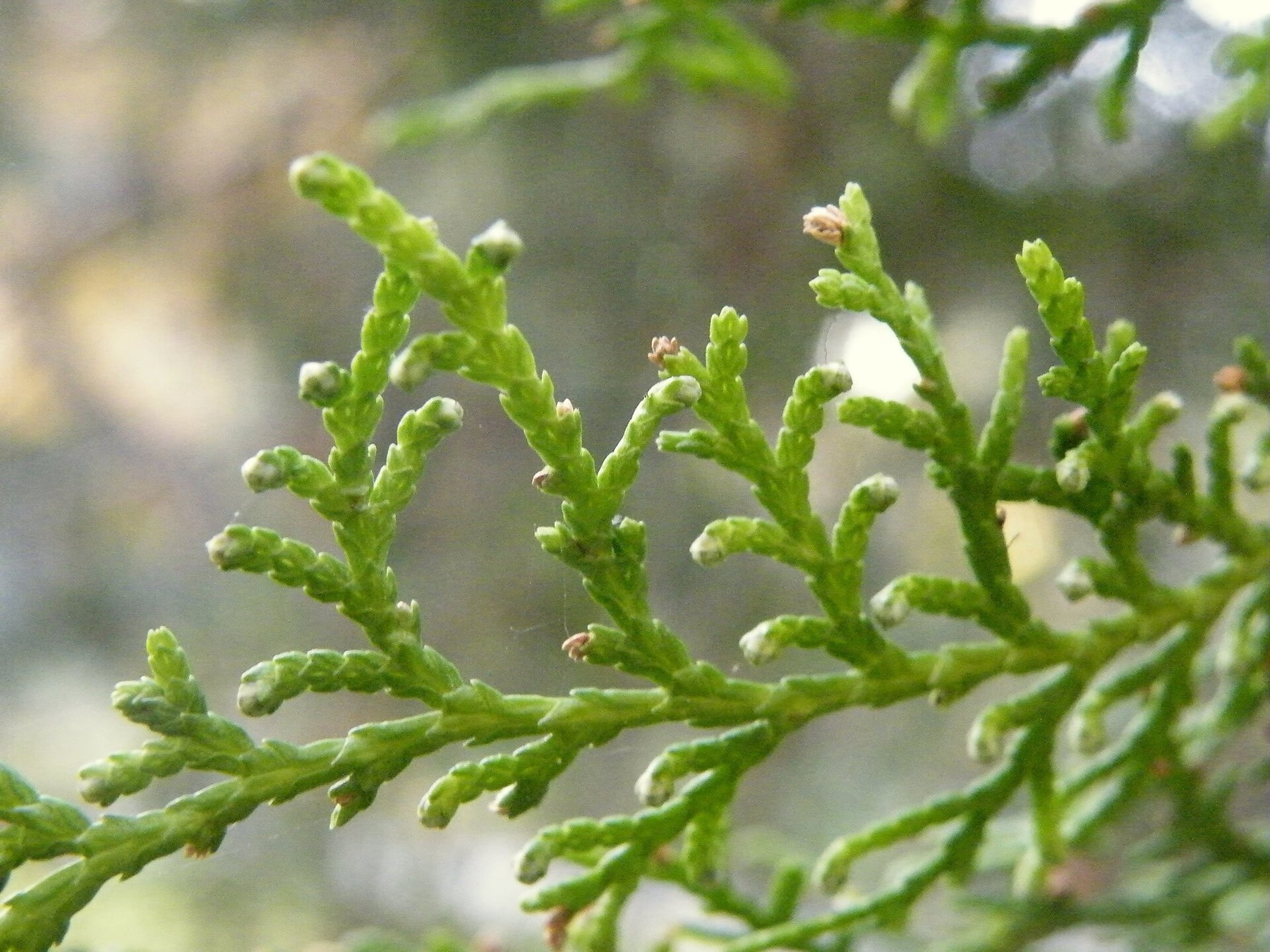
Chinese arborvitae
Platycladus orientalis
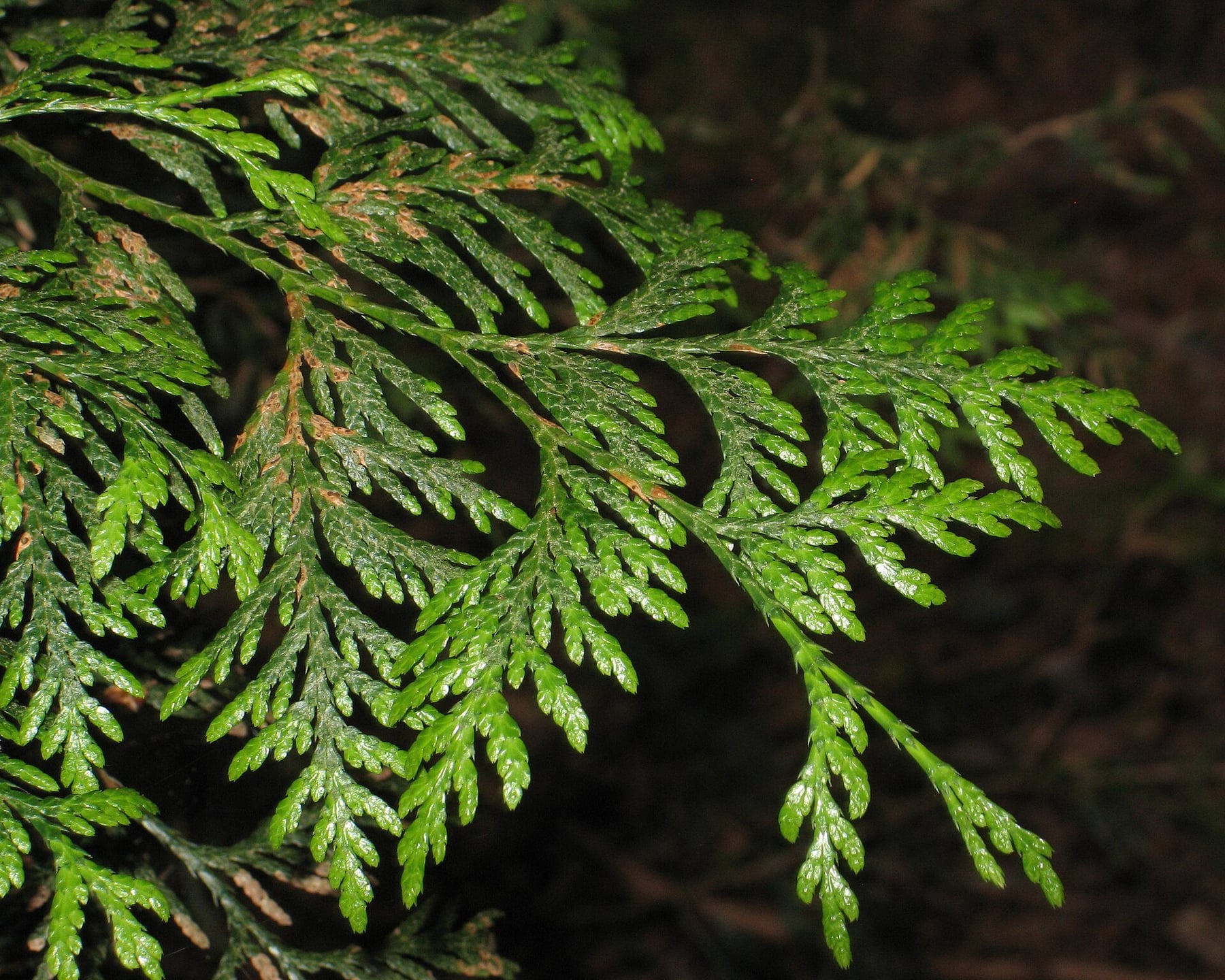
Western red cedar
Thuja plicata
Western red cedar has foliage flattened horizontally in a fan, often marked with white beneath, and a pineapple smell when crushed, whereas Chinese arborvitae has twigs held vertically (not flattened) and a different resinous smell.
🌿 Other Cupressaceae to discover


ℹ️ Educational profile — do not use it to judge whether a plant is edible or safe.
🌱 This database is constantly evolving — species and information are added and corrected regularly. Spotted a mistake? Report it below.
© Floraneo — profile content is protected; reproduction without permission is prohibited. Photos remain under their own licence (see the credit shown on each photo).