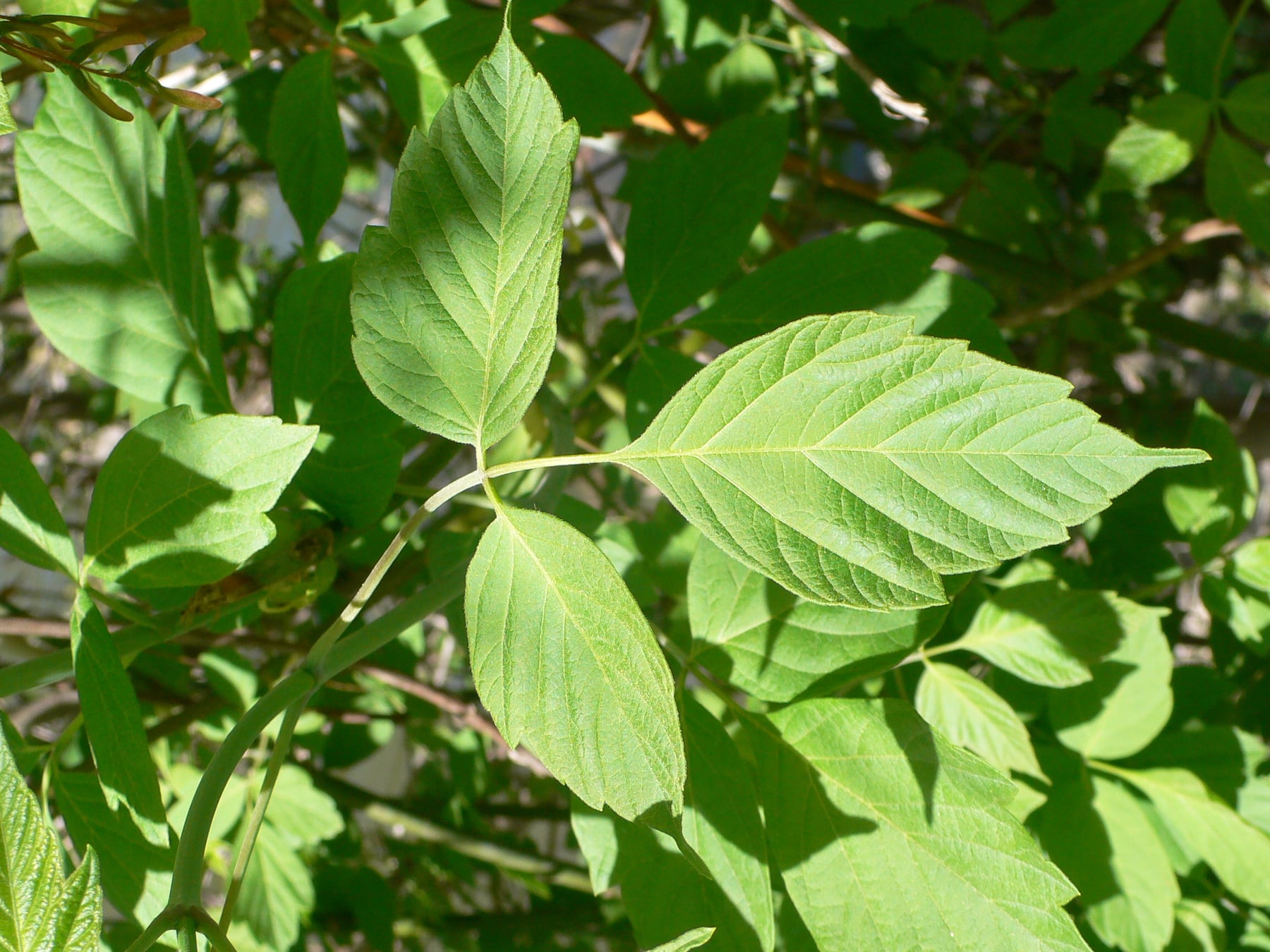
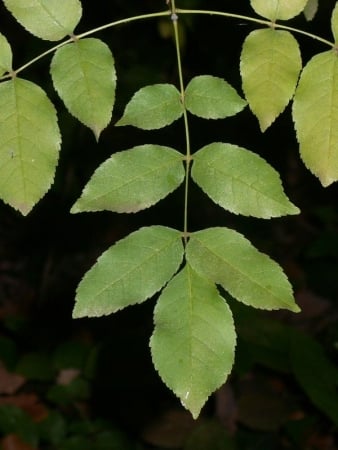
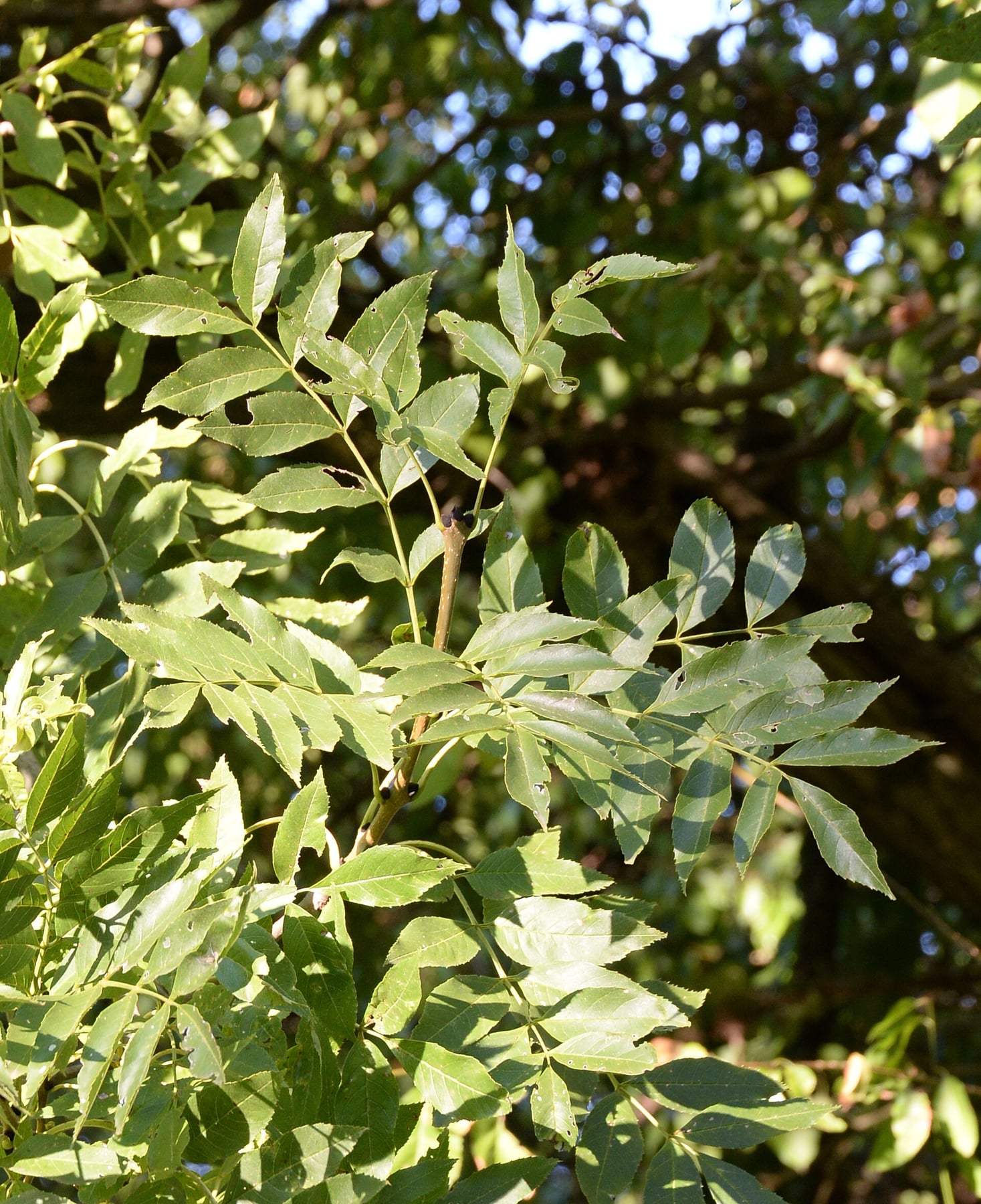
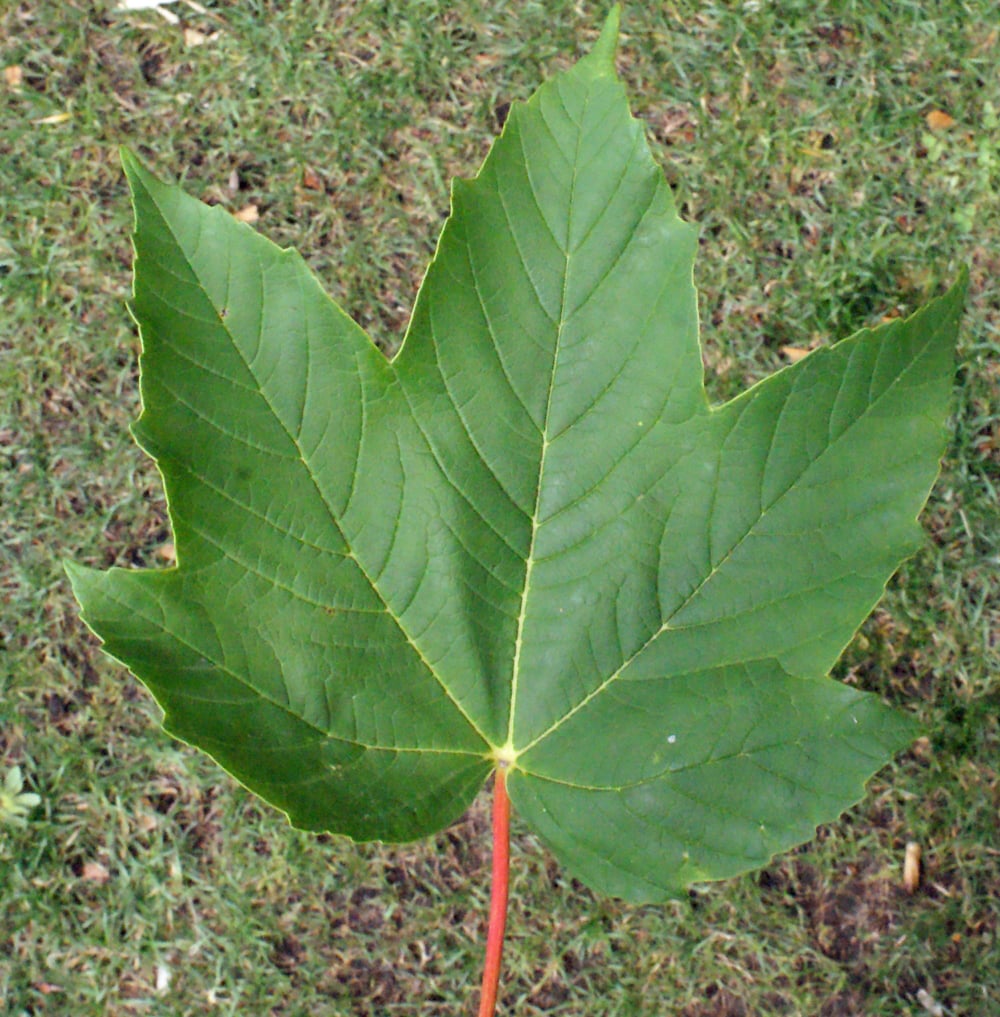
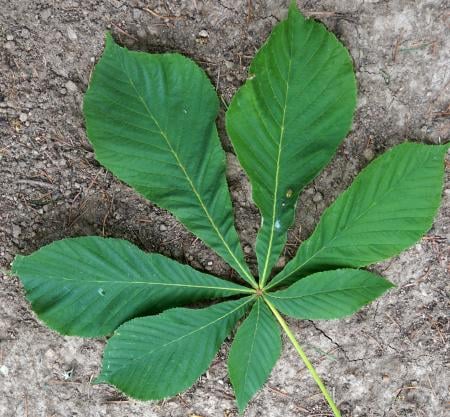
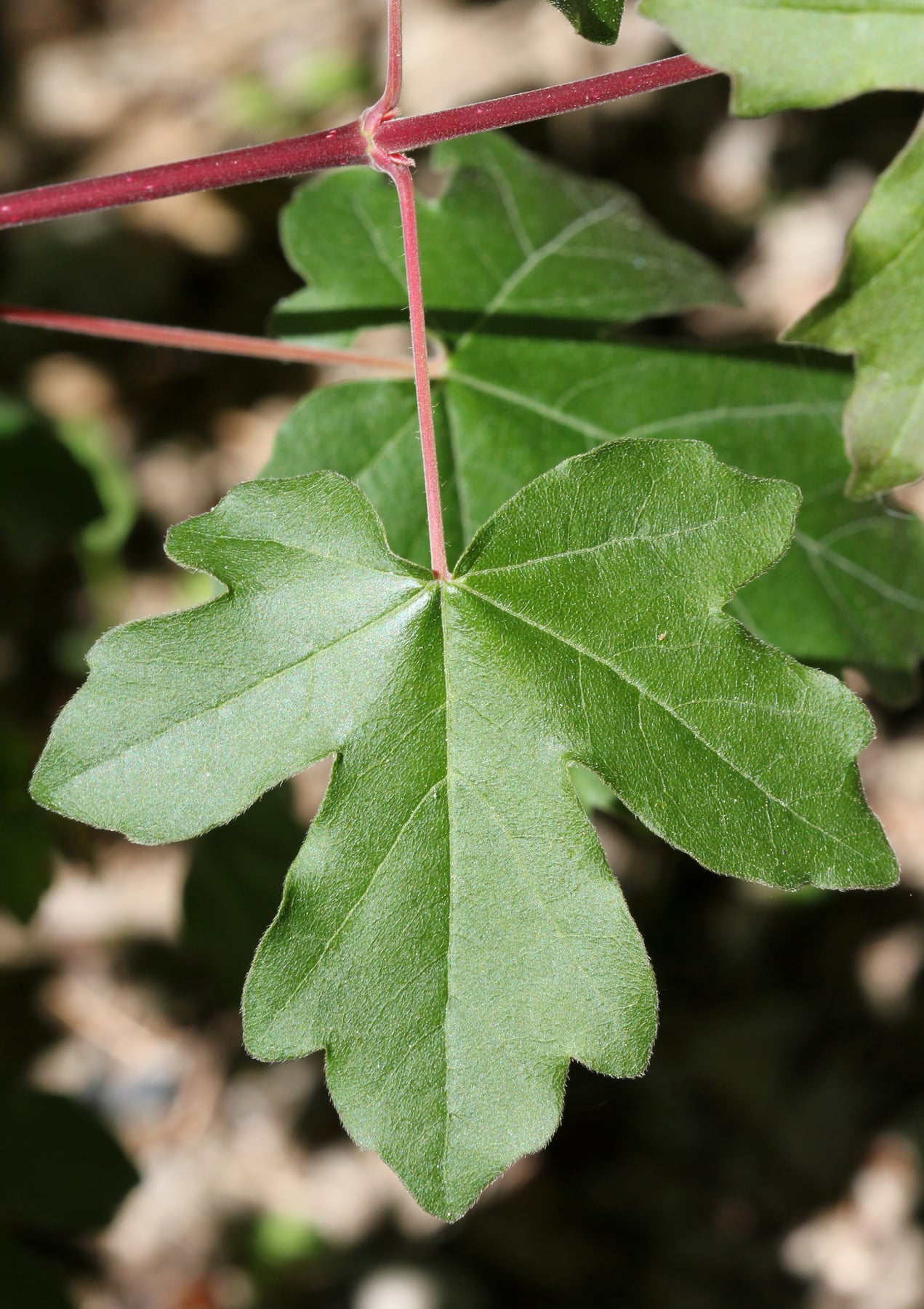
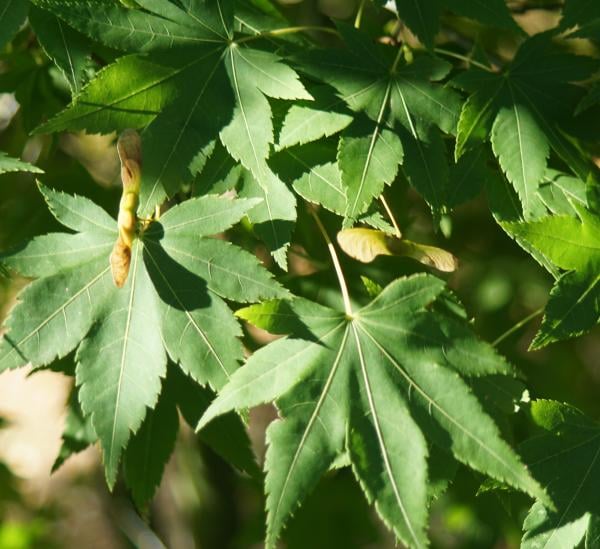
The only native or naturalised maple with compound leaves — all the others have a simple lobed leaf. Common ash has opposite, lanceolate, toothed leaflets, without the typical double-winged fruits of maples; box elder, despite its almost identical compound leaves, is recognised by its opposite green buds and its samaras winged in pairs.
Learn to recognise it
Trees for experts. This plant is in the lesson “Trees for experts”, with 11 others.
Compound, 3 to 7 toothed leaflets — unique among maples in not having a simple leaf
🌸 Flowers
Pendent flowers on fine threads before the leaves appear
🍎 Fruits
Samaras with narrowly spread wings
🪵 Bark
Pale grey, characteristic green shoots
Distribution, pollinators, uses▾
🗺️ Distribution
Native to North America, widely naturalised in Europe; invasive in places in France, notably along rivers
🐝 Value for pollinators
Early flowering before the leaves, nectar-rich, appreciated by bees in early spring
✂️ Horticultural uses
Planted in urban avenues for its fast growth, exists in ornamental variegated varieties
⚠️ Possible toxicity
Seeds (samaras) and young seedlings rich in hypoglycin A, toxic to horses (atypical myopathy / seasonal pasture myopathy), as in sycamore; risk of fatal poisoning if horses graze near seedlings or seeds fallen on the ground. No known risk to humans from mere contact.
🌱 Known cultivars
Flamingo
The most widely sold box elder cultivar: leaves edged in creamy white, with spectacular pink spring shoots that give the variety its "flamingo" name.
Aureomarginatum
Leaves with a wide golden margin on a green background, hardier and more vigorous than Flamingo; valued for brightening a border without the fragile pink shoots of the other variety. (Not to be confused with 'Auratum', a distinct cultivar with entirely golden foliage.)
Common ash has opposite, lanceolate, toothed leaflets, without the typical double-winged fruits of maples; box elder, despite its almost identical compound leaves, is recognised by its opposite green buds and its samaras winged in pairs.