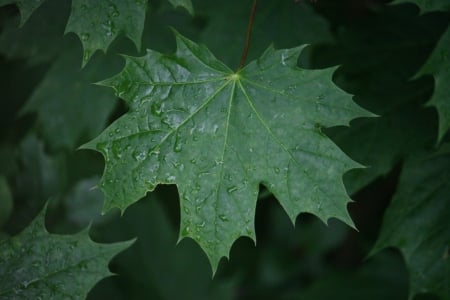
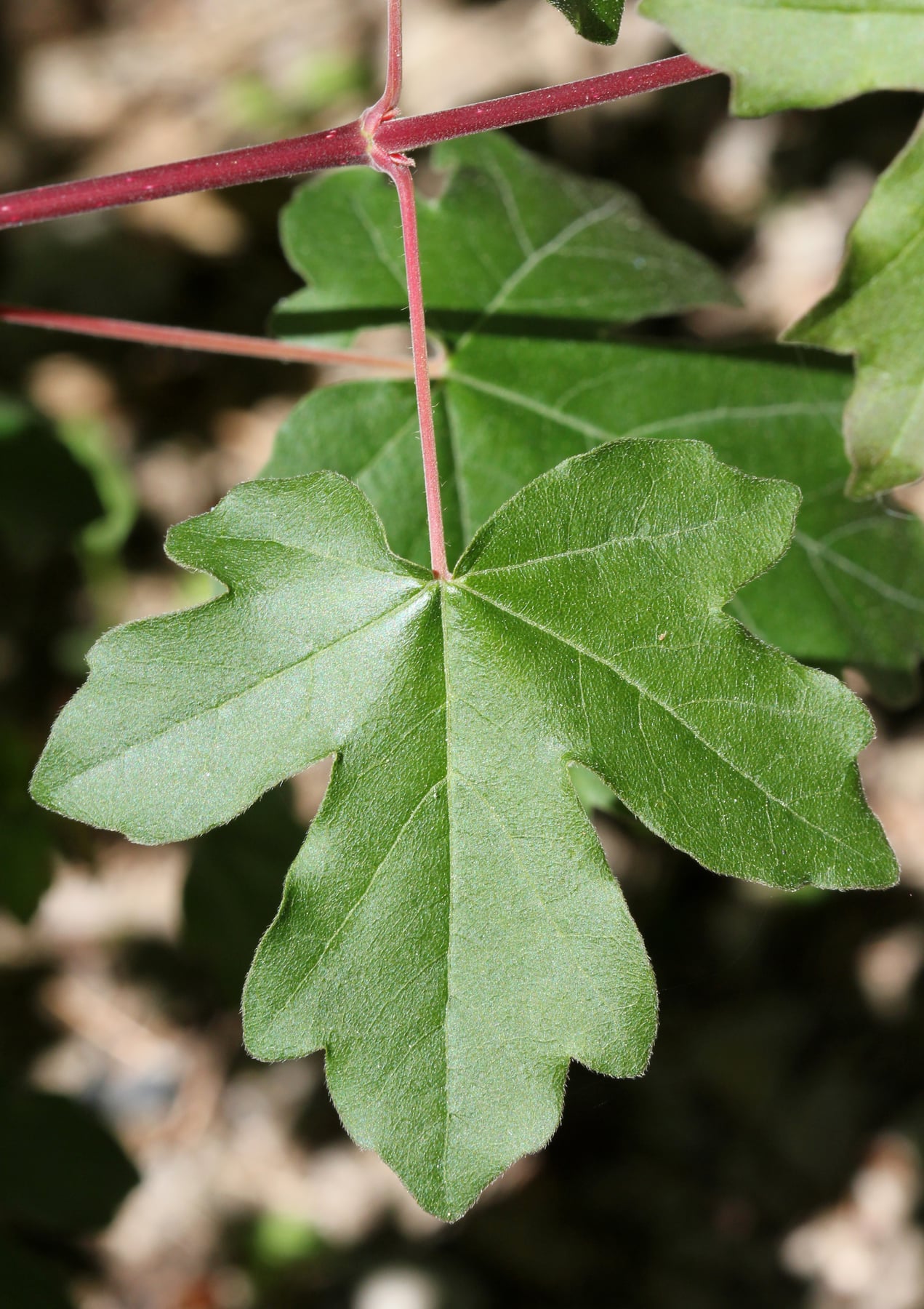
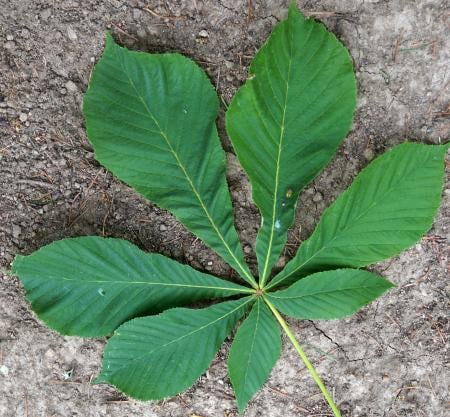
Unlike Norway maple, its sap is not milky when the petiole is broken — a reliable distinguishing criterion between the two species. Breaking the petiole of Norway maple reveals a milky white sap, absent in sycamore — a good clue, to be combined with others: in sycamore, the lobes are often more deeply cut than in Norway maple and the samara wings generally form a more acute angle. No single criterion is absolute: use several characters together.
🍃 Leaves
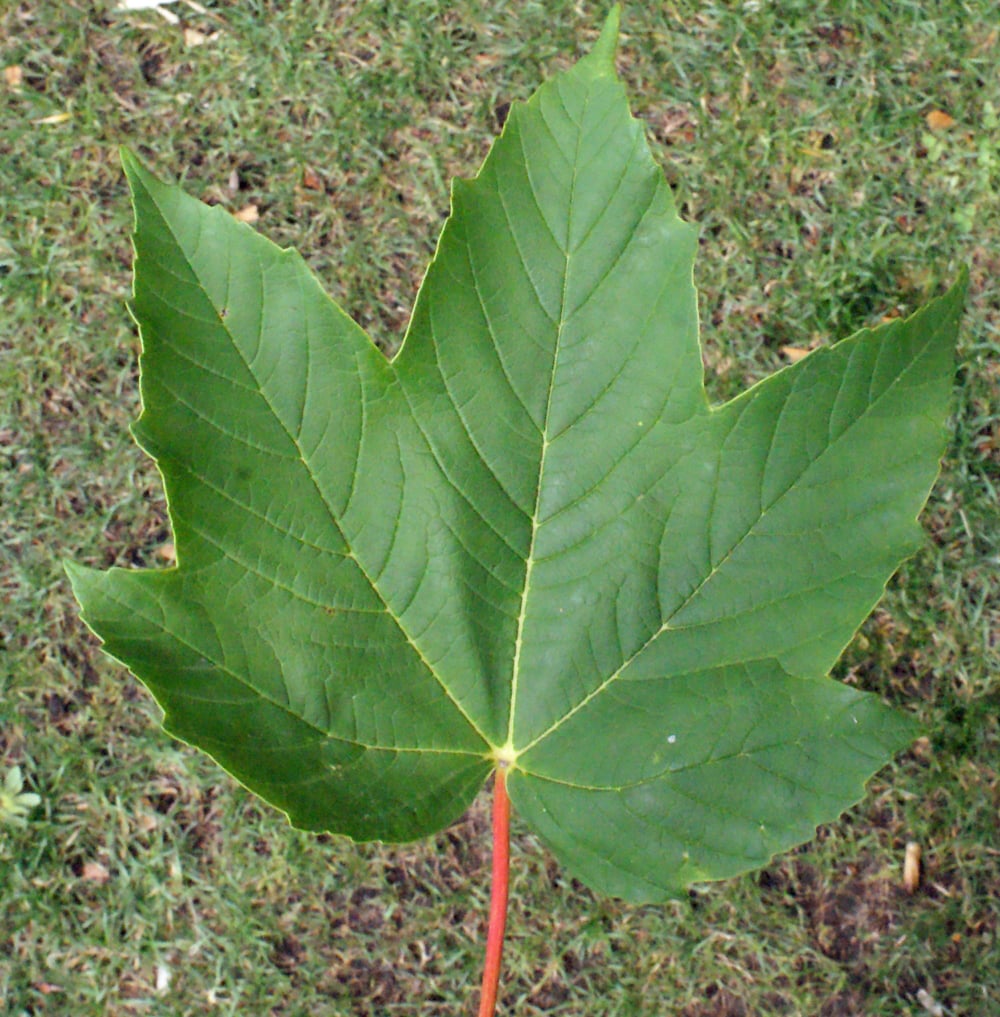
Large opposite leaves with 5 lobes, often 10 to 25 cm, with the underside more or less hairy depending on the individual; the sinuses between the lobes are generally deeper than in Norway maple.
🌸 Flowers
Yellowish-green pendent racemes
🍎 Fruits
Samaras with very widely spread wings, almost at a right angle
🪵 Bark
Grey, flaking off in irregular plates with age
🗺️ Distribution
Central and western Europe, Caucasus; widely naturalised and planted throughout France
🐝 Value for pollinators
Early flowering in very nectar-rich pendent racemes, an important source of nectar for bees early in the season
✂️ Horticultural uses
Planted in avenues, in parks or as a windbreak; pale timber sought after in cabinet-making and instrument-making
⚠️ Possible toxicity
Seeds and young shoots rich in hypoglycin A, toxic to horses (atypical myopathy); no known risk to humans from mere contact
Breaking the petiole of Norway maple reveals a milky white sap, absent in sycamore — a good clue, to be combined with others: in sycamore, the lobes are often more deeply cut than in Norway maple and the samara wings generally form a more acute angle. No single criterion is absolute: use several characters together.
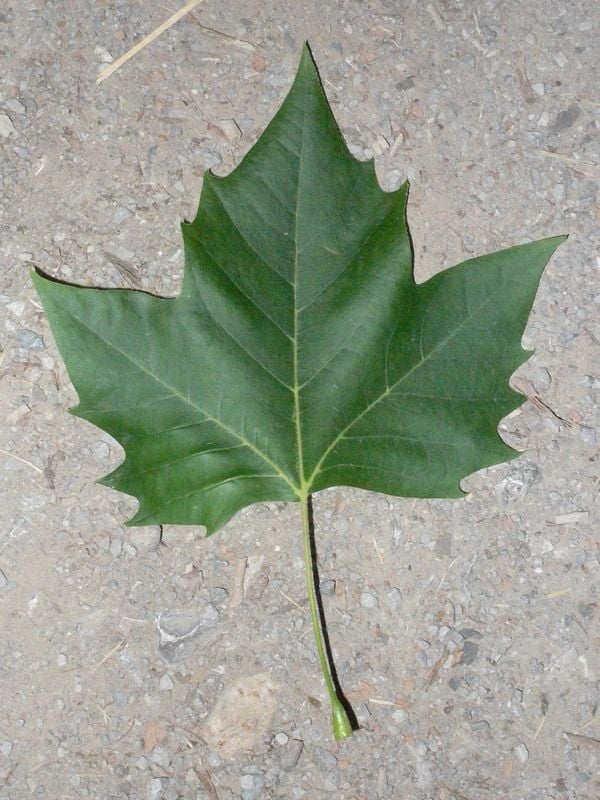
Despite its name, sycamore is not a plane tree, but their lobed leaves look very similar at a distance. London plane has characteristic bark that flakes off in large coloured plates (green, grey, beige), whereas sycamore bark stays grey and cracks into small irregular plates; the fruits also differ clearly: pendent balls on London plane, winged samaras on sycamore.