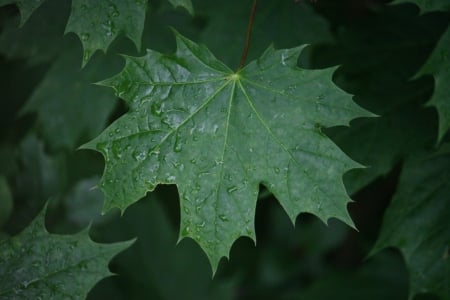
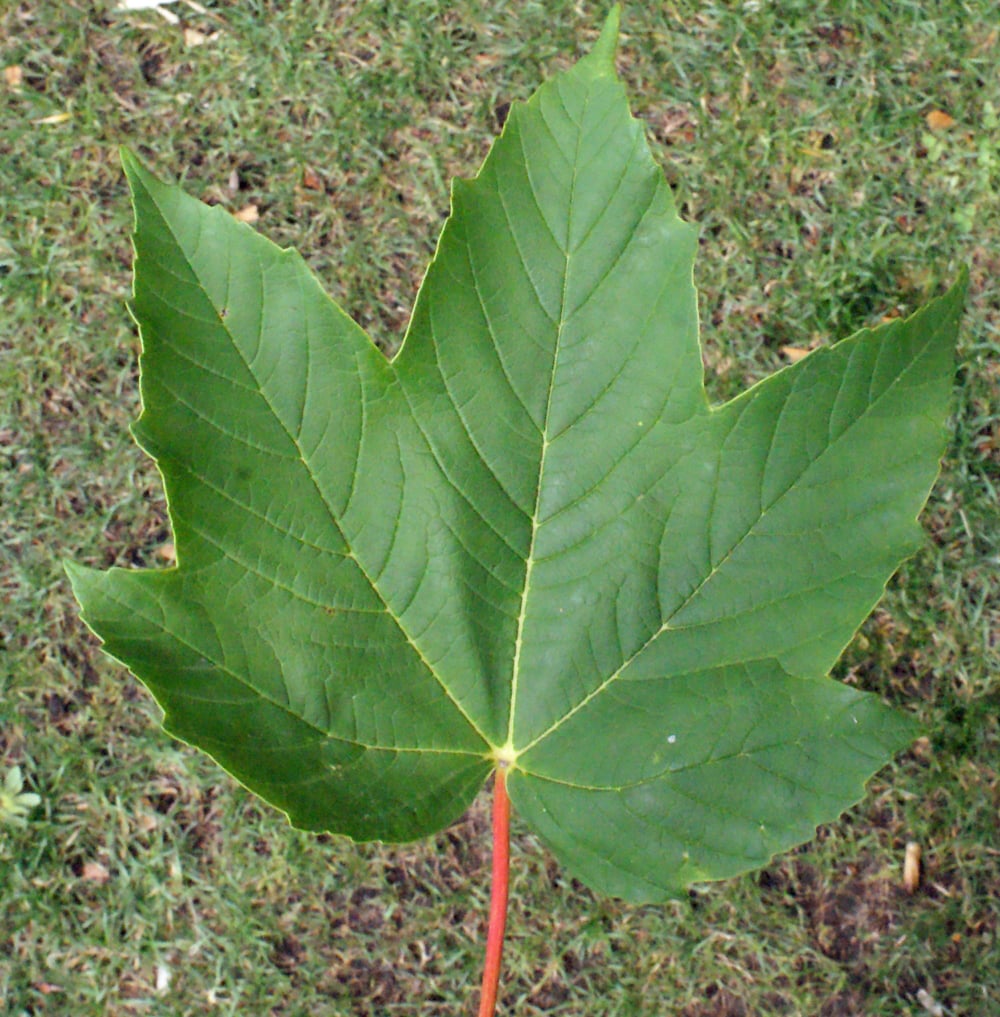
Milky sap when the petiole is broken — this is what distinguishes it from sycamore. Breaking the petiole of Norway maple reveals a milky white sap, absent in sycamore — a good clue, to be combined with others: in Norway maple, the lobes are generally less deeply cut and the samara wings are almost horizontal; in sycamore, the underside of the leaves is often hairier and the samara wings form a more acute angle.
🍃 Leaves
Large opposite leaves with 5 lobes, generally 10 to 20 cm, with broad, shallowly cut lobes; the sinuses between the lobes are often fairly open.
🌸 Flowers
Erect corymbs, bright yellow, very visible before the leaves appear
🍎 Fruits
Samaras with almost horizontal, widely spread wings
🪵 Bark
Dark grey, finely cracked, never flaking
🗺️ Distribution
Europe, as far as the Caucasus; common in France, notably planted in towns and parks
🐝 Value for pollinators
Early flowering in small yellow-green clusters before the leaves, very nectar-rich for bees in spring
✂️ Horticultural uses
Very widely planted in urban avenues and parks for its golden autumn foliage
⚠️ Possible toxicity
No known toxicity
🌱 Known cultivars
Crimson King
The best known purple-leaved Norway maple: dark colour held all season, widely used as an avenue or specimen tree for its strong visual contrast.
Globosum
Perfectly round, compact ball-shaped form grafted on a stem, without any need for pruning; widely used in towns to line streets and squares.
Drummondii
Variegated green and creamy-white foliage, with spring shoots tinged pink; one of the most widely planted variegated maples in Europe.
Breaking the petiole of Norway maple reveals a milky white sap, absent in sycamore — a good clue, to be combined with others: in Norway maple, the lobes are generally less deeply cut and the samara wings are almost horizontal; in sycamore, the underside of the leaves is often hairier and the samara wings form a more acute angle.
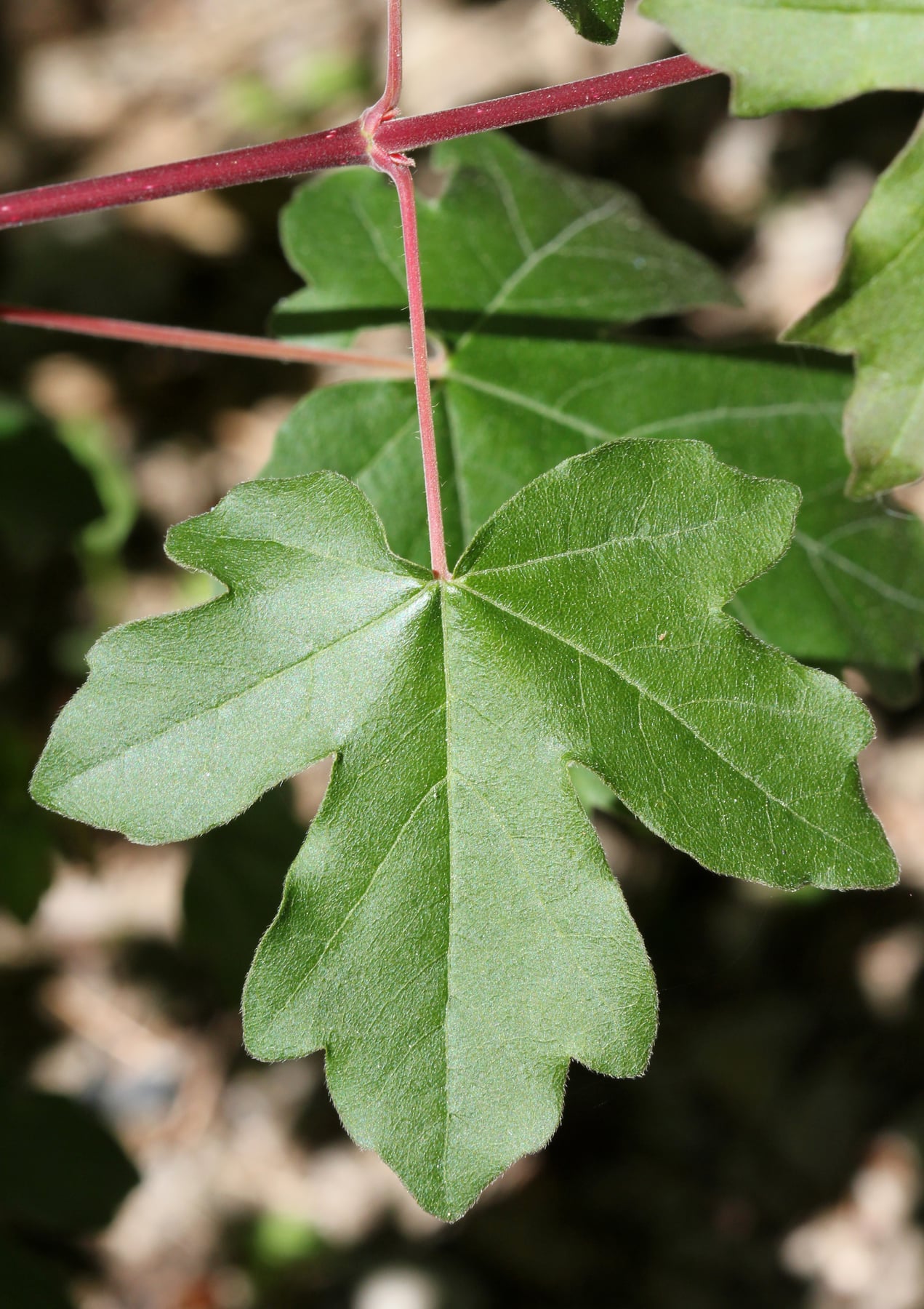
Field maple has generally smaller leaves and more rounded lobes than Norway maple; its young shoots may also bear corky ridges, absent on Norway maple.