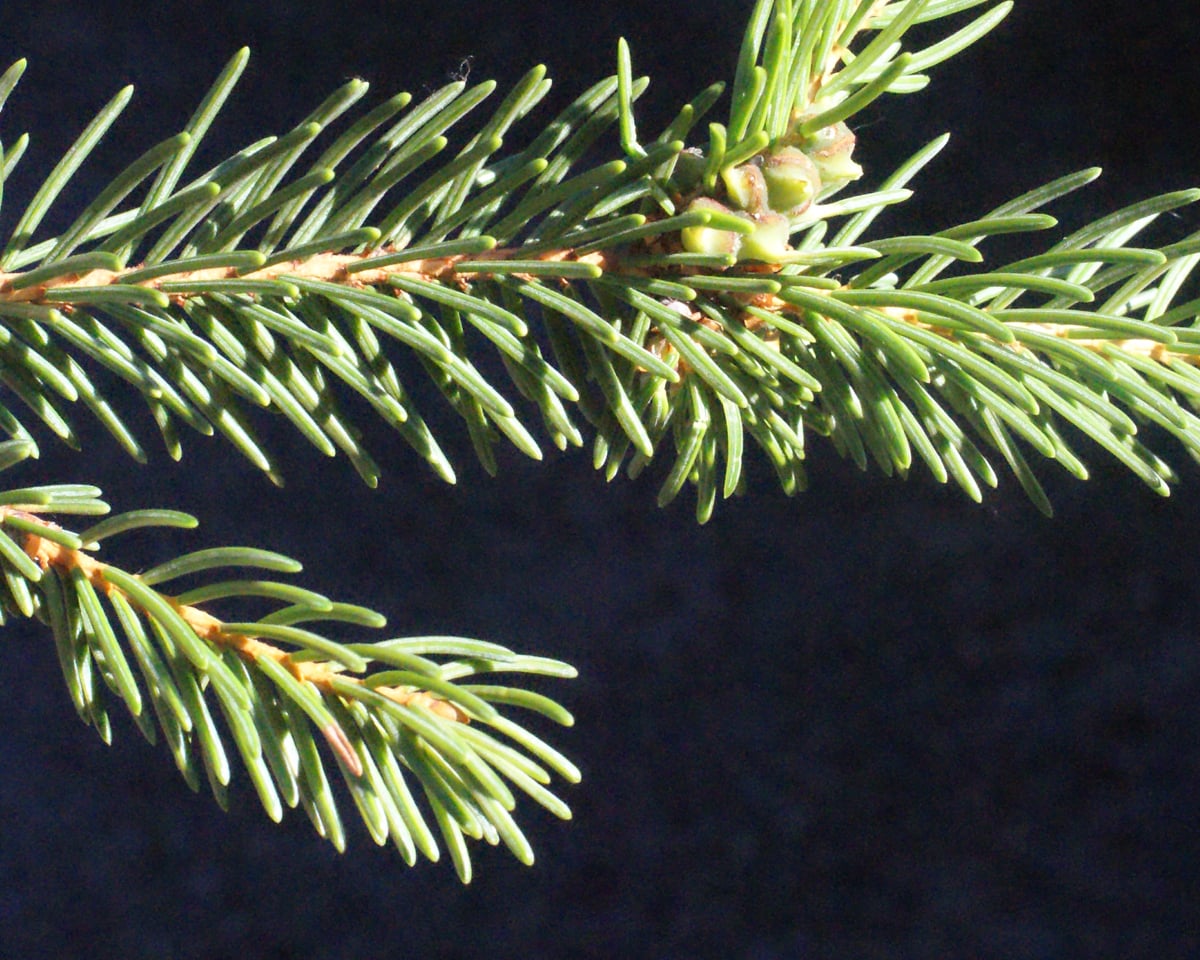
Leaf
David J. Stang · CC BY-SA 4.0
- 15 to 30 m in the wild, often more modest and clipped in gardens
- Planted as a specimen or hedge in gardens and parks throughout France for its bluish foliage; sometimes used as a potted Christmas tree
- Full sun
- Very hardy, to -30°C
In flower in May
1 monthMay (flowering as cones, barely visible)
See what flowers in:May ›
❓ How do you recognise this plant?
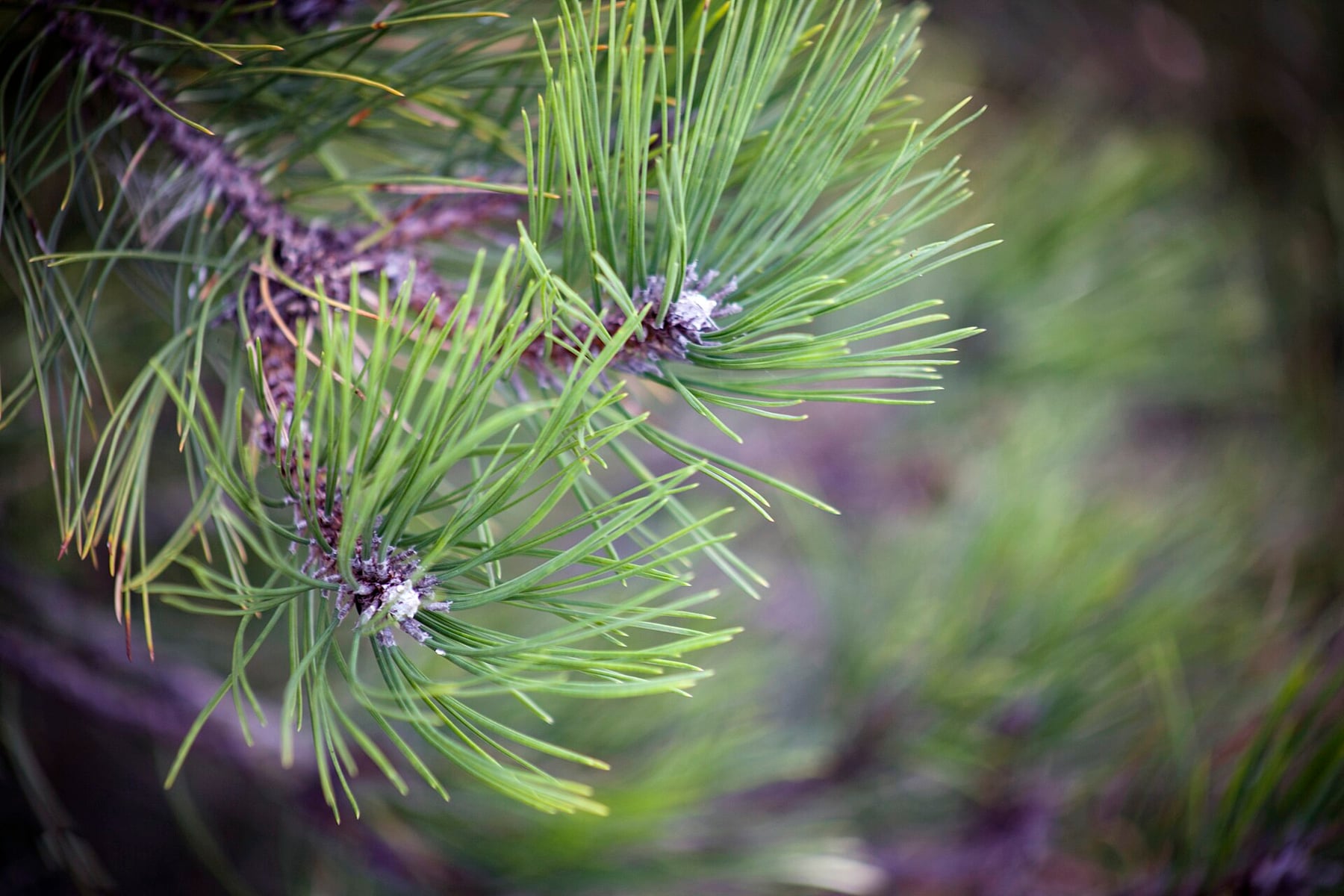
Its so recognisable silvery-blue colour comes from a fine waxy film on the needles, which disappears if rubbed.
Learn to recognise it
Pines, firs and larches. This plant is in the lesson “Pines, firs and larches”, with 7 others.

A free account is enough for this lesson.
🍃 Leaves
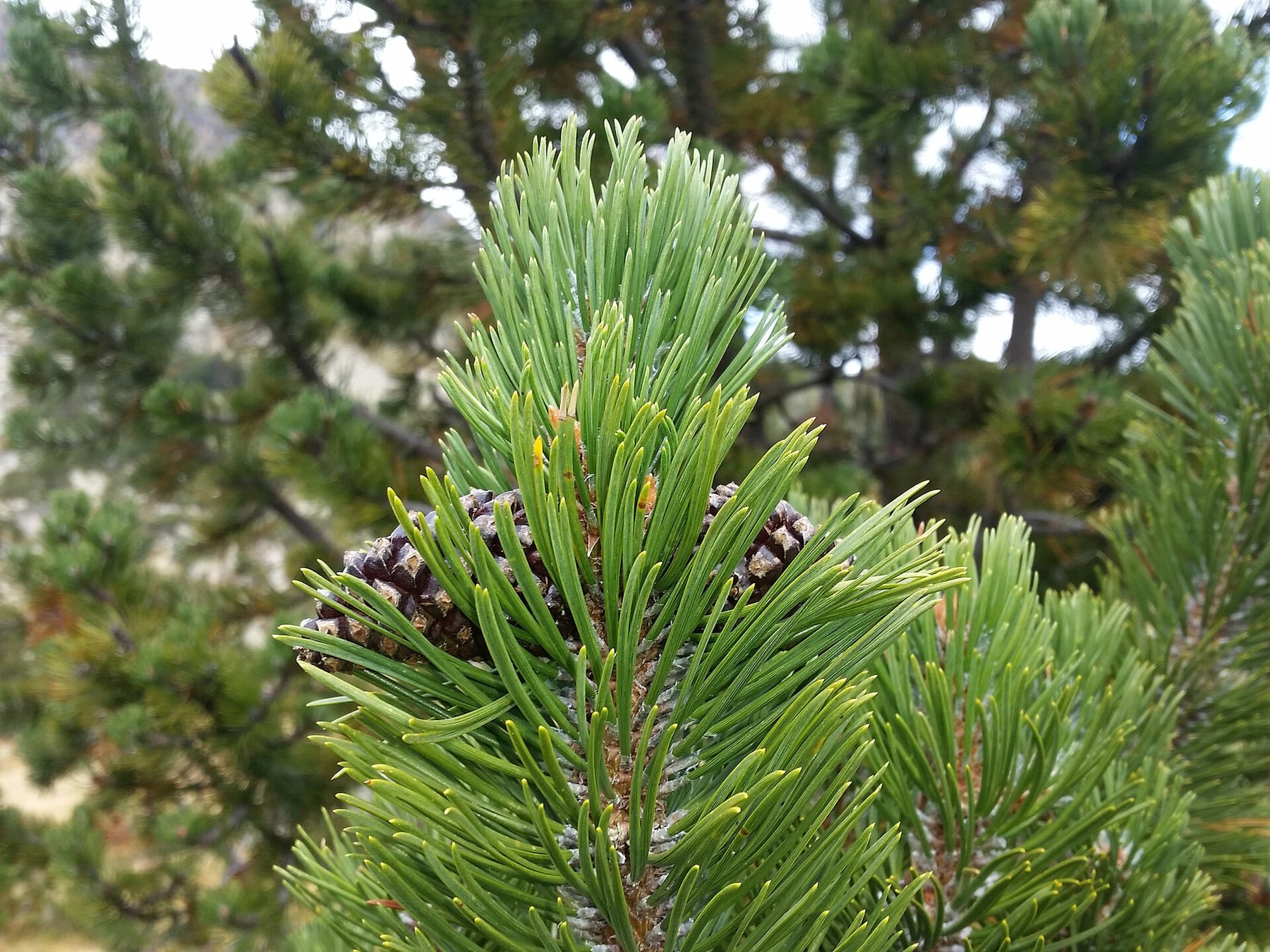
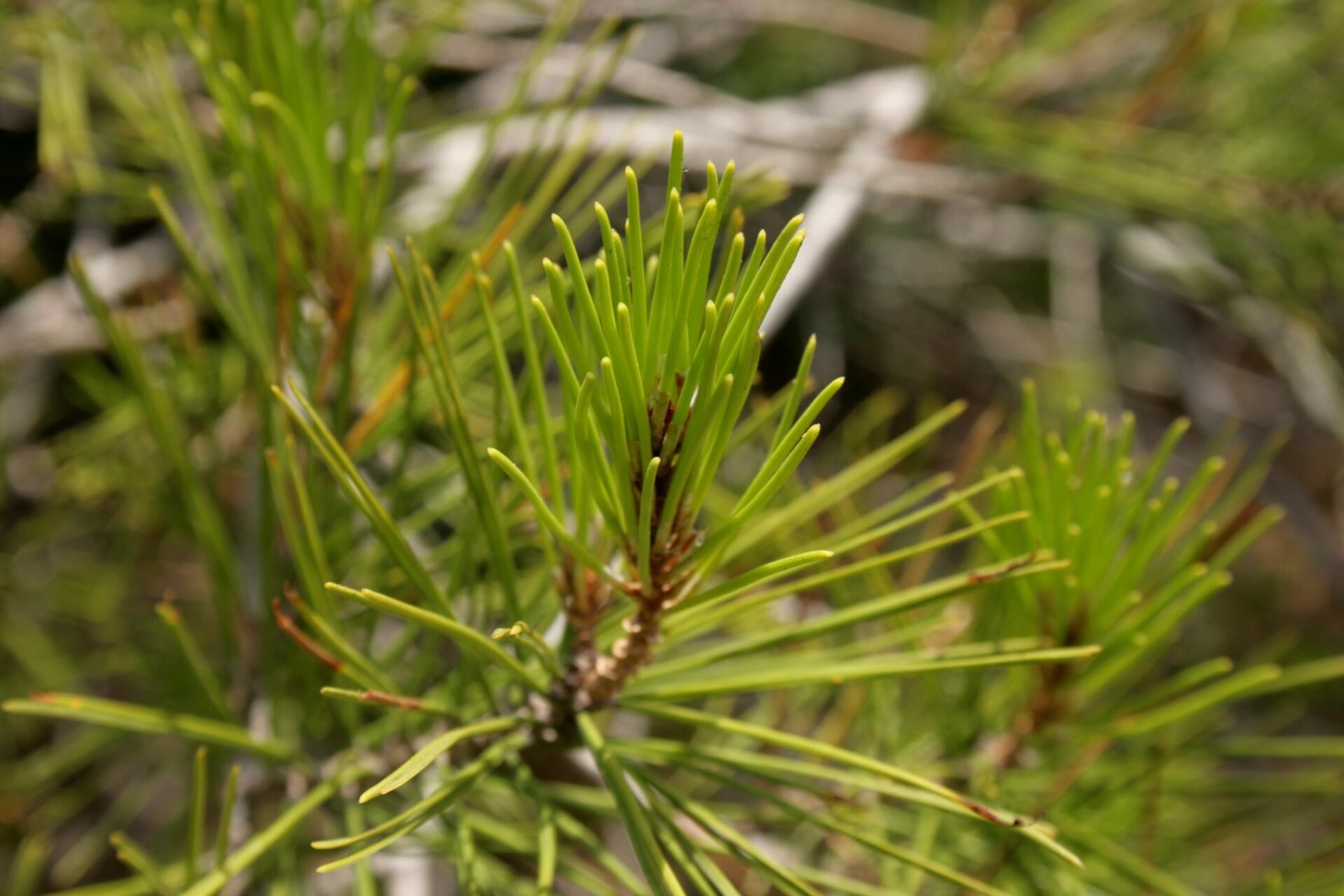
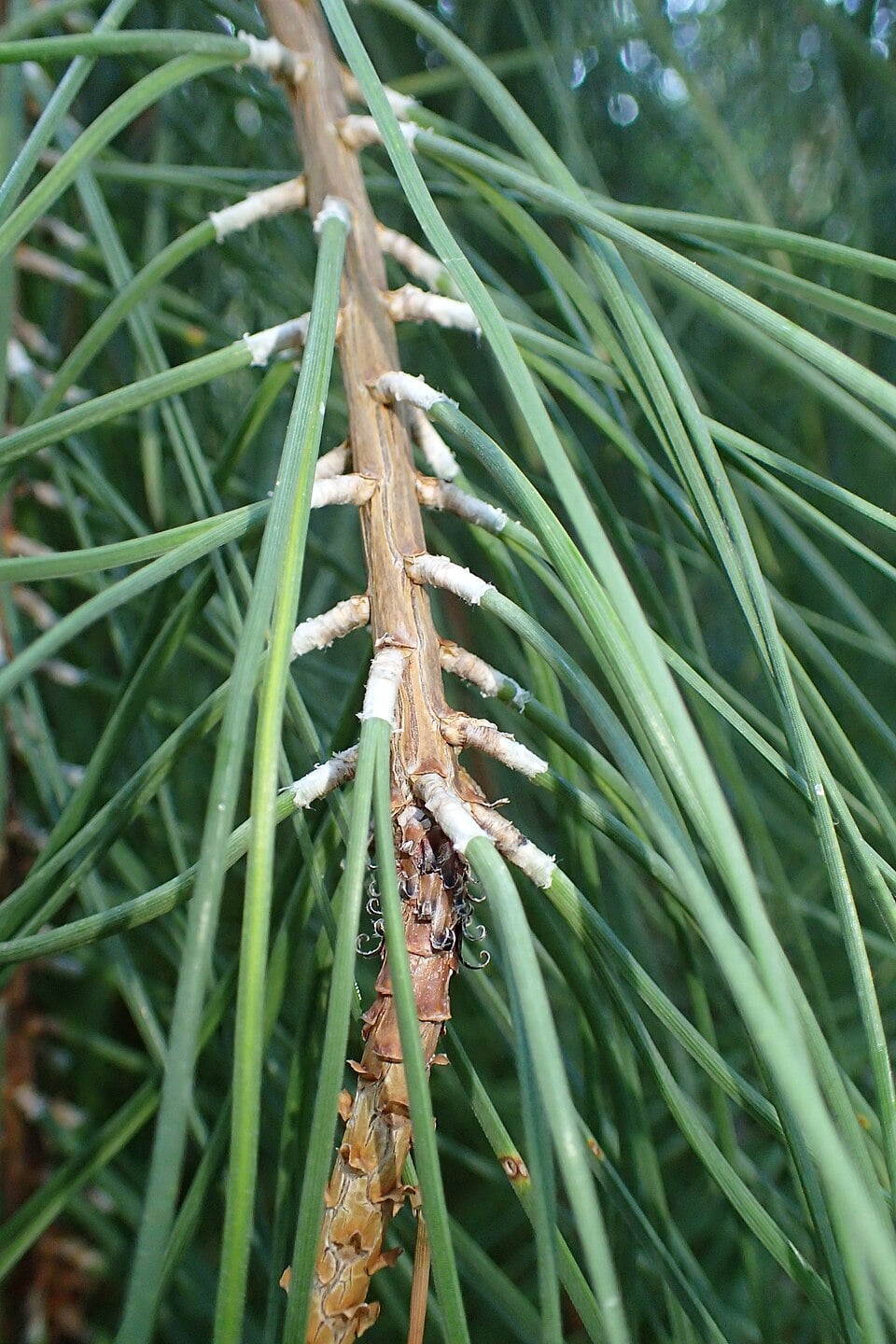
Short (1-2 cm) evergreen needles, rigid, sharp, arranged all around the shoot, a very characteristic silvery-blue to blue-grey colour
🌸 Flowers
Inconspicuous reddish male cones, pale female cones becoming pendent at maturity
🍎 Fruits
Pendent cylindrical cones, light brown at maturity, 6 to 10 cm
🪵 Bark
Grey, cracking into scales with age
Distribution, pollinators, uses
🗺️ Distribution
Native to the Rocky Mountains (Colorado, Utah), widely introduced and planted as an ornamental tree throughout France
🐝 Value for pollinators
Of little interest to pollinators (wind-pollinated) but its seeds feed birds and small rodents
✂️ Horticultural uses
One of the most widely planted ornamental conifers for its spectacular metallic-blue foliage, as a specimen, hedge or pot plant for the festive season
🌿 Other Pinaceae to discover
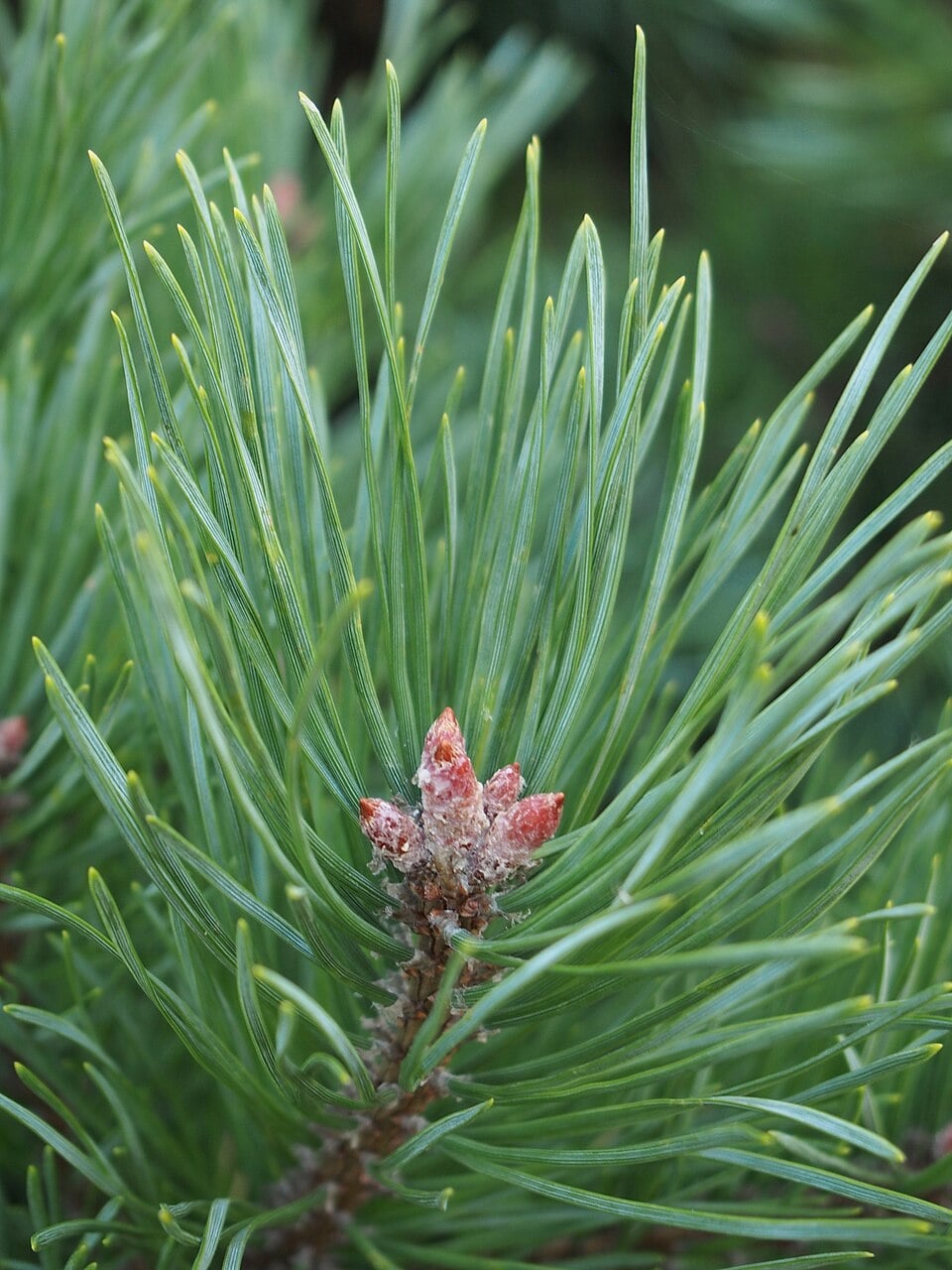


ℹ️ Educational profile — do not use it to judge whether a plant is edible or safe.
🌱 This database is constantly evolving — species and information are added and corrected regularly. Spotted a mistake? Report it below.
© Floraneo — profile content is protected; reproduction without permission is prohibited. Photos remain under their own licence (see the credit shown on each photo).