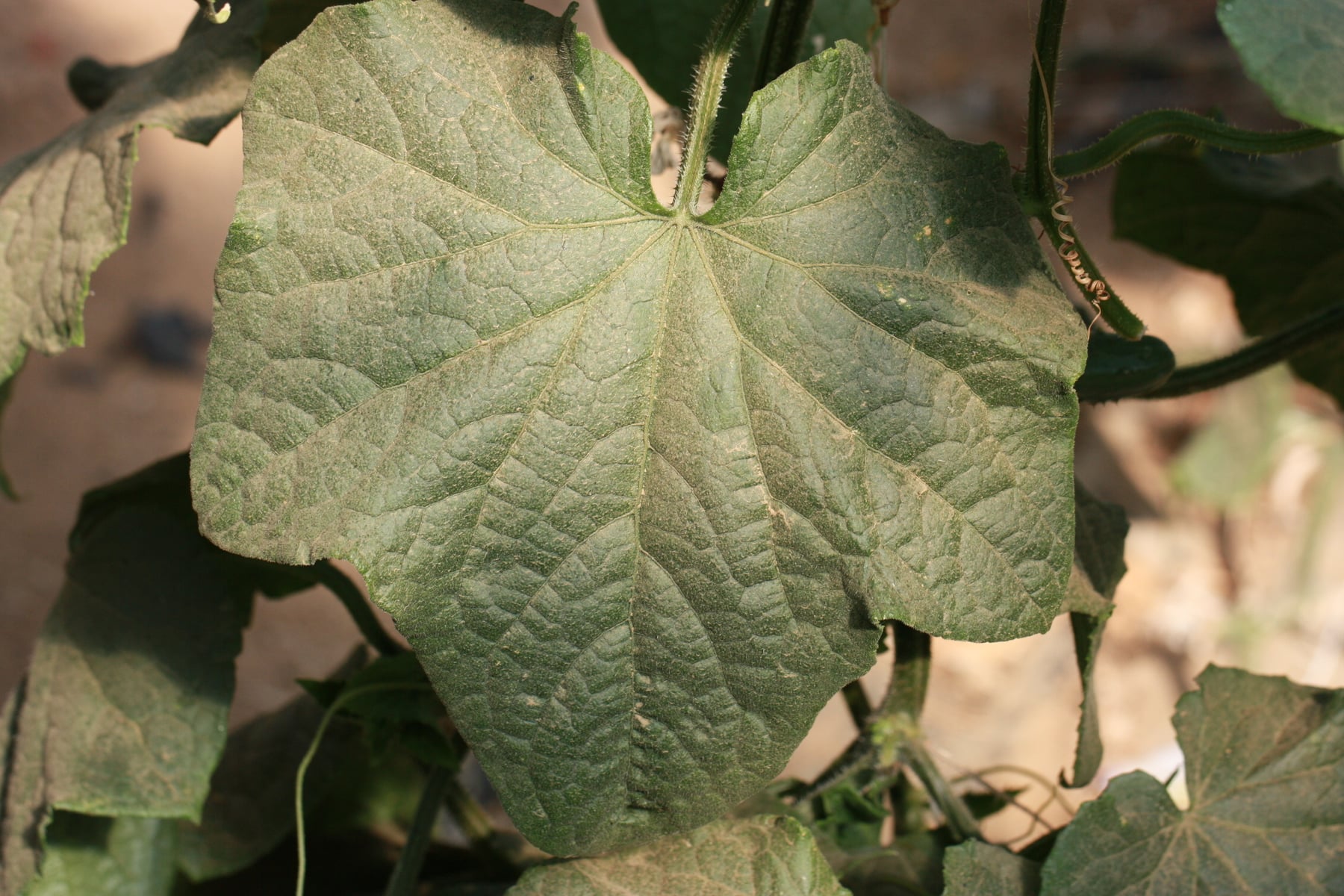
Leaf
Forest & Kim Starr, Wikimedia · CC BY 3.0
Bitter melon
Momordica charantia L.
Also known as: Bitter gourd, Balsam pear
Family: Cucurbitaceae
Climbing vine of 2 to 5 m
Grown in the vegetable garden in warm climates, on a trellis or pergola
Flowering: June – September
Full sun
Not hardy, needs strong heat, grown as an annual
❓ How do you recognise this plant?
Bitter melon is one of the most bitter vegetables grown in the world — this pronounced bitterness, due to compounds called cucurbitacins, makes it an essential ingredient in many Asian cuisines despite its disconcerting taste for unaccustomed palates.
🍃 Leaves
Palmate, cut into 5-7 lobes, borne on a vine that climbs by tendrils
🌸 Flowers
Yellow, solitary, monoecious plant
🍎 Fruits
Elongated, warty fruit, green then orange at maturity, splitting open to reveal seeds surrounded by a red aril
🪵 Bark
Slender climbing herbaceous vine
🗺️ Distribution
Native to tropical Asia; grown in France in warm climates or under glass
🐝 Value for pollinators
Nectar-rich flowers visited by bees, necessary for fruit formation
✂️ Horticultural uses
Heat-demanding fruiting vegetable for the vegetable garden, grown for its very bitter fruit typical of Asian cuisines
⚠️ Possible toxicity
Immature fruit edible cooked after the bitterness has been removed; seeds and ripe fruit mildly toxic
🌿 Other Cucurbitaceae to discover
ℹ️ Educational profile — do not use it to judge whether a plant is edible or safe.
🌱 This database is constantly evolving — species and information are added and corrected regularly. Spotted a mistake? Report it below.
© Floraneo — profile content is protected; reproduction without permission is prohibited. Photos remain under their own licence (see the credit shown on each photo).