Leaf
Liliane Roubaudi, Tela Botanica · CC BY-SA 2.0
Giant pumpkin
Cucurbita maxima Duchesne
Also known as: Hubbard squash, Kabocha
Family: Cucurbitaceae
Trailing stems several metres long
Grown in open fields, rich, free-draining soils
Flowering: June – September
Full sun
Not hardy, frost-sensitive, grown as an annual
❓ How do you recognise this plant?
Unlike the courgette, which is harvested young, the pumpkin is left to reach full maturity on the plant before harvesting — which is what allows it to reach an often impressive size. The courgette has an angular stem and is harvested young; the pumpkin has a soft, cylindrical stem and is harvested fully ripe, often much larger.
🍃 Leaves
Very large, rounded, soft, unlobed or only slightly lobed, covered in soft hairs
🌸 Flowers
Large, yellow-orange, trumpet-shaped; monoecious plant (separate male and female flowers)
🍎 Fruits
Very large round, flattened fruit, smooth skin, dense, sweet orange flesh
🪵 Bark
Trailing stem, cylindrical and soft (unlike the courgette, whose stem is angular)
🗺️ Distribution
Native to South America; cultivated throughout France
🐝 Value for pollinators
Large flowers rich in nectar, essential to bees for fruit formation
✂️ Horticultural uses
Vegetable garden crop grown for its large fruit, harvested fully ripe unlike the courgette
⚠️ Possible toxicity
Fruit edible; no known toxicity
⚠️ Look-alike species
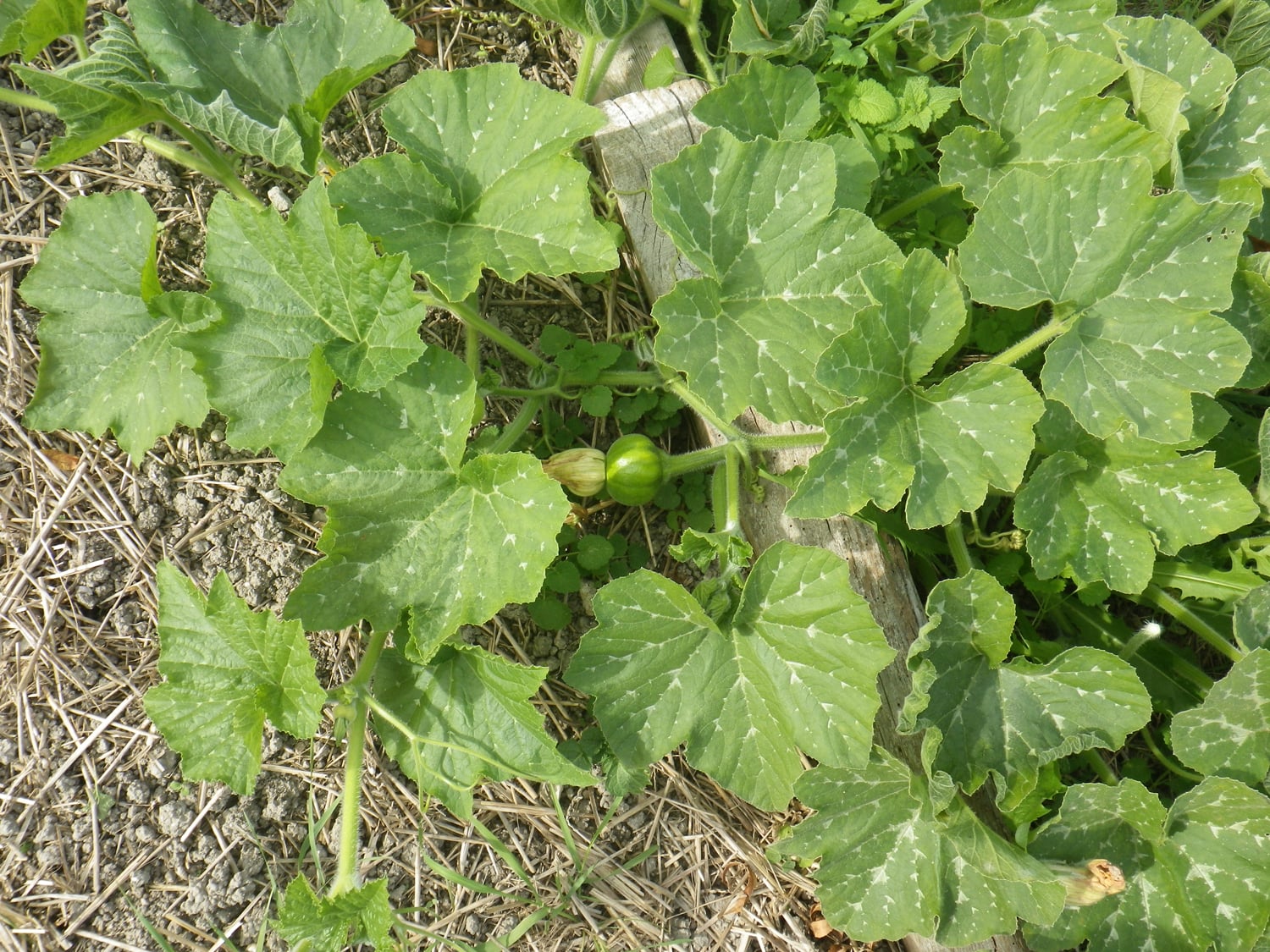
Giant pumpkin
Cucurbita maxima
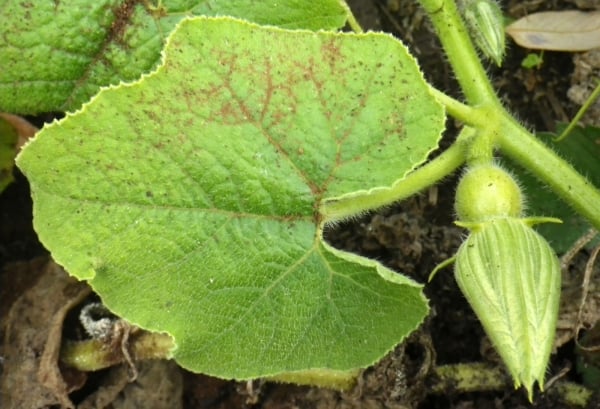
Courgette
Cucurbita pepo
The courgette has an angular stem and is harvested young; the pumpkin has a soft, cylindrical stem and is harvested fully ripe, often much larger.
Giant pumpkin
Cucurbita maxima
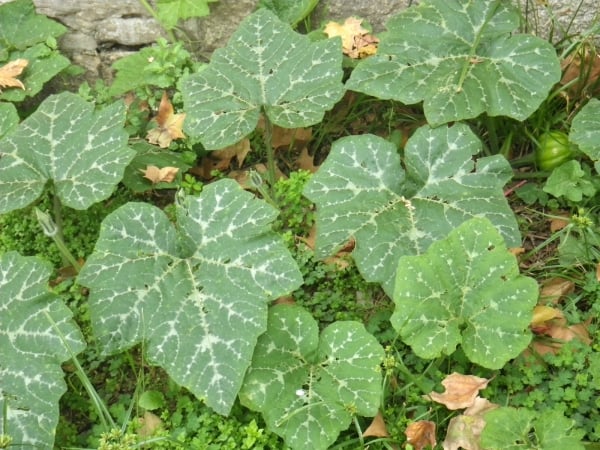
Butternut squash
Cucurbita moschata
The pumpkin has a soft, spongy, cylindrical fruit stalk, without angles and without a distinct flare; the butternut squash has a hard, angular fruit stalk clearly flaring into a star shape where it joins the fruit.
🌿 Other Cucurbitaceae to discover
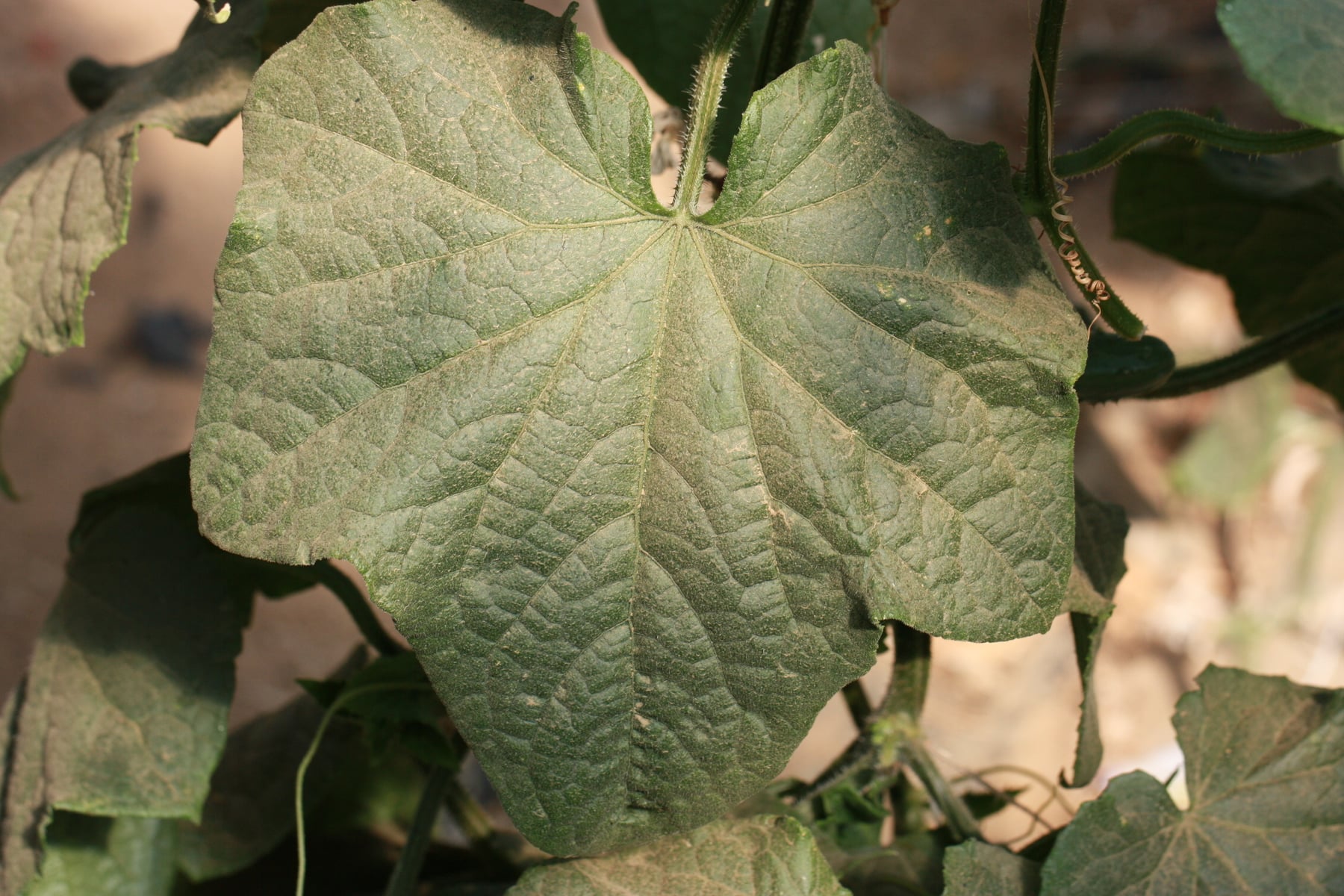

ℹ️ Educational profile — do not use it to judge whether a plant is edible or safe.
🌱 This database is constantly evolving — species and information are added and corrected regularly. Spotted a mistake? Report it below.
© Floraneo — profile content is protected; reproduction without permission is prohibited. Photos remain under their own licence (see the credit shown on each photo).