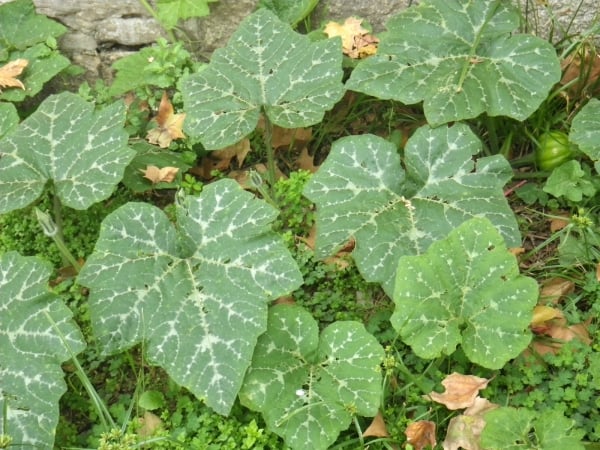
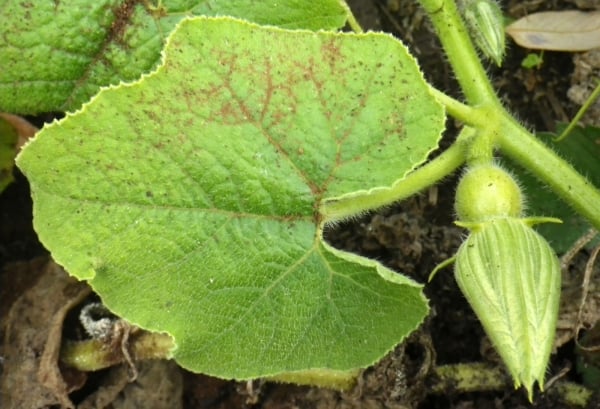
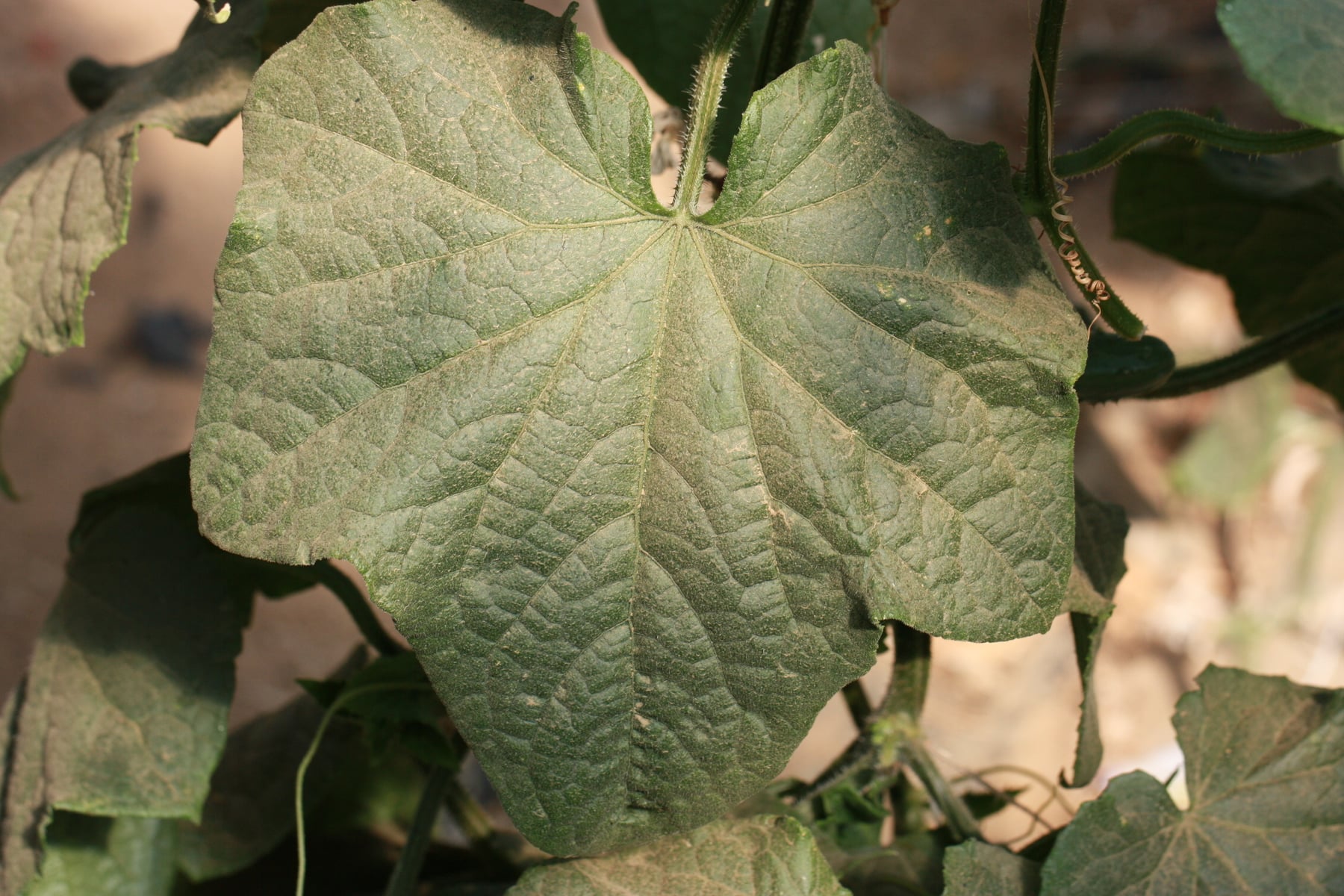
Leaf
Liliane Roubaudi, Tela Botanica · CC BY-SA 2.0

Butternut squash

Cucurbita moschata Duchesne
Also known as: Butternut pumpkin
Family: Cucurbitaceae
Trailing stems of several metres
Grown in open fields, rich soils
Flowering: June – September
Full sun
Not hardy, frost-sensitive, grown as an annual

❓ How do you recognise this plant?

The Butternut variety, the most widely grown of this species, owes its pear shape and smooth skin to recent varietal selection — its name comes from 'butter-nut', referring to its smooth, buttery flesh. Butternut squash has a hard, angular stalk that flares widely into a star shape where it joins the fruit; the courgette has an equally hard and angular stalk, but it stays thin and does not flare where it joins the fruit.
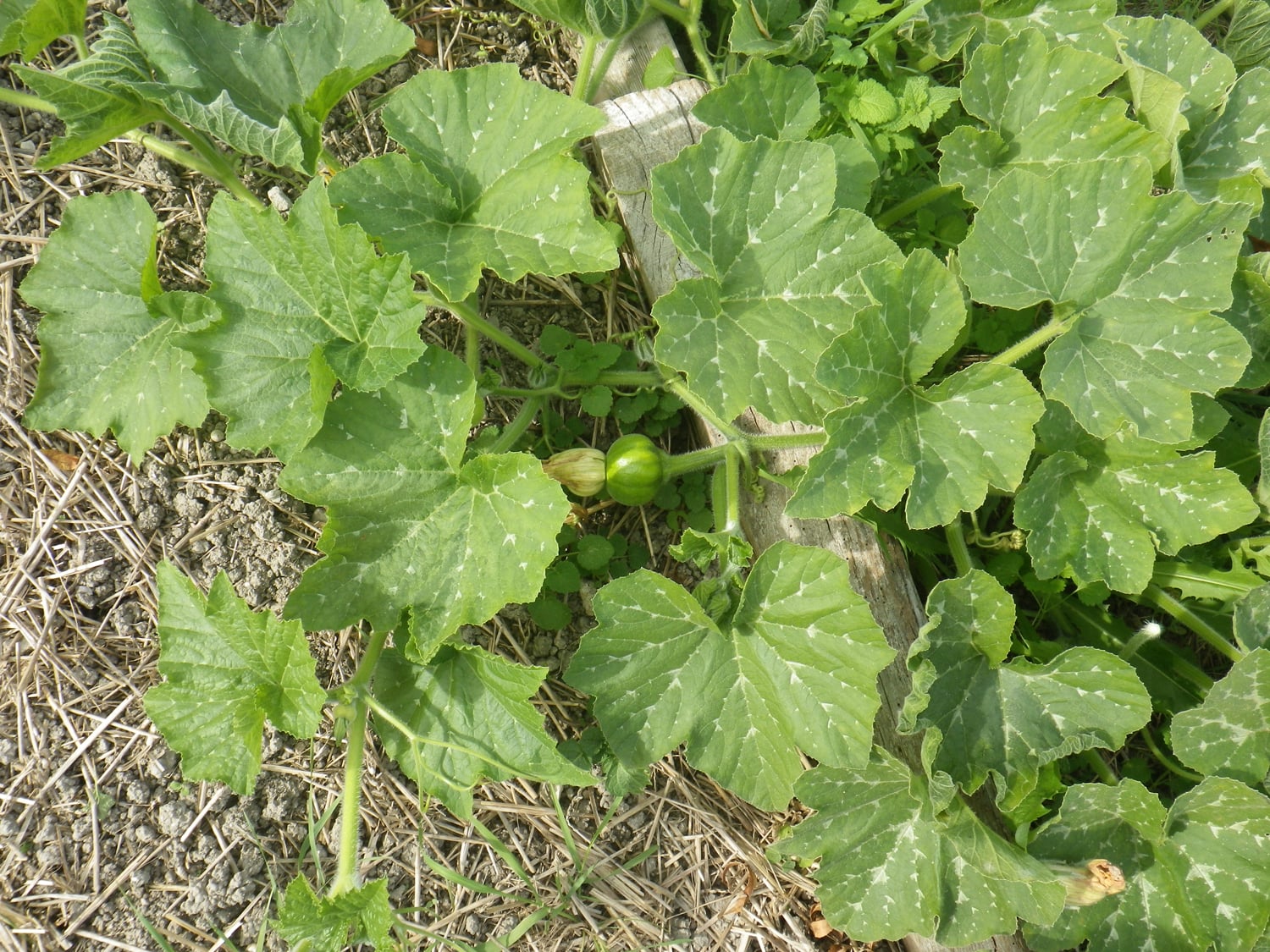
🍃 Leaves
Large, rounded with 5 faint lobes, slightly downy
🌸 Flowers
Large, orange-yellow, trumpet-shaped; monoecious plant
🍎 Fruits
Elongated pear-shaped fruit, beige-orange skin, dense, sweet orange flesh with a musky flavour
🪵 Bark
Angular, hairy trailing stem
🗺️ Distribution
Native to Central America; grown throughout France, notably the Butternut variety
🐝 Value for pollinators
Large flowers very rich in honey, indispensable to bees for fruit formation
✂️ Horticultural uses
Vegetable garden crop grown for its sweet-fleshed fruit, keeps very well all winter

⚠️ Possible toxicity

Fruit edible; no known toxicity

⚠️ Look-alike species

Butternut squash
Butternut squash
Cucurbita moschata
Courgette
Courgette
Cucurbita pepo

Butternut squash has a hard, angular stalk that flares widely into a star shape where it joins the fruit; the courgette has an equally hard and angular stalk, but it stays thin and does not flare where it joins the fruit.

Butternut squash
Butternut squash
Cucurbita moschata
Giant pumpkin
Giant pumpkin
Cucurbita maxima

Butternut squash has a hard, angular stalk that flares markedly into a star shape at the junction with the fruit; the giant pumpkin has a soft, spongy, cylindrical stalk, without angles and without clear flaring.

ℹ️ Educational profile — do not use it to judge whether a plant is edible or safe.

🌱 This database is constantly evolving — species and information are added and corrected regularly. Spotted a mistake? Report it below.

© Floraneo — profile content is protected; reproduction without permission is prohibited. Photos remain under their own licence (see the credit shown on each photo).