Leaf
Inconnu, Wikimedia · Domaine public
Virginia creeper
Parthenocissus quinquefolia (L.) Planch.
Also known as: American ivy, Five-leaved ivy
Family: Vitaceae
Climber reaching 15 to 20 m
Walls, facades, pergolas, fences and banks in gardens and towns throughout France; sometimes naturalised at woodland edges
Flowering: June - July
Full sun
Part shade
Very hardy, to -30°C
❓ How do you recognise this plant?
Its adhesive pads stick so firmly to the wall that Virginia creeper cannot be pulled off without leaving its adhesive discs stuck to the stone. Boston ivy has simple leaves with 3 pointed lobes and clings directly to the support by small adhesive pads, whereas Virginia creeper has compound leaves of 5 leaflets and climbs by tendrils with sucker-like pads.
🍃 Leaves
Deciduous, palmately compound with 5 toothed elliptic leaflets, matt green turning a blazing scarlet red in autumn
🌸 Flowers
Small, greenish, inconspicuous, grouped in cymes in the leaf axils
🍎 Fruits
Small blue-black berries with a waxy bloom, grouped in clusters, not edible for humans
🪵 Bark
Greyish-brown woody stem with tendrils ending in adhesive pads that cling directly to walls
🗺️ Distribution
Native to eastern North America, widely planted and sometimes naturalised throughout France
🐝 Value for pollinators
Inconspicuous but nectar-bearing flowers, visited by bees and wasps; fruits appreciated by birds in winter
✂️ Horticultural uses
Self-clinging climber ideal for quickly covering walls and facades without a support, renowned for its autumn colours
⚠️ Possible toxicity
Berries slightly toxic (calcium oxalate) if ingested; sap irritating to sensitive skin
⚠️ Look-alike species
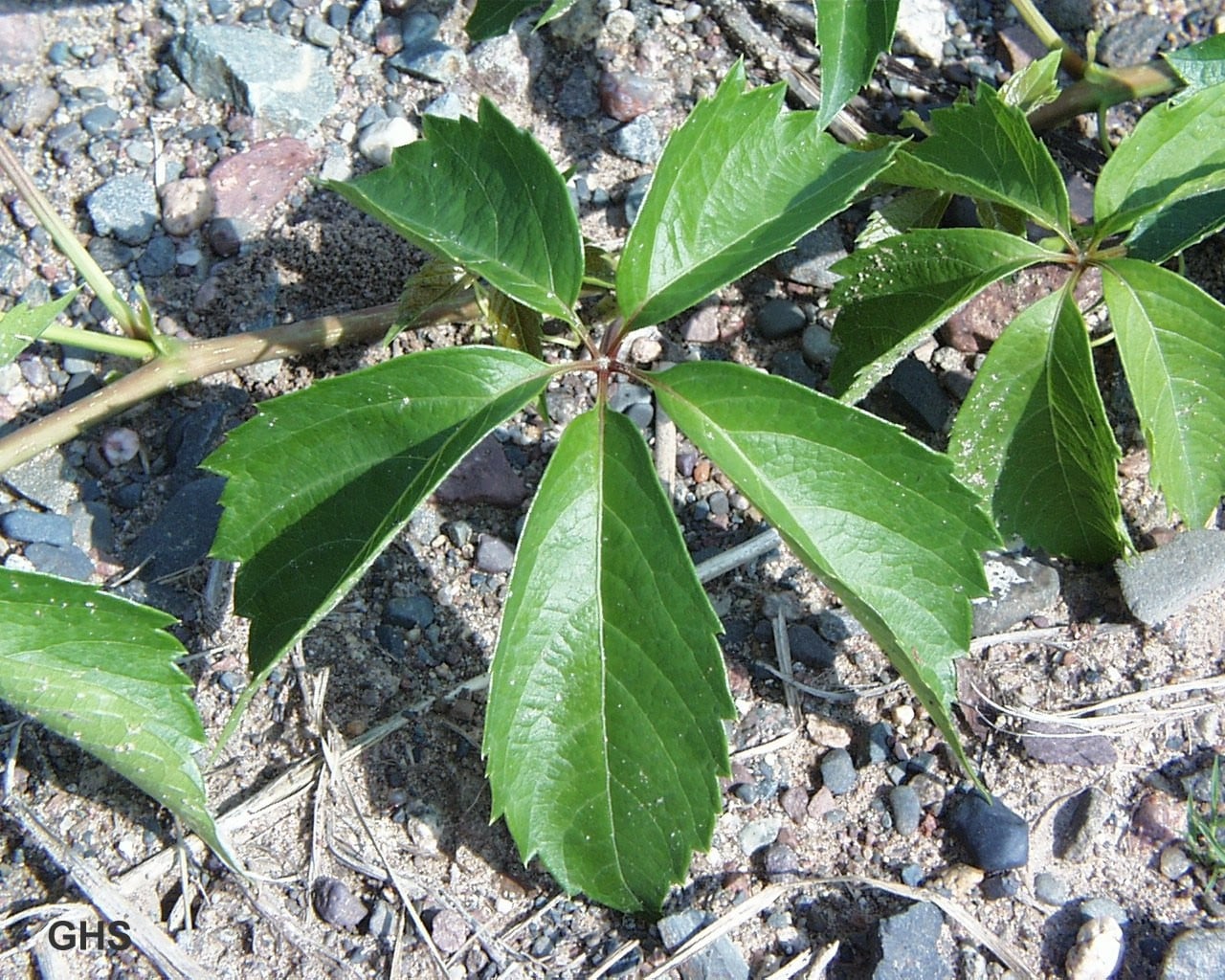
Virginia creeper
Parthenocissus quinquefolia
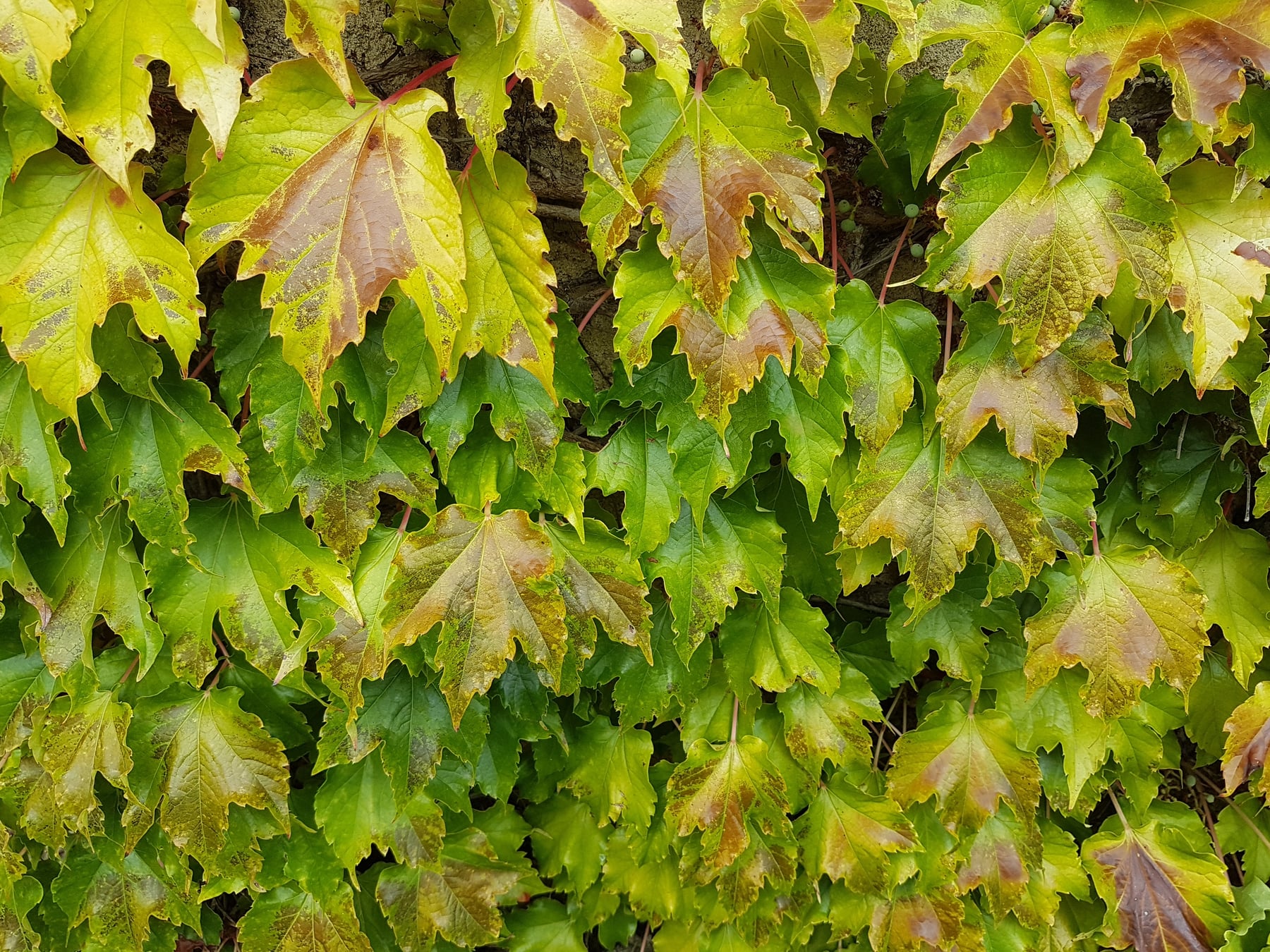
Boston ivy
Parthenocissus tricuspidata
Boston ivy has simple leaves with 3 pointed lobes and clings directly to the support by small adhesive pads, whereas Virginia creeper has compound leaves of 5 leaflets and climbs by tendrils with sucker-like pads.
🌿 Other Vitaceae to discover

ℹ️ Educational profile — do not use it to judge whether a plant is edible or safe.
🌱 This database is constantly evolving — species and information are added and corrected regularly. Spotted a mistake? Report it below.
© Floraneo — profile content is protected; reproduction without permission is prohibited. Photos remain under their own licence (see the credit shown on each photo).