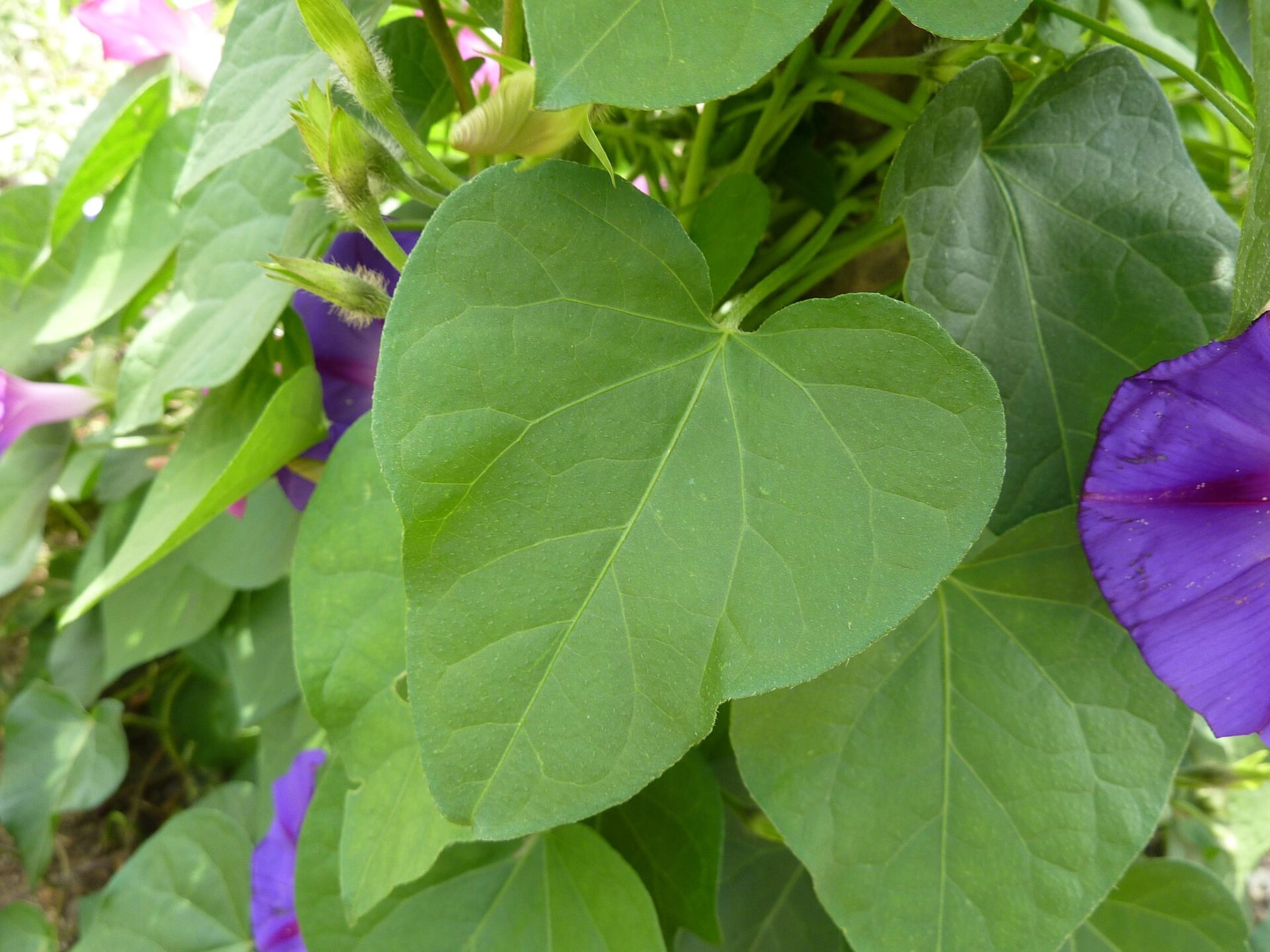
Leaf
James Steakley, Wikimedia · CC BY-SA 3.0
Sweet potato
Ipomoea batatas (L.) Lam.
Family: Convolvulaceae
- Trailing stems 1 to 4 m long
- Grown in the vegetable garden in a hot climate, or in a temperate climate with a long summer
- Flowering: Rarely seen in temperate climates; pink-violet funnel-shaped flowers in a hot climate
- Full sun
- Not hardy, needs a long warm season, does not tolerate frost
❓ How do you recognise this plant?
The sweet potato is not related to the potato — it is in fact a close cousin of bindweed and morning glory, grown for its sweet tuberous root rather than for its climbing foliage.
Learn to recognise it
Herbs and classic vegetable-garden vegetables. This plant is in the lesson “Herbs and classic vegetable-garden vegetables”, with 11 others.

🍃 Leaves
Heart-shaped or lobed, green or purplish depending on the variety, borne on trailing stems
🌸 Flowers
Funnel-shaped, pale pink to violet, resembling those of bindweed (same family)
🍎 Fruits
Small capsule, rarely formed in the French climate
🌿 Stem and habit
Trailing stem, rooting at the nodes; tuberous root orange, yellow or purple (the part eaten)
Distribution, pollinators, uses
🗺️ Distribution
Native to tropical America; grown in France notably in the south-west
🐝 Value for pollinators
Nectar-rich flowers when they appear, rarely seen in the French climate
✂️ Horticultural uses
Root vegetable for the vegetable garden that needs warmth, also used as an ornamental ground cover for its foliage
⚠️ Possible toxicity
Tuber edible when cooked; no known toxicity
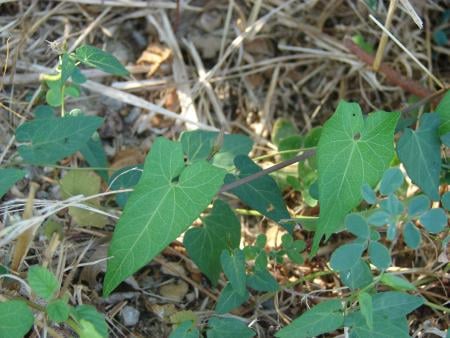
🌿 Other Convolvulaceae to discover

ℹ️ Educational profile — do not use it to judge whether a plant is edible or safe.
🌱 This database is constantly evolving — species and information are added and corrected regularly. Spotted a mistake? Report it below.
© Floraneo — profile content is protected; reproduction without permission is prohibited. Photos remain under their own licence (see the credit shown on each photo).