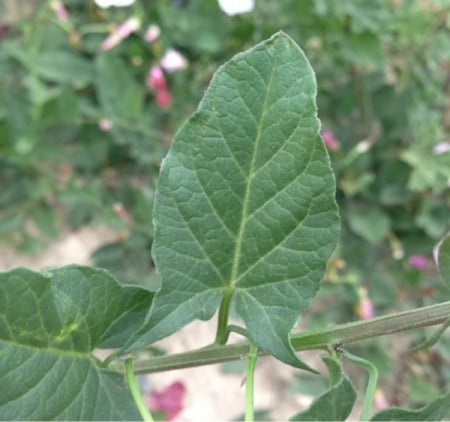
Leaf
Magnus Manske, Wikipedia · CC BY-SA 2.5
Common morning glory
Ipomoea purpurea (L.) Roth
Also known as: Purple morning glory, Tall morning glory
Family: Convolvulaceae
2 to 4 m in a single season
Gardens throughout France, sown every year at the foot of a sunny trellis, wire fence or stake; sometimes naturalised on waste ground
Flowering: July - October
Full sun
Not hardy (annual plant, killed by frost)
❓ How do you recognise this plant?
Each flower lasts only a single morning — faded by the afternoon — but the plant produces so many new ones each day that flowering seems uninterrupted all summer.
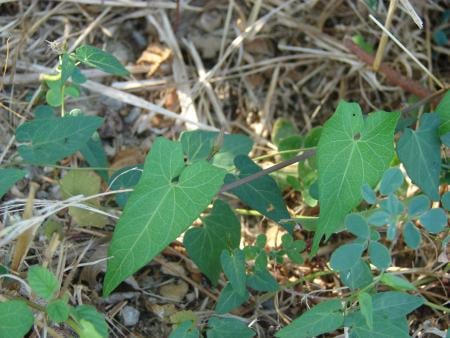
🍃 Leaves
Deciduous, heart-shaped, bright green, carried on a twining stem
🌸 Flowers
Large flaring funnel-shaped flowers, purple, pink or blue depending on the variety, open for only one morning
🍎 Fruits
Small round capsules containing several black seeds
🪵 Bark
Thin, green, herbaceous stem, twining around any support without tendrils or holdfasts
🗺️ Distribution
Native to tropical America, grown as an annual climber throughout France, sometimes naturalised in the south
🐝 Value for pollinators
Nectar-bearing flowers visited by bees and bumblebees early in the morning
✂️ Horticultural uses
The most widely sown annual climber for quickly covering a trellis or wire fence in a single season, each flower lasting only a day
⚠️ Possible toxicity
Seeds toxic if ingested (ergoline-type alkaloids related to LSA): digestive upset, and neurological/hallucinogenic effects if a large amount is ingested; also toxic to dogs, cats and horses.
🌿 Other Convolvulaceae to discover

ℹ️ Educational profile — do not use it to judge whether a plant is edible or safe.
🌱 This database is constantly evolving — species and information are added and corrected regularly. Spotted a mistake? Report it below.
© Floraneo — profile content is protected; reproduction without permission is prohibited. Photos remain under their own licence (see the credit shown on each photo).