Leaf
Paul Fabre, Tela Botanica · CC BY-SA 2.0
Hedge bindweed
Calystegia sepium (L.) R.Br.
Also known as: Bellbind, Larger bindweed
Family: Convolvulaceae
1 to 3 m long (climbing)
Hedges, damp wasteland, climbing over shrubs
Flowering: June – September
Full sun
Part shade
Very hardy, to -25°C
❓ How do you recognise this plant?
Its large white trumpets can reach twice the size of those of field bindweed. Hedge bindweed has much larger leaves and white flowers twice as wide as field bindweed, whose leaves are small and whose flowers are often tinged with pink.
🍃 Leaves
Large, arrow-shaped, with a deeply notched base
🌸 Flowers
Large white trumpets, much wider than field bindweed
🍎 Fruits
Small capsule with black seeds
🪵 Bark
Vigorous twining stems climbing high into hedges
🗺️ Distribution
Europe, Asia, North America; very common in France in hedges and damp woodland edges
🐝 Value for pollinators
Large white funnel-shaped flowers, visited by bees and the convolvulus hawk-moth (a night-flying moth)
✂️ Horticultural uses
Regarded as an invasive climbing weed, rarely tolerated in gardens
⚠️ Possible toxicity
No known toxicity to humans; mild purgative effect in large quantity
⚠️ Look-alike species
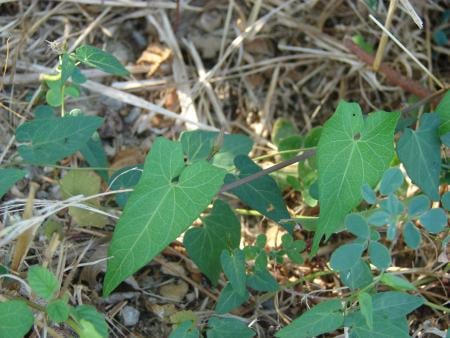
Hedge bindweed
Calystegia sepium
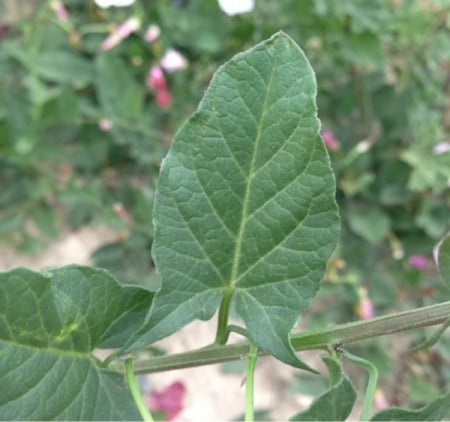
Field bindweed
Convolvulus arvensis
Hedge bindweed has much larger leaves and white flowers twice as wide as field bindweed, whose leaves are small and whose flowers are often tinged with pink.
🌿 Other Convolvulaceae to discover


ℹ️ Educational profile — do not use it to judge whether a plant is edible or safe.
🌱 This database is constantly evolving — species and information are added and corrected regularly. Spotted a mistake? Report it below.
© Floraneo — profile content is protected; reproduction without permission is prohibited. Photos remain under their own licence (see the credit shown on each photo).