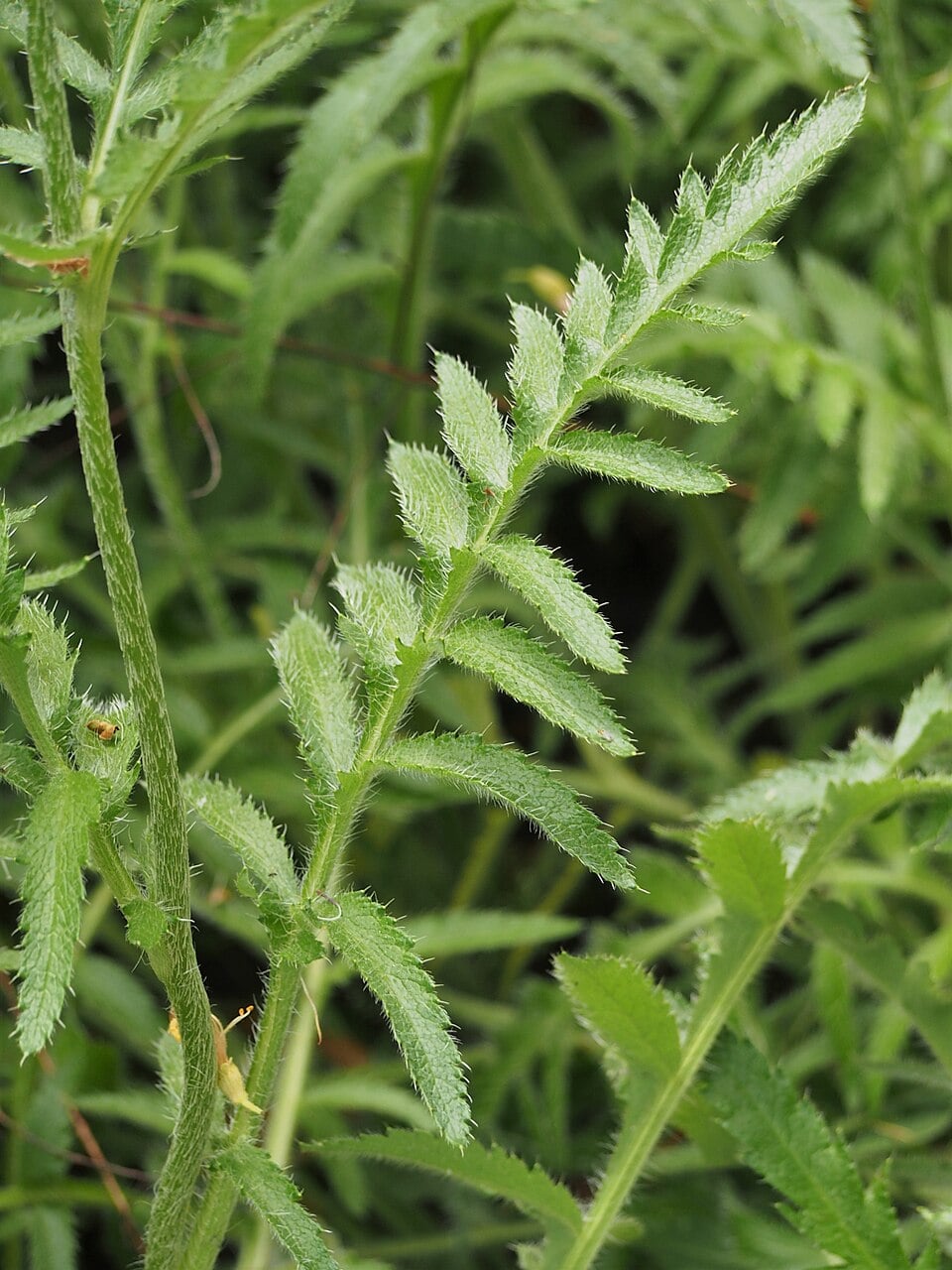
Leaf
Krzysztof Ziarnek, Kenraiz, Wikimedia · CC BY-SA 4.0
Plume poppy
Macleaya cordata (Willd.) R.Br.
Family: Papaveraceae
2 to 2.5 m tall
Large perennial planted at the back of a border or as a specimen for its architectural foliage.
Flowering: July – August
Full sun
Part shade
Hardy to about -20°C
❓ How do you recognise this plant?
Despite the poppy in its name, it does not produce flowers with visible petals: its large cream plumes are in fact thousands of tiny petal-less flowers, and its orange sap, like that of greater celandine, contains irritant alkaloids.
🍃 Leaves
Large, lobed, grey-green above and whitish beneath, recalling a fig leaf
🌸 Flowers
Without petals, tiny, cream to pinkish, gathered in large feathery terminal panicles
🍎 Fruits
Very small, barely visible capsules produced by the flowers
🪵 Bark
Not applicable — herbaceous plant
🗺️ Distribution
Native to China and Japan, widely grown in Europe as an ornamental perennial
🐝 Value for pollinators
Flowering not very rich in nectar, limited interest for pollinators
✂️ Horticultural uses
Planted at the back of a border or as a specimen for its decorative foliage and architectural habit, spreads by creeping rhizomes
⚠️ Possible toxicity
Orange sap containing alkaloids (including sanguinarine), irritant to the skin and toxic if ingested
🌿 Other Papaveraceae to discover



ℹ️ Educational profile — do not use it to judge whether a plant is edible or safe.
🌱 This database is constantly evolving — species and information are added and corrected regularly. Spotted a mistake? Report it below.
© Floraneo — profile content is protected; reproduction without permission is prohibited. Photos remain under their own licence (see the credit shown on each photo).