Habit
AnoukHrm, Tela Botanica · CC BY-SA 2.0
Miss Willmott's ghost
Eryngium giganteum M.Bieb.
Also known as: Giant sea holly, Tall eryngo
Family: Apiaceae
- 80 cm to 1.20 m tall
- Planted in a sunny, dry bed, poor, free-draining soils
- Full sun
- Hardy, to about -18°C, biennial plant that self-sows easily
In flower from July to August
2 months❓ How do you recognise this plant?
Miss Willmott's ghost self-seeds so abundantly in English gardens that it is nicknamed after a 19th-century gardener who is said to have discreetly scattered its seeds in her friends' gardens on her visits.
Learn to recognise it
Rare and collector perennials. This plant is in the lesson “Rare and collector perennials”, with 10 others.


🍃 Leaves
Basal leaves heart-shaped, stem leaves deeply cut and spiny, silvery
🌸 Flowers
Small bluish flower head surrounded by a large ruff of silvery prickly bracts
🍎 Fruits
Small achene
🌿 Stem and habit
Upright, branched, bluish herbaceous stem
Distribution, pollinators, uses
🗺️ Distribution
Native to the Caucasus; widely grown in France in dry beds
🐝 Value for pollinators
Very nectar-rich flowers, attractive to bees and many foraging insects
✂️ Horticultural uses
Biennial perennial for dry beds, planted for its spectacular silvery ruff surrounding each flower, also used as a dried flower
⚠️ Possible toxicity
No notable toxicity known
🌿 Other Apiaceae to discover
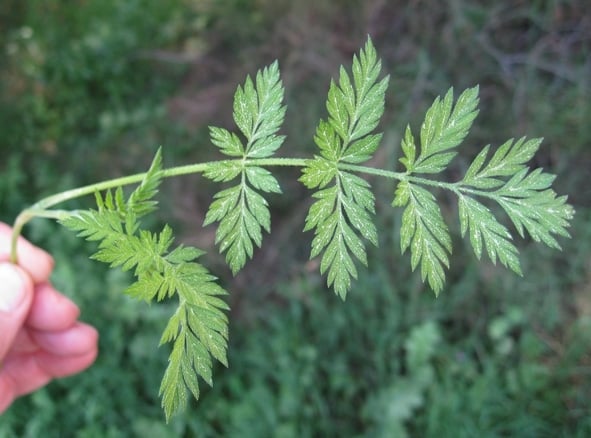


ℹ️ Educational profile — do not use it to judge whether a plant is edible or safe.
🌱 This database is constantly evolving — species and information are added and corrected regularly. Spotted a mistake? Report it below.
© Floraneo — profile content is protected; reproduction without permission is prohibited. Photos remain under their own licence (see the credit shown on each photo).