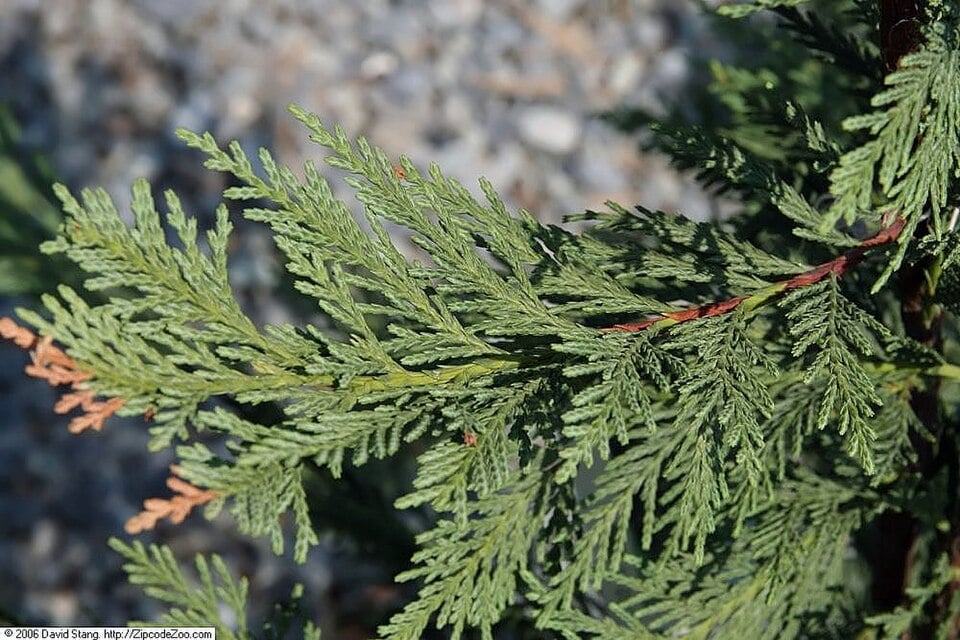
Leaf
David J. Stang, Wikimedia · CC BY-SA 4.0
Leyland cypress
× Cuprocyparis leylandii (A.B.Jacks. & Dallim.) Dallim.
Also known as: Leylandii
Family: Cupressaceae
- Can exceed 20 m if untrimmed (generally kept between 2 and 5 m as a hedge)
- Very fast-growing screening hedges, very widely planted in France and Europe
- Flowering: No notable flowering (tiny cones, of no ornamental value)
- Full sun, Part shade
- Hardy to about -20°C
❓ How do you recognise this plant?
Born by chance from a cross between two different genera of conifers, it grows so fast — sometimes more than a metre a year — that, if poorly maintained, it has become one of the main causes of neighbour disputes in Europe.
Learn to recognise it
Cedars, cypresses and sequoias. This plant is in the lesson “Cedars, cypresses and sequoias”, with 10 others.

A free account is enough for this lesson.
🍃 Leaves
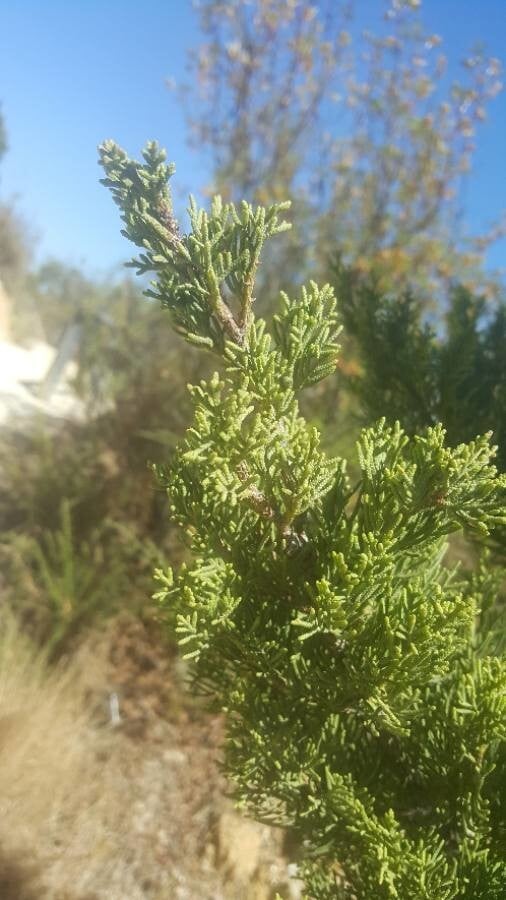
Evergreen, very fine scales, green to grey-green, arranged in dense flat sprays
🌸 Flowers
Tiny cones, of no ornamental value
🍎 Fruits
Small globular brown cones, rare on trimmed specimens
🪵 Bark
Reddish-brown, fibrous
Distribution, pollinators, uses
🗺️ Distribution
Garden hybrid that arose spontaneously in England in the late 19th century, between two North American conifers; now planted throughout Europe
🐝 Value for pollinators
Of no interest to pollinators
✂️ Horticultural uses
Screening and windbreak hedge with extremely rapid growth, requiring strict, regular trimming
⚠️ Possible toxicity
Foliage slightly toxic if eaten
🌿 Other Cupressaceae to discover
ℹ️ Educational profile — do not use it to judge whether a plant is edible or safe.
🌱 This database is constantly evolving — species and information are added and corrected regularly. Spotted a mistake? Report it below.
© Floraneo — profile content is protected; reproduction without permission is prohibited. Photos remain under their own licence (see the credit shown on each photo).