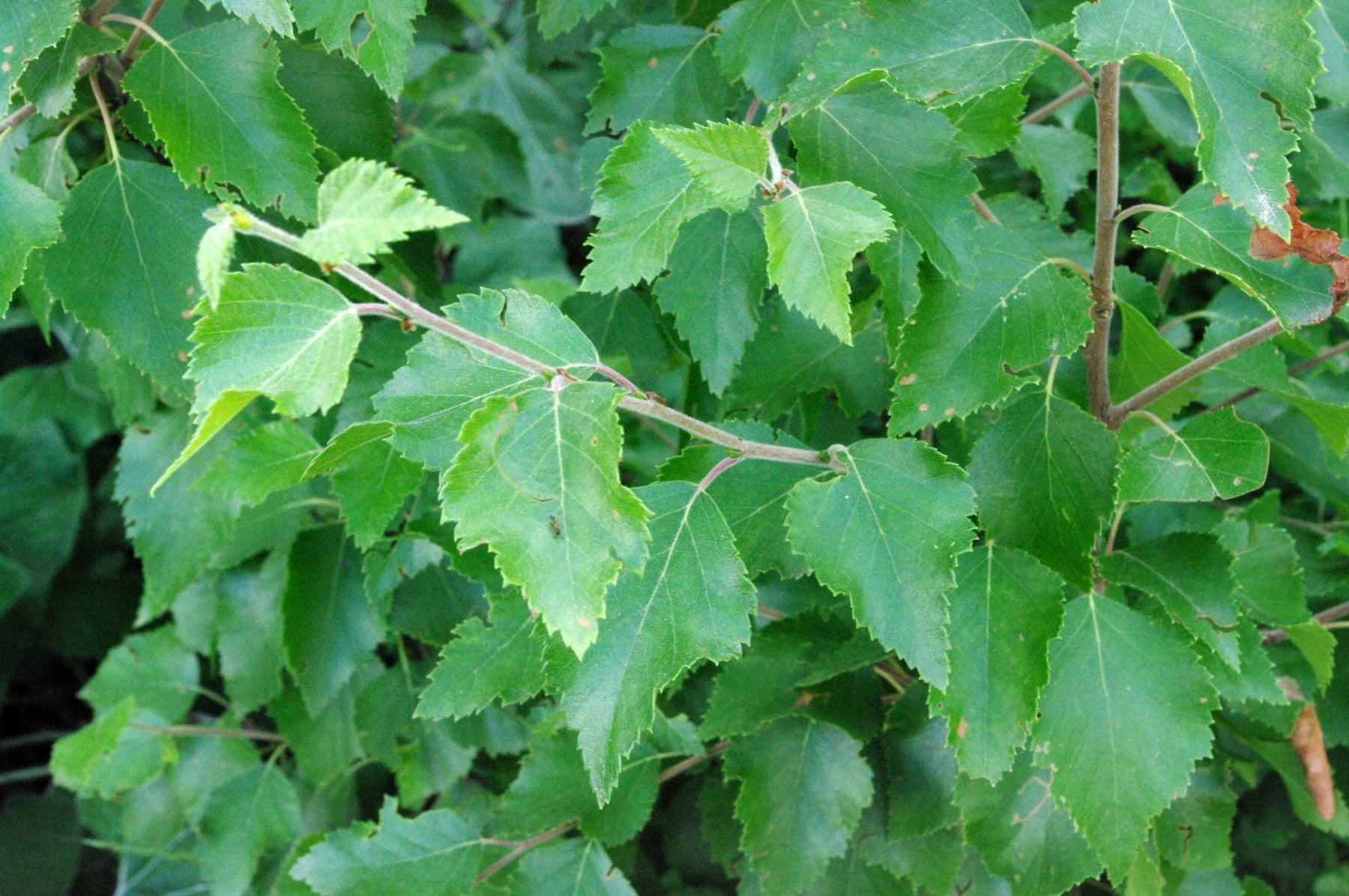
Leaf
Krzysztof Ziarnek, Kenraiz, Wikimedia · CC BY-SA 4.0
Himalayan birch
Betula utilis D.Don
Family: Betulaceae
12 to 18 m tall
Planted as a specimen in contemporary gardens for its decorative white bark
Flowering: March – April
Full sun
Part shade
Hardy to about -25°C
❓ How do you recognise this plant?
Its variety 'Jacquemontii' has the whitest bark of all cultivated birches, a sought-after asset for brightening a garden in winter. Silver birch has white bark that cracks into black diamonds with age and slender, often drooping branches, whereas Himalayan birch has pure white to pinkish bark that peels in thin horizontal sheets, without the black fissures.
🍃 Leaves
Deciduous, ovate, toothed, mid-green, turning yellow in autumn
🌸 Flowers
Hanging yellowish male catkins, upright, more discreet female catkins
🍎 Fruits
Small winged samara grouped in a catkin
🪵 Bark
Pure white to pinkish, peeling in thin horizontal sheets, particularly luminous in the variety jacquemontii
🗺️ Distribution
Native to the Himalaya, from Nepal to Kashmir
🐝 Value for pollinators
Pollen appreciated by bees in spring
✂️ Horticultural uses
Widely planted as a specimen or in small groups for its brilliant white bark, particularly decorative in winter
⚠️ Look-alike species
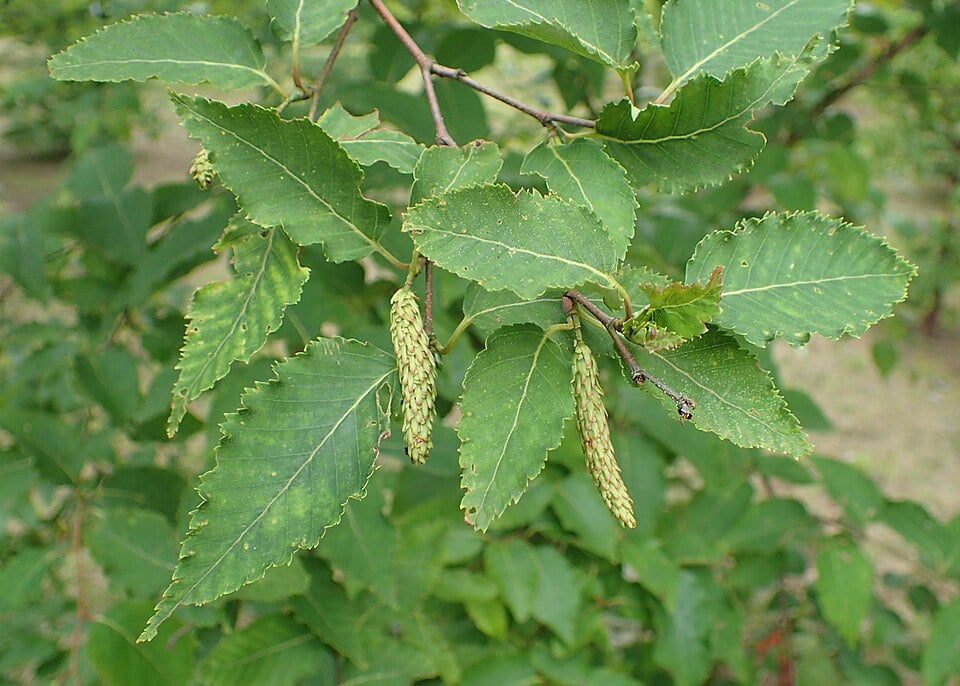
Himalayan birch
Betula utilis
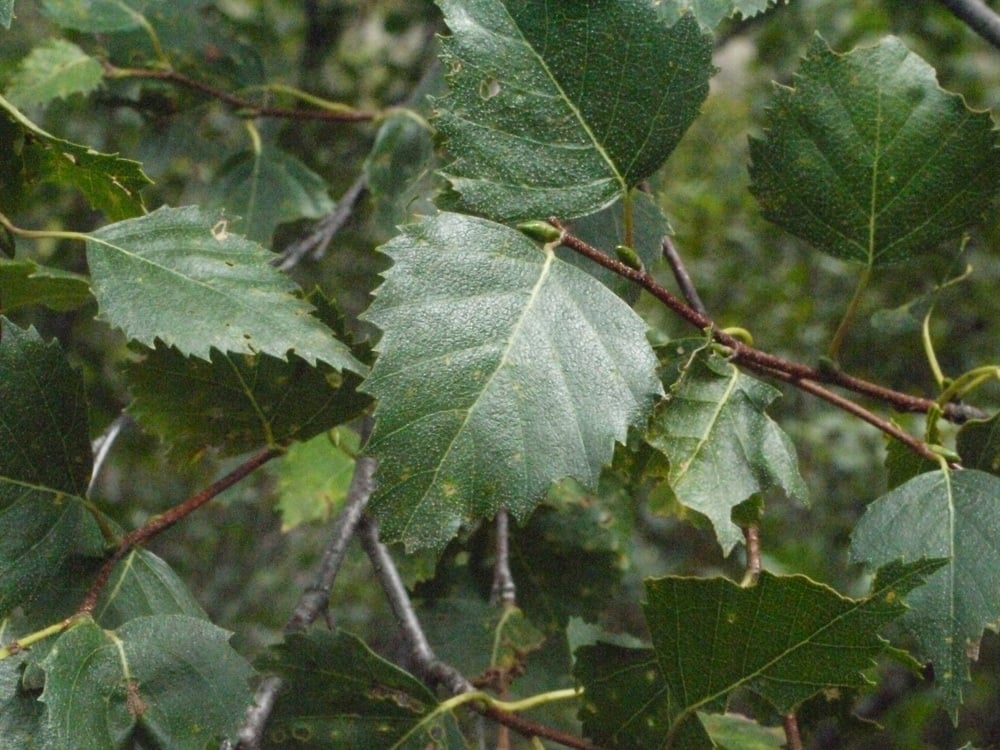
Silver birch
Betula pendula
Silver birch has white bark that cracks into black diamonds with age and slender, often drooping branches, whereas Himalayan birch has pure white to pinkish bark that peels in thin horizontal sheets, without the black fissures.
🌿 Other Betulaceae to discover
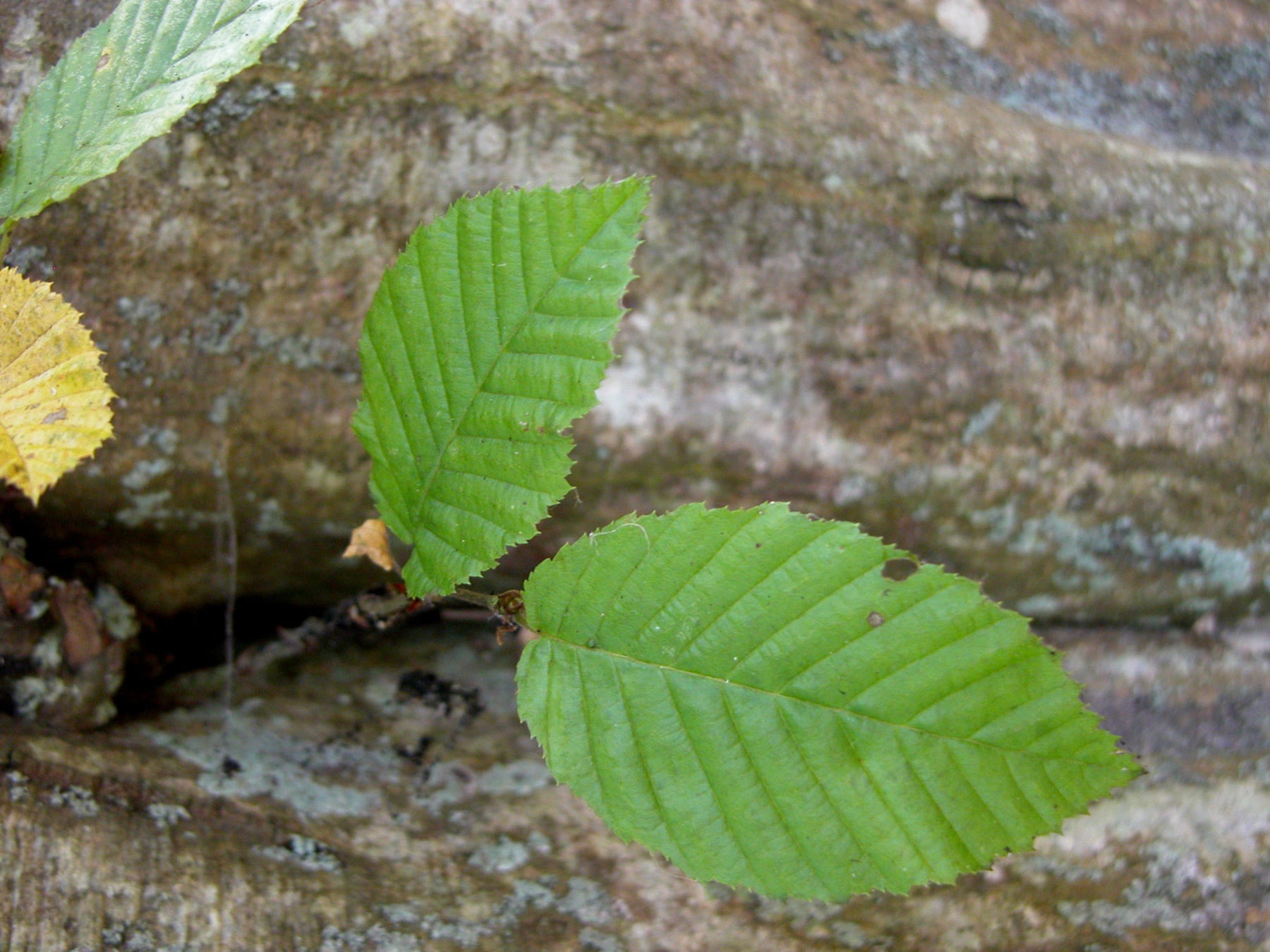
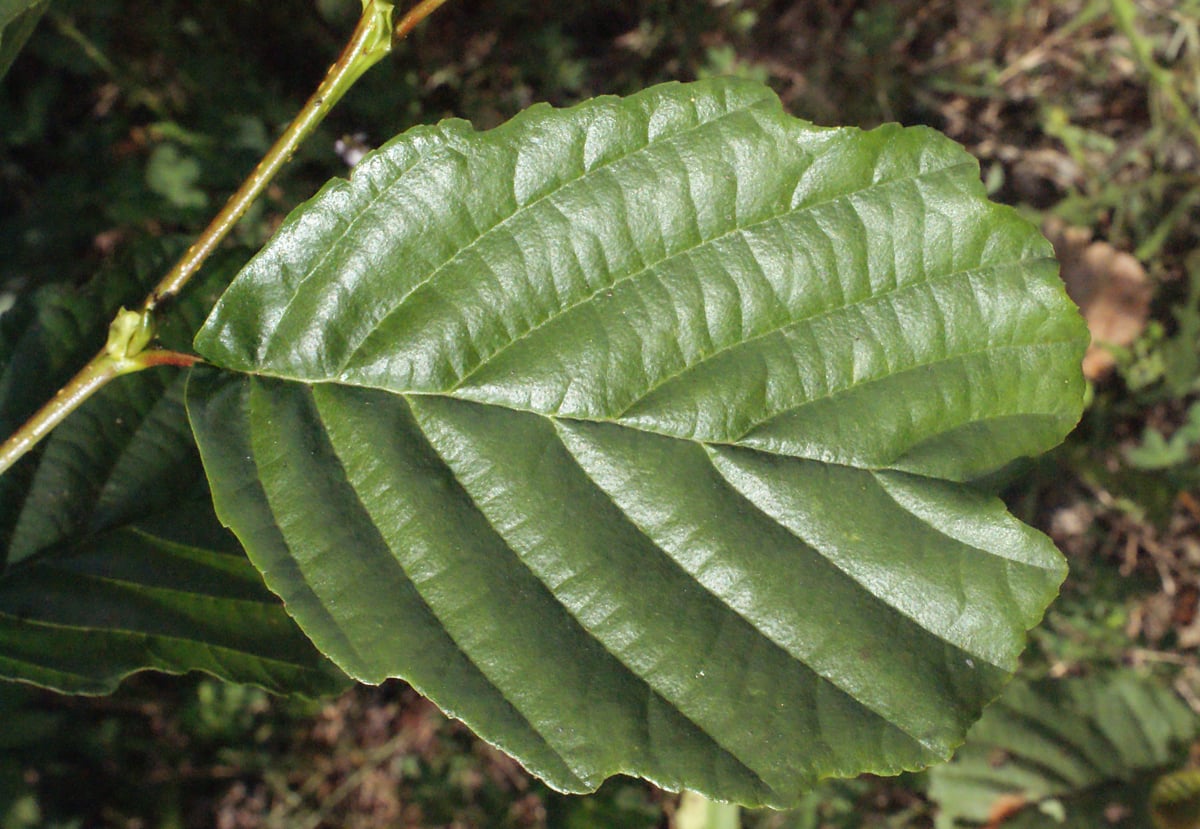
ℹ️ Educational profile — do not use it to judge whether a plant is edible or safe.
🌱 This database is constantly evolving — species and information are added and corrected regularly. Spotted a mistake? Report it below.
© Floraneo — profile content is protected; reproduction without permission is prohibited. Photos remain under their own licence (see the credit shown on each photo).