Leaf
Hladac, Wikimedia · CC BY-SA 4.0
- 10 to 20 m tall
- Torrent banks, alluvial ground and cool mountain slopes; tolerates cold well and poor or disturbed soils
- Full sun, Part shade
- Very hardy, to -35°C
In flower from February to April
3 months❓ How do you recognise this plant?
Like all alders, it lives with bacteria (Frankia) that fix nitrogen from the air in its roots: it enriches the soil and prepares the ground for other trees. Grey alder has pointed leaves that are grey and downy beneath, smooth pale grey bark and non-sticky buds, and grows mainly in the mountains; common alder has rounded leaves with a notched tip that are green beneath, cracked brown bark and sticky buds carried on a short stalk.
🍃 Leaves
Alternate, ovate and pointed, 4 to 10 cm, doubly toothed, dull green above and greyish-white and downy beneath
🌸 Flowers
Hanging male catkins 5 to 10 cm long, reddish-brown, from late winter; small egg-shaped female catkins
🍎 Fruits
Small woody cones 1 to 2 cm long, brown, that stay on the tree; tiny winged seeds
🪵 Bark
Smooth and pale grey, long without cracks
Distribution, pollinators, uses
🗺️ Distribution
Northern Europe and the mountains of Europe (Alps, Jura, Vosges), the Caucasus, North America
🐝 Value for pollinators
Early catkins supply pollen to bees from late winter
✂️ Horticultural uses
Pioneer tree to stabilise banks and replant poor or disturbed soils; it enriches the soil in nitrogen
⚠️ Possible toxicity
Not known to be toxic
⚠️ Look-alike species

Grey alder
Alnus incana

Common alder
Alnus glutinosa
Grey alder has pointed leaves that are grey and downy beneath, smooth pale grey bark and non-sticky buds, and grows mainly in the mountains; common alder has rounded leaves with a notched tip that are green beneath, cracked brown bark and sticky buds carried on a short stalk.
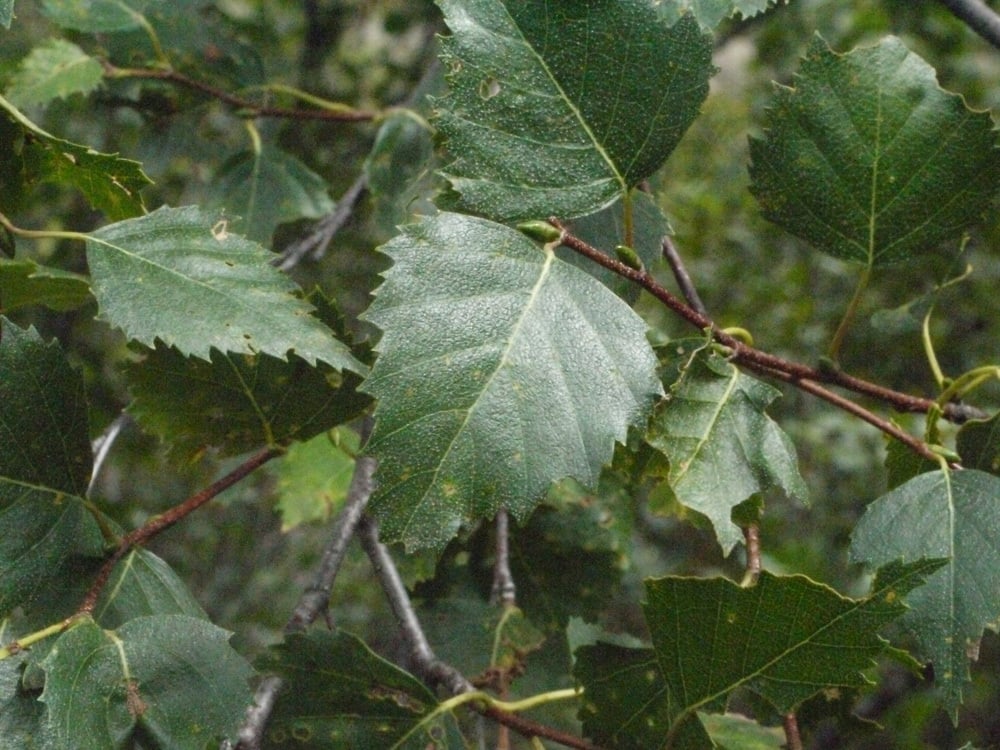
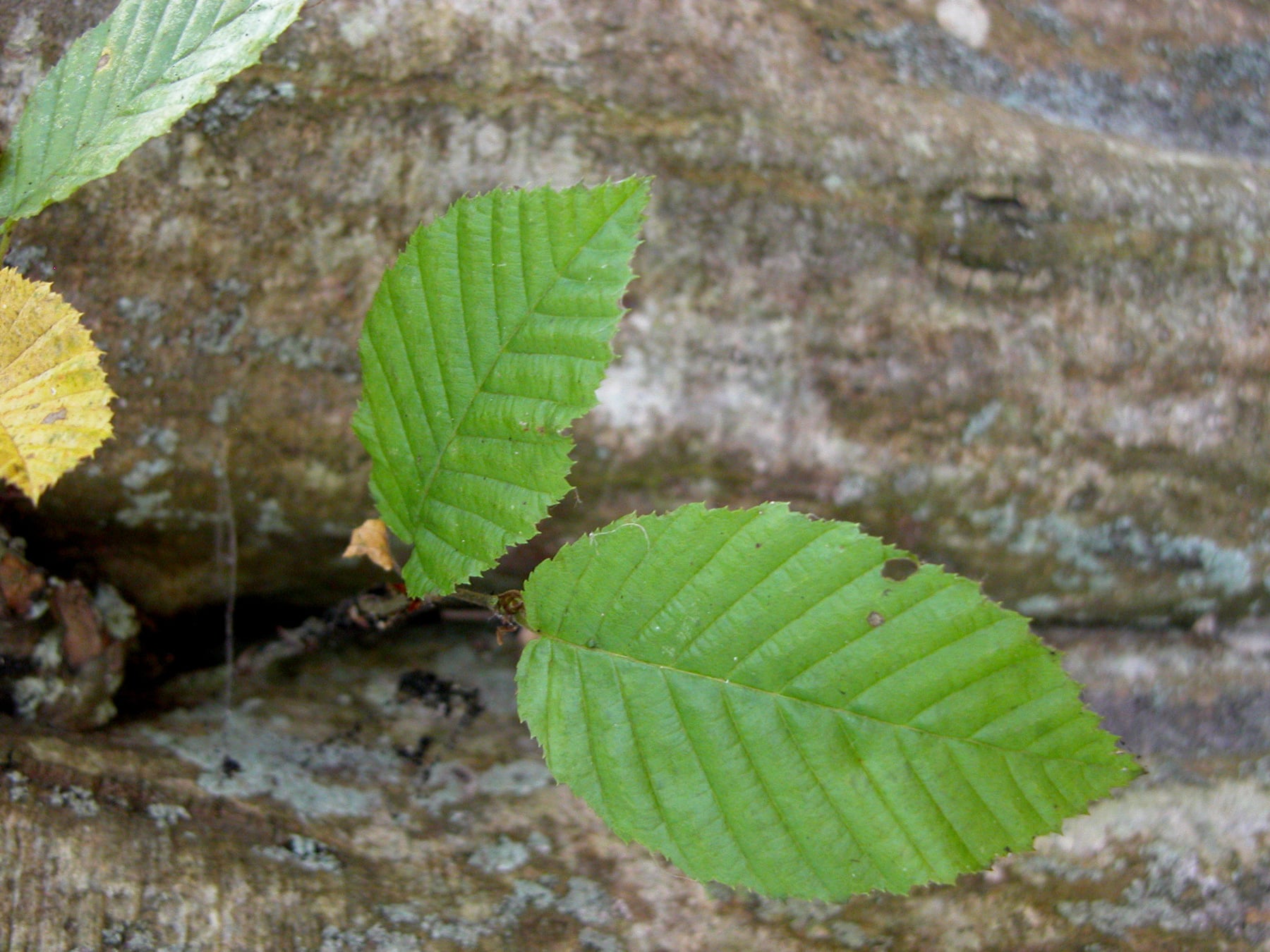
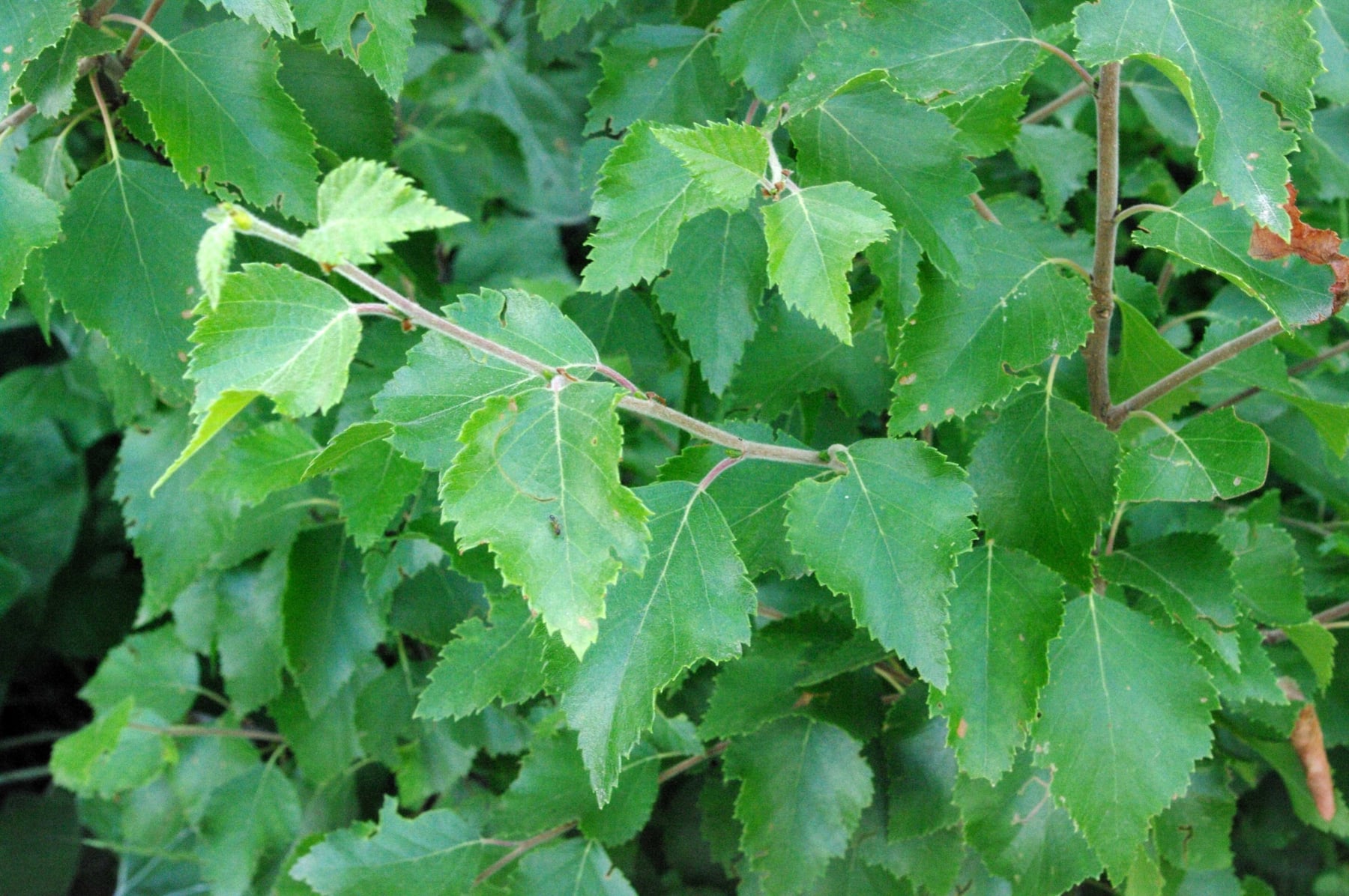
🌿 Other Betulaceae to discover
ℹ️ Educational profile — do not use it to judge whether a plant is edible or safe.
🌱 This database is constantly evolving — species and information are added and corrected regularly. Spotted a mistake? Report it below.
© Floraneo — profile content is protected; reproduction without permission is prohibited. Photos remain under their own licence (see the credit shown on each photo).