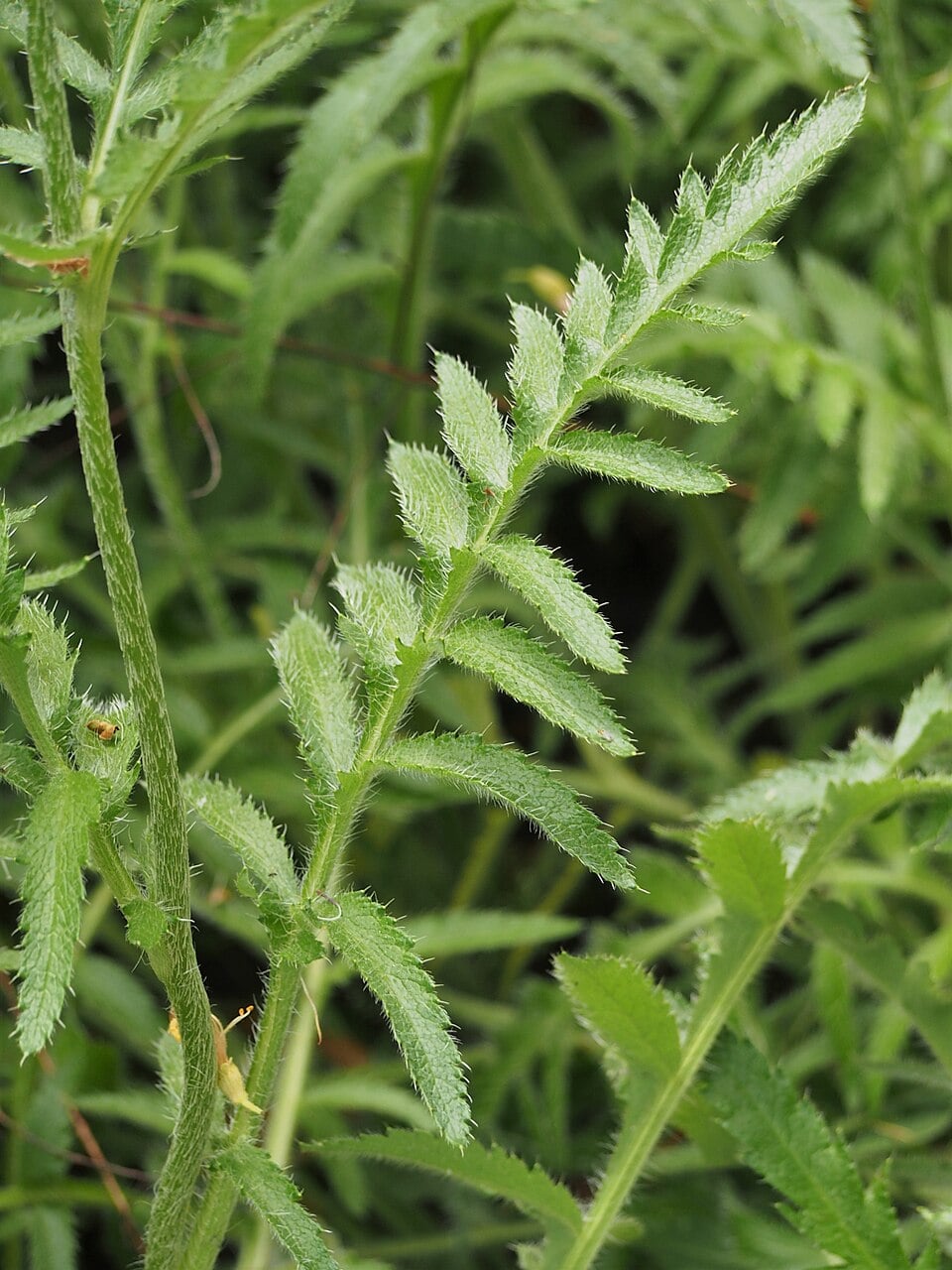
Leaf
Liliane Roubaudi, Tela Botanica · CC BY-SA 2.0
Greater celandine
Chelidonium majus L.
Family: Papaveraceae
30 to 80 cm
Walls, rubble, hedgerows, shady places near dwellings
Flowering: April – October
Full sun
Part shade
Shade
Very hardy, to -20°C
❓ How do you recognise this plant?
Bright orange sap that flows as soon as a stem or leaf is broken — very different from the white latex of the dandelion.
🍃 Leaves
Cut into rounded lobes, glaucous green, brittle
🌸 Flowers
Bright yellow, four petals, in small umbels
🍎 Fruits
Long narrow capsule
🪵 Bark
Brittle herbaceous stem, toxic bright orange sap
🗺️ Distribution
Europe, western Asia; common in France near dwellings, walls and hedgerows
🐝 Value for pollinators
Yellow flowers rich in pollen, visited by bees and hoverflies in spring
✂️ Horticultural uses
Rarely grown in ornamental gardens, tolerated at the foot of walls for its former medicinal use
⚠️ Possible toxicity
Orange latex toxic and irritant to skin and mucous membranes, dangerous if eaten (digestive and liver disorders)
🌿 Other Papaveraceae to discover



ℹ️ Educational profile — do not use it to judge whether a plant is edible or safe.
🌱 This database is constantly evolving — species and information are added and corrected regularly. Spotted a mistake? Report it below.
© Floraneo — profile content is protected; reproduction without permission is prohibited. Photos remain under their own licence (see the credit shown on each photo).