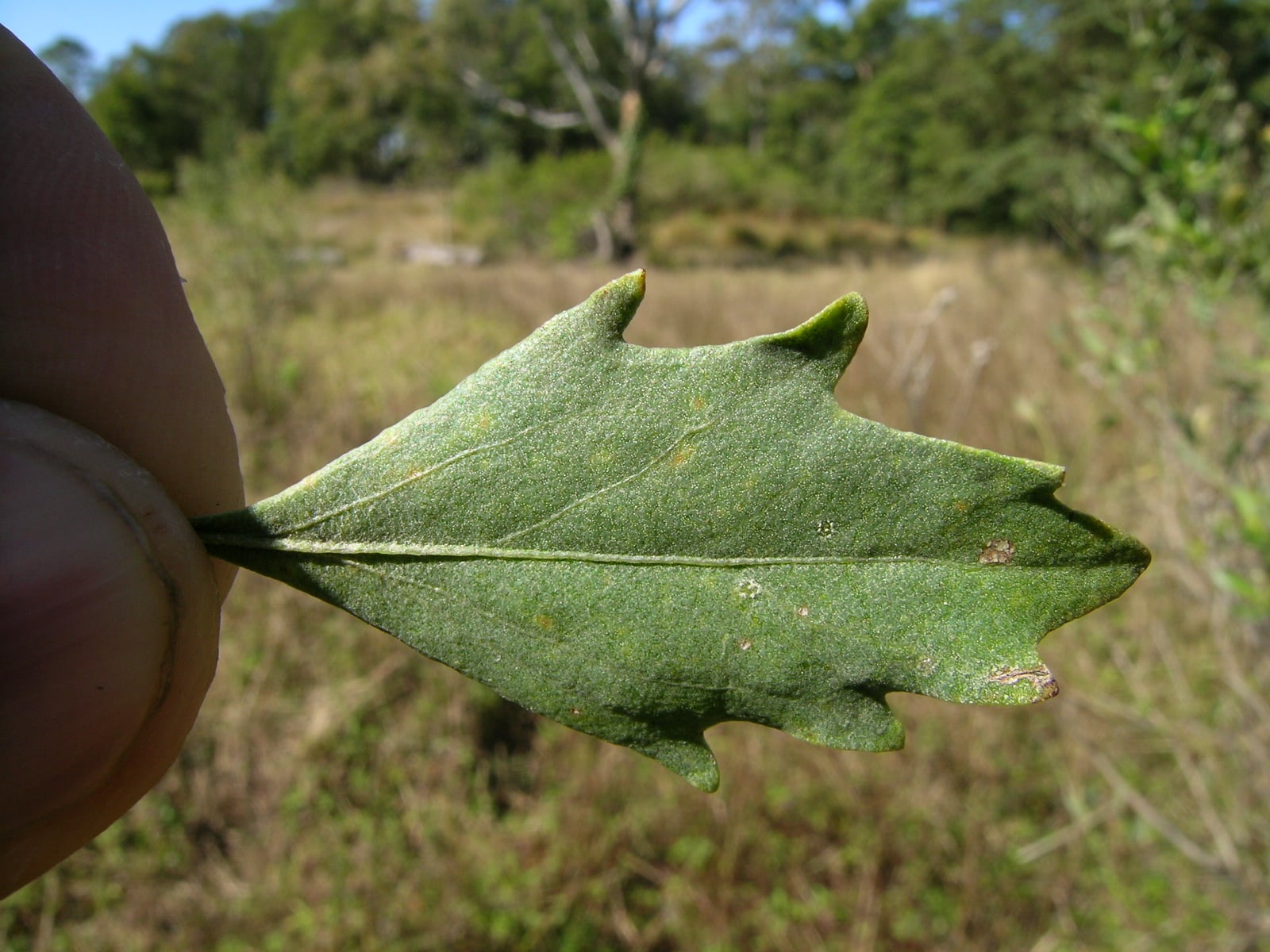
Leaf
Ellyne Geurts, iNaturalist · CC0
- 50 to 150 cm tall
- Cultivated fields, meadows, waste ground, fallow land, roadsides and banks; rich, cool soils
- Full sun
- Very hardy, to -30°C
In flower from June to September
4 months❓ How do you recognise this plant?
Its creeping roots go down more than a metre and a mere fragment is enough to give a new plant: it is one of the most persistent weeds of fields. Creeping thistle has small lilac flower heads 2 cm across, plain leaves without markings and a spineless stem; milk thistle has large purple flower heads 4 to 5 cm across surrounded by spiny bracts, glossy leaves marbled white along the veins and a robust stem.
🍃 Leaves
Alternate, narrow and lanceolate, cut into wavy lobes edged with spines, bright green, stalkless and without wings running down the stem
🌸 Flowers
Flower heads 1.5 to 2.5 cm, pale lilac-pink, scented, in corymbs; male and female flowers are borne on different plants
🍎 Fruits
Achenes topped by a plumed white pappus, dispersed by the wind
🌿 Stem and habit
Upright, ridged, spineless and unwinged stem, slightly downy
Distribution, pollinators, uses
🗺️ Distribution
Europe, Asia, North Africa; introduced and invasive in many regions of the world
🐝 Value for pollinators
Very rich in nectar: bees, bumblebees, hoverflies and butterflies visit it; the seeds feed goldfinches
✂️ Horticultural uses
Wild plant often regarded as a weed of crops and gardens, since its deep rhizomes regrow after cutting
⚠️ Possible toxicity
No notable toxicity known; the spines prick
⚠️ Look-alike species
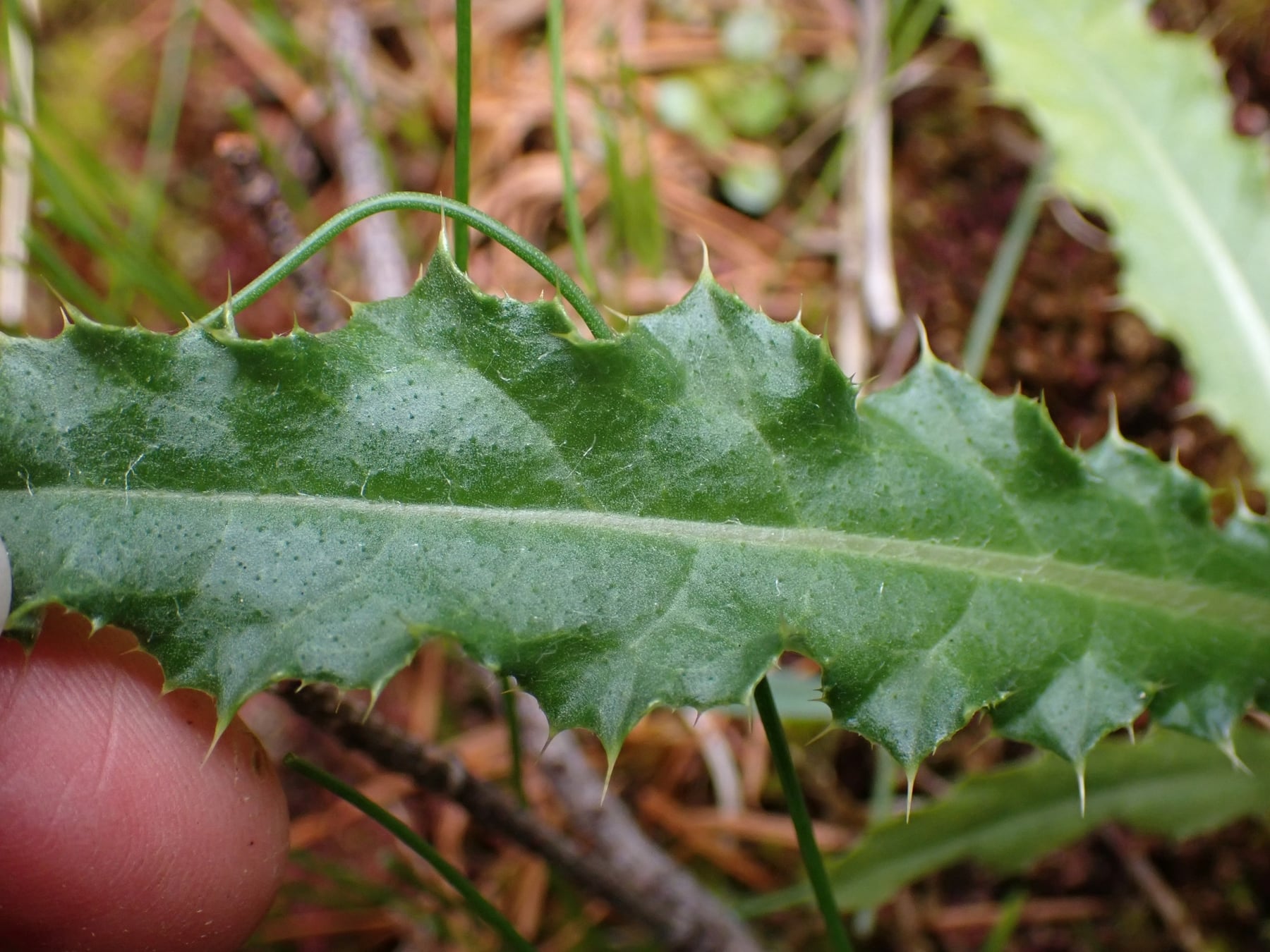
Creeping thistle
Cirsium arvense
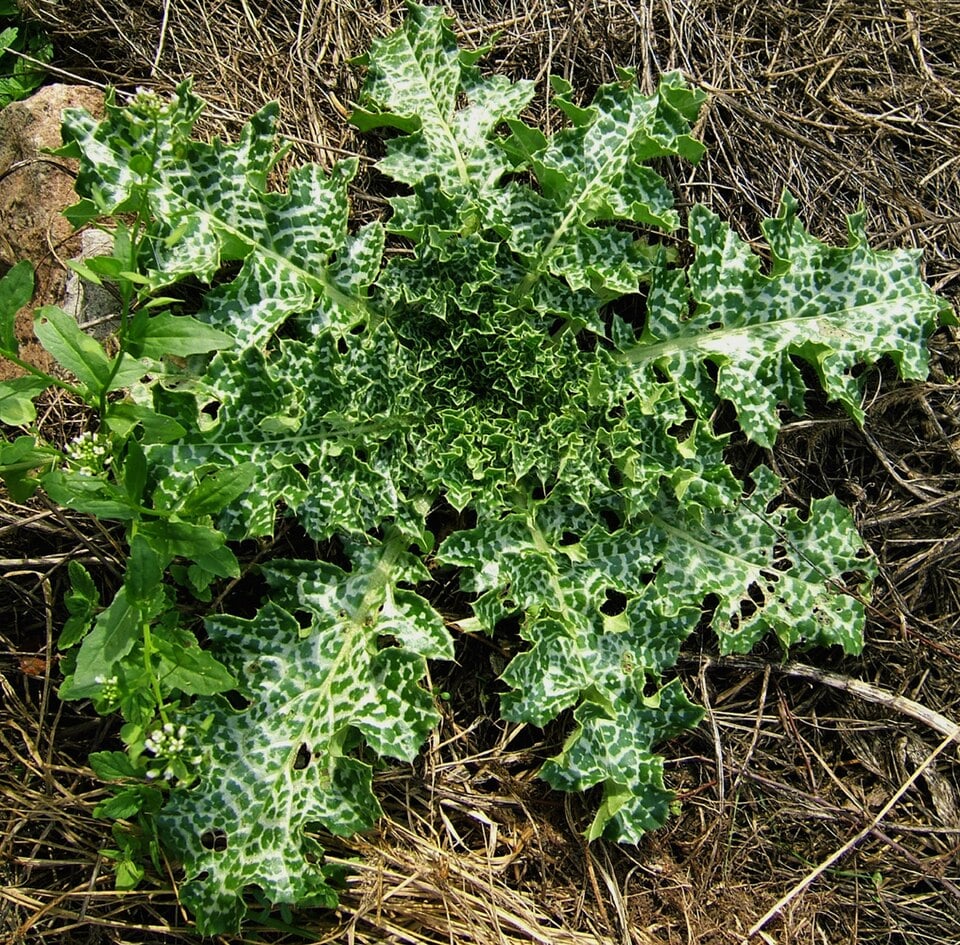
Milk thistle
Silybum marianum
Creeping thistle has small lilac flower heads 2 cm across, plain leaves without markings and a spineless stem; milk thistle has large purple flower heads 4 to 5 cm across surrounded by spiny bracts, glossy leaves marbled white along the veins and a robust stem.
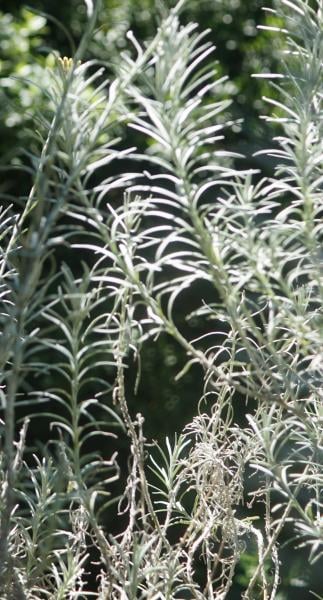
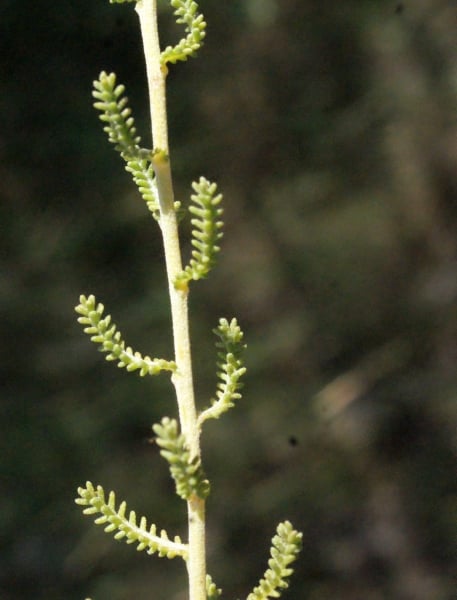
🌿 Other Asteraceae to discover
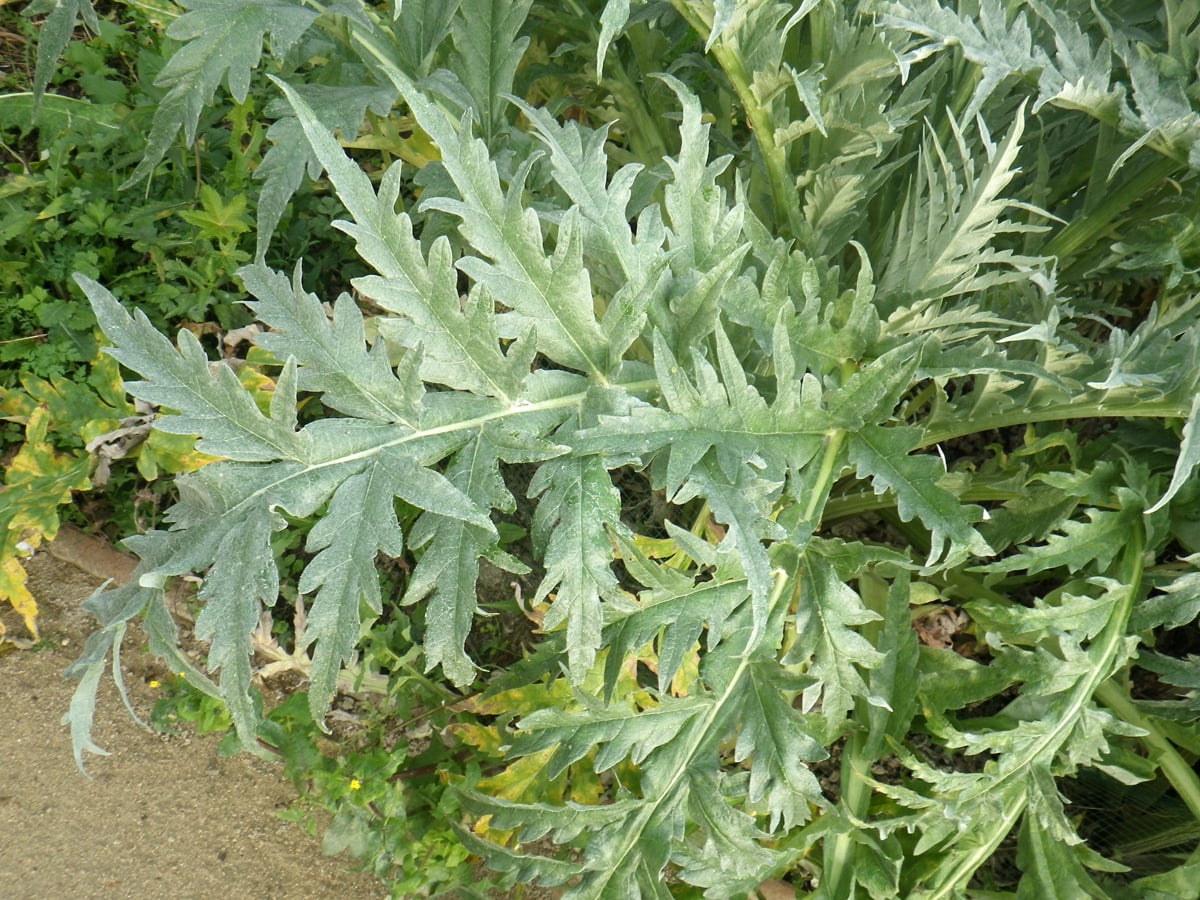
ℹ️ Educational profile — do not use it to judge whether a plant is edible or safe.
🌱 This database is constantly evolving — species and information are added and corrected regularly. Spotted a mistake? Report it below.
© Floraneo — profile content is protected; reproduction without permission is prohibited. Photos remain under their own licence (see the credit shown on each photo).