Leaf
Liliane Roubaudi, Tela Botanica · CC BY-SA 2.0
Globe artichoke
Cynara scolymus L.
Also known as: Artichoke
Family: Asteraceae
1 to 1.5 m tall
Grown in vegetable gardens, rich well-drained soils
Flowering: June – August if not harvested
Full sun
Fairly hardy, to about -12°C depending on variety
❓ How do you recognise this plant?
What we eat of the artichoke is an immature flower bud — if left to flower, it becomes a magnificent blue-violet flower head, much loved by bees. Cardoon and globe artichoke are the same botanical species selected in different ways: cardoon for its fleshy stalks, artichoke for its large, still-closed flower head.
🍃 Leaves
Large, deeply cut, grey-green, spiny or not depending on the variety
🌸 Flowers
Large blue-violet flower head inside a fleshy involucre of scales
🍎 Fruits
Achene topped with a silky pappus
🪵 Bark
Large perennial herbaceous plant forming a rosette of large leaves.
🗺️ Distribution
Native to the Mediterranean basin; grown in France notably in Brittany and Provence
🐝 Value for pollinators
Large flower head with abundant nectar if left to flower, very attractive to bees and bumblebees
✂️ Horticultural uses
Perennial flower-vegetable for the kitchen garden, harvested before the flower head opens fully
⚠️ Possible toxicity
Immature flower head edible; no known toxicity
⚠️ Look-alike species
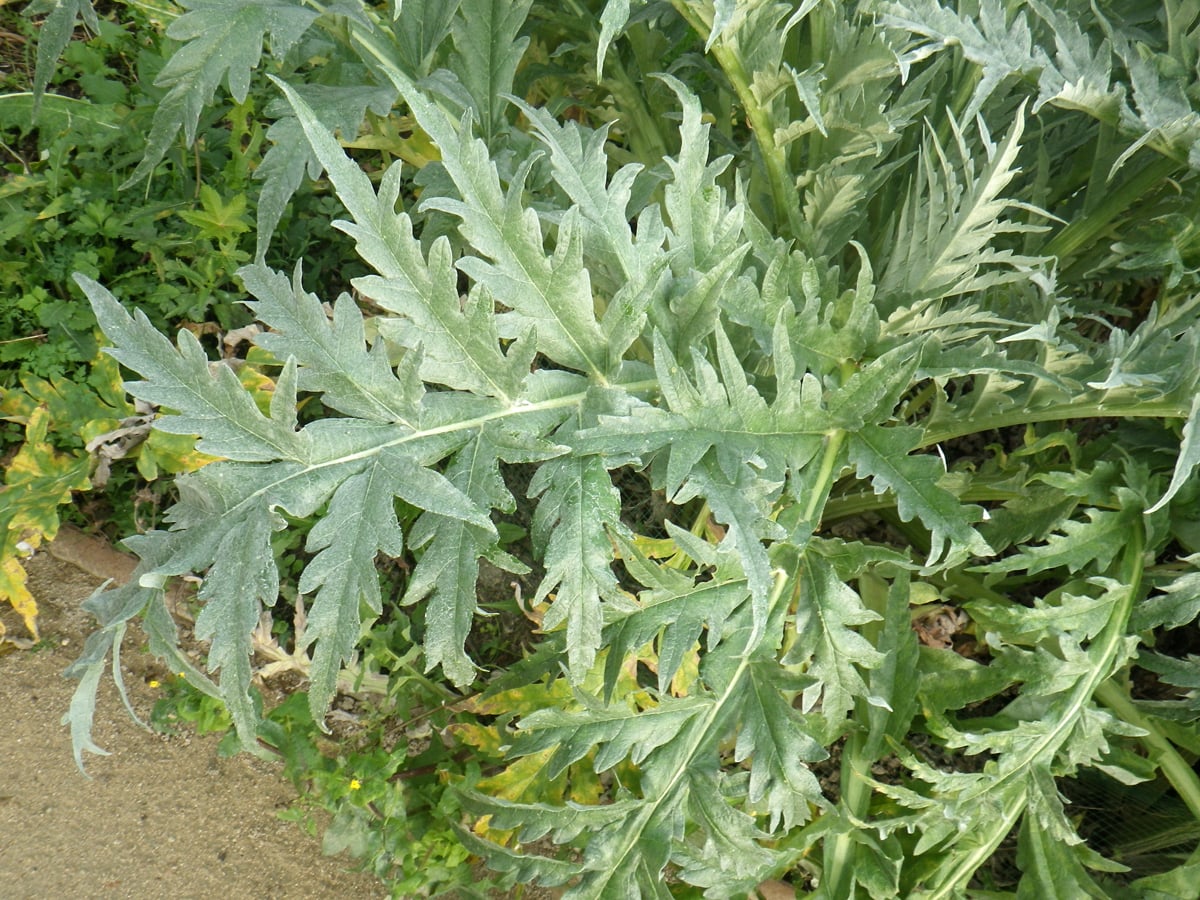
Globe artichoke
Cynara scolymus
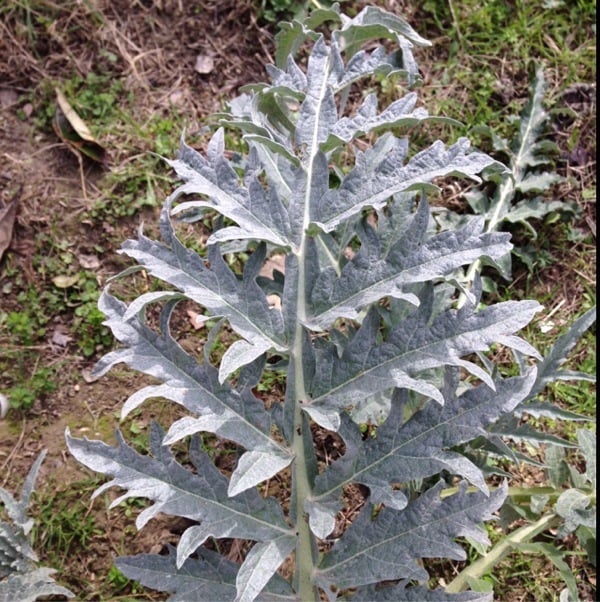
Cardoon
Cynara cardunculus
Cardoon and globe artichoke are the same botanical species selected in different ways: cardoon for its fleshy stalks, artichoke for its large, still-closed flower head.
🌿 Other Asteraceae to discover


ℹ️ Educational profile — do not use it to judge whether a plant is edible or safe.
🌱 This database is constantly evolving — species and information are added and corrected regularly. Spotted a mistake? Report it below.
© Floraneo — profile content is protected; reproduction without permission is prohibited. Photos remain under their own licence (see the credit shown on each photo).