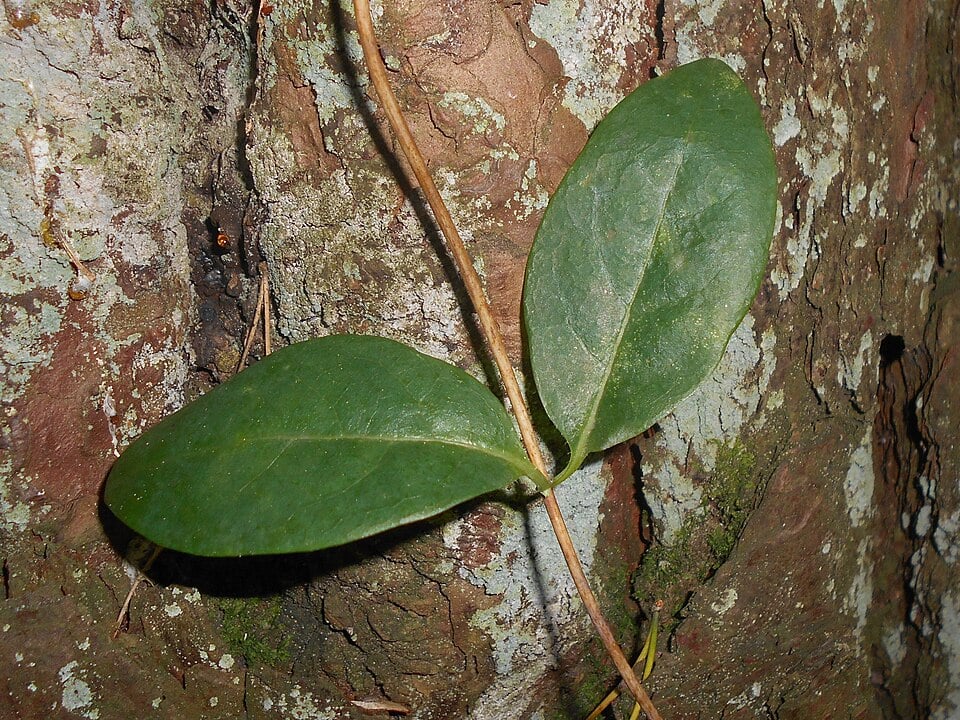
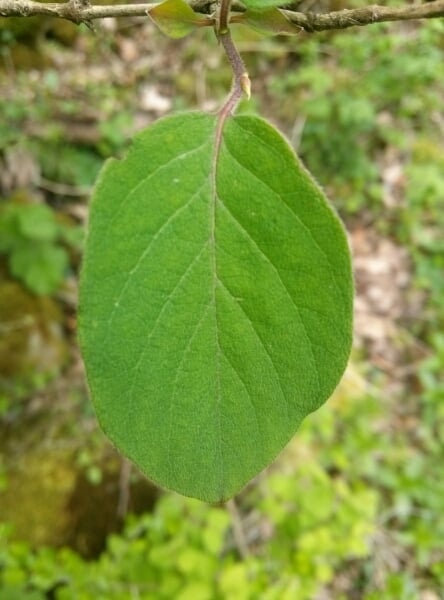
Leaf
Salicyna, Wikimedia · CC BY-SA 4.0

Common honeysuckle

Lonicera periclymenum L.
Also known as: Woodbine, European honeysuckle
Family: Caprifoliaceae
twining climber 2 to 5 m long
Hedges, woodland edges and understorey, climbing over bushes
Flowering: June – September
Full sun
Part shade
Very hardy, to -20°C

❓ How do you recognise this plant?

Powerful fragrance in the evening — one of the most scented flowers of our hedgerows. Fly honeysuckle bears its flowers in pairs in the leaf axils on a rather bushy shrub, whereas common honeysuckle has flowers grouped in terminal heads at the ends of climbing stems.
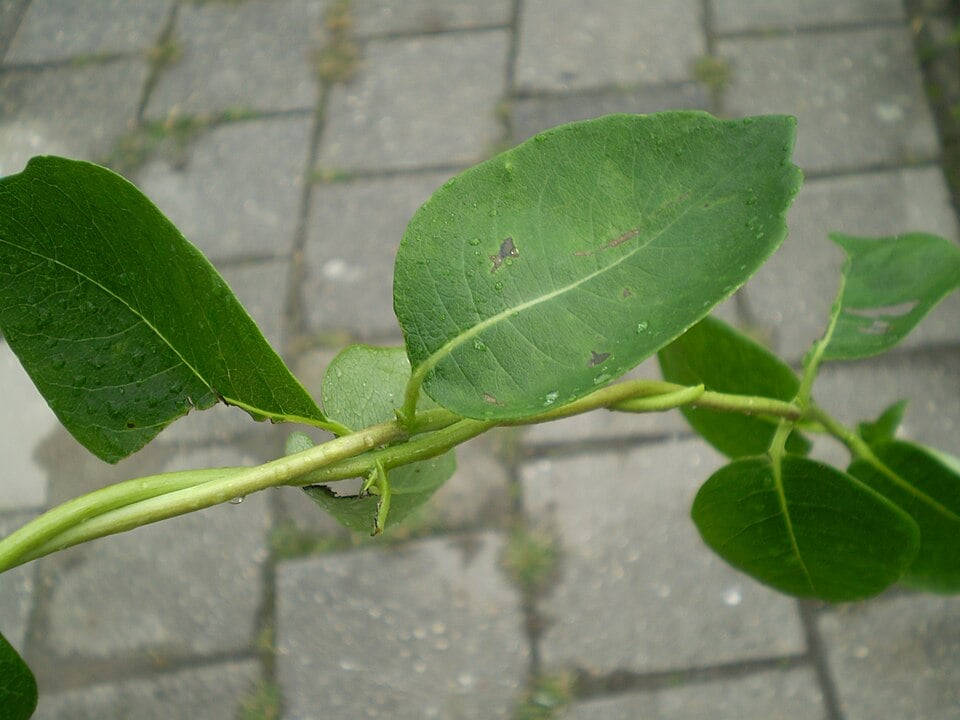
🍃 Leaves
Opposite, ovate, entire, slightly bluish beneath
🌸 Flowers
Long cream-yellow tubes tinged with pink, very fragrant in the evening
🍎 Fruits
Glossy red berries, generally in close pairs in the leaf axils.
🪵 Bark
Twining stems winding around supports
🗺️ Distribution
Europe, North Africa; very common in hedges and woodland edges throughout France.
🐝 Value for pollinators
Very fragrant flowers in the evening, adapted to long-tongued moths (hawk-moths), also visited by bumblebees.
✂️ Horticultural uses
Planted to clothe pergolas, trellises and fences thanks to its powerful fragrance.

⚠️ Possible toxicity

Red berries toxic if eaten, causing digestive upset (vomiting, diarrhoea).

⚠️ Look-alike species

Common honeysuckle
Common honeysuckle
Lonicera periclymenum
Fly honeysuckle
Fly honeysuckle
Lonicera xylosteum

Fly honeysuckle bears its flowers in pairs in the leaf axils on a rather bushy shrub, whereas common honeysuckle has flowers grouped in terminal heads at the ends of climbing stems.

Common honeysuckle
Common honeysuckle
Lonicera periclymenum
Japanese honeysuckle
Lonicera japonica

Common honeysuckle is deciduous, with flowers tinged red-purple from the moment they open, whereas Japanese honeysuckle keeps semi-evergreen foliage in winter and its white flowers turn yellow after flowering.

ℹ️ Educational profile — do not use it to judge whether a plant is edible or safe.

🌱 This database is constantly evolving — species and information are added and corrected regularly. Spotted a mistake? Report it below.

© Floraneo — profile content is protected; reproduction without permission is prohibited. Photos remain under their own licence (see the credit shown on each photo).