Leaf
Marija Gaj, Wikimedia · CC BY-SA 4.0
Coast redwood
Sequoia sempervirens (D.Don) Endl.
Also known as: Redwood
Family: Cupressaceae
Up to 30-40 m in France (over 100 m in its native range), with a very tapering trunk
Planted singly in large parks, arboreta and château estates; rarer in small gardens because of its final size
Flowering: February - March (inconspicuous flowering, conifer)
Full sun
Part shade
Hardy to -15°C or so, appreciates some atmospheric humidity
❓ How do you recognise this plant?
It is the tallest tree species in the world in the wild, but in France, where the climate is less favourable, it rarely exceeds 40 m. Giant sequoia has very thick, spongy red-brown bark and pointed scale-like leaves pressed against the shoots, whereas coast redwood has flat needle-like leaves arranged flat on either side of the shoot, like a yew.
🍃 Leaves
Flat, soft needles arranged flat on either side of the shoot, dark green above, two white bands beneath
🌸 Flowers
Small, inconspicuous yellowish male cones in late winter, at the tips of the shoots
🍎 Fruits
Small woody ovoid cones 2 to 3 cm long, much smaller than those of the giant sequoia
🪵 Bark
Thick, fibrous and spongy bark, reddish-brown, peeling off in long vertical strips
🗺️ Distribution
Native to the Pacific coast of the United States, introduced and planted in large French parks since the 19th century
🐝 Value for pollinators
Of little interest to pollinators, but its thick, fibrous bark shelters many insects and serves as a refuge for wildlife
✂️ Horticultural uses
Majestic ornamental tree for large parks and arboreta, planted singly for its slender silhouette and fast growth
⚠️ Possible toxicity
Non-toxic
⚠️ Look-alike species
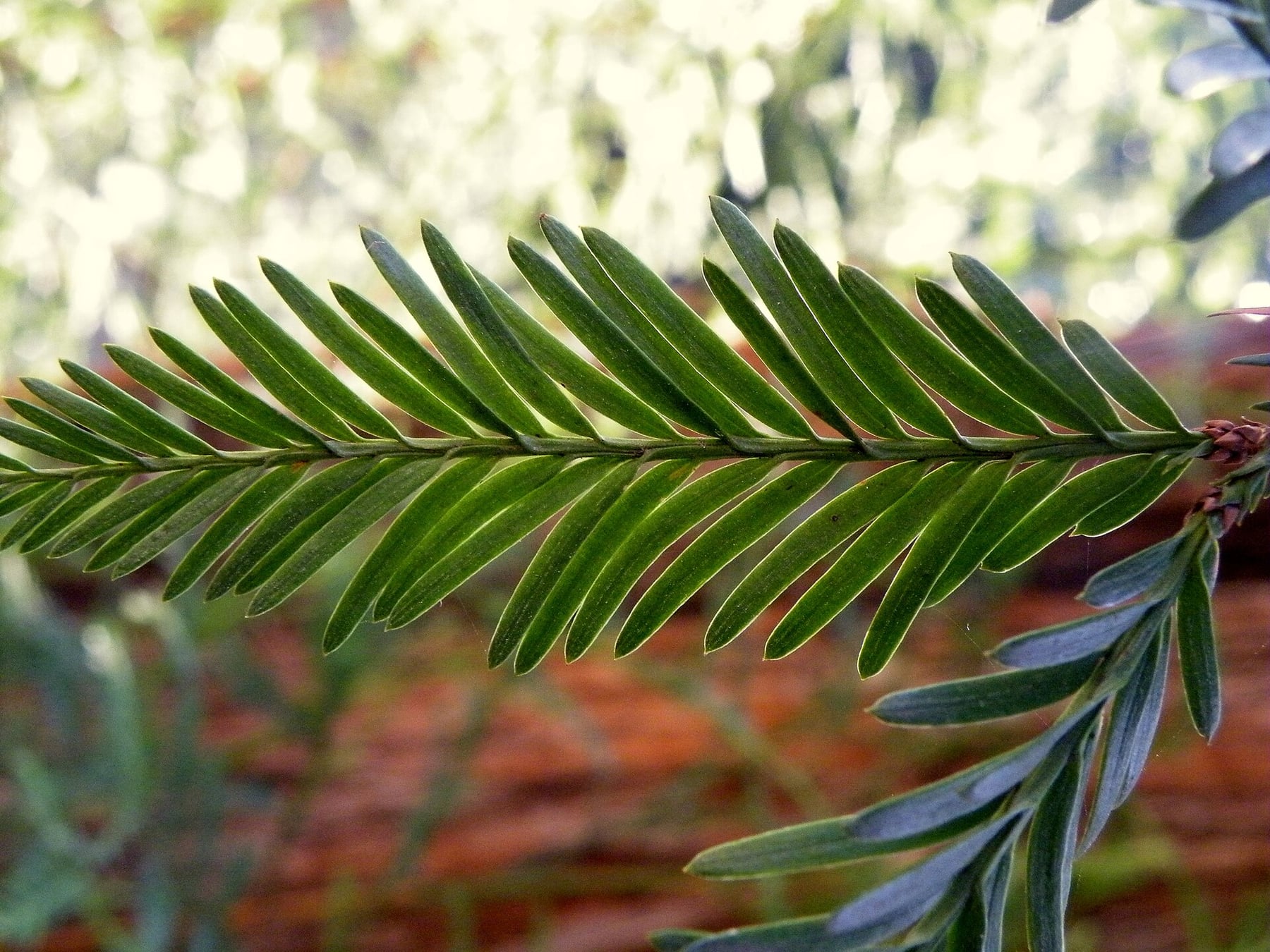
Coast redwood
Sequoia sempervirens
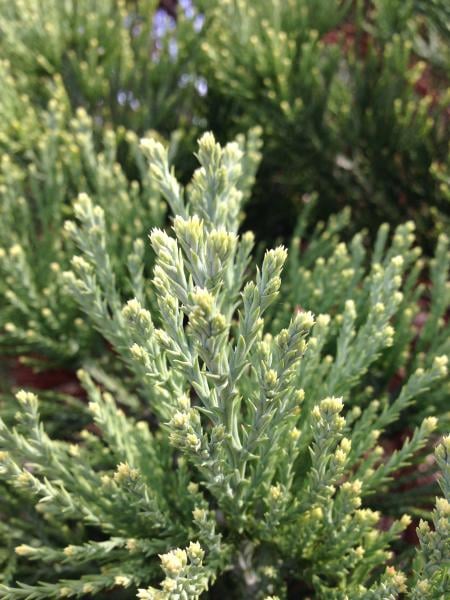
Giant sequoia
Sequoiadendron giganteum
Giant sequoia has very thick, spongy red-brown bark and pointed scale-like leaves pressed against the shoots, whereas coast redwood has flat needle-like leaves arranged flat on either side of the shoot, like a yew.
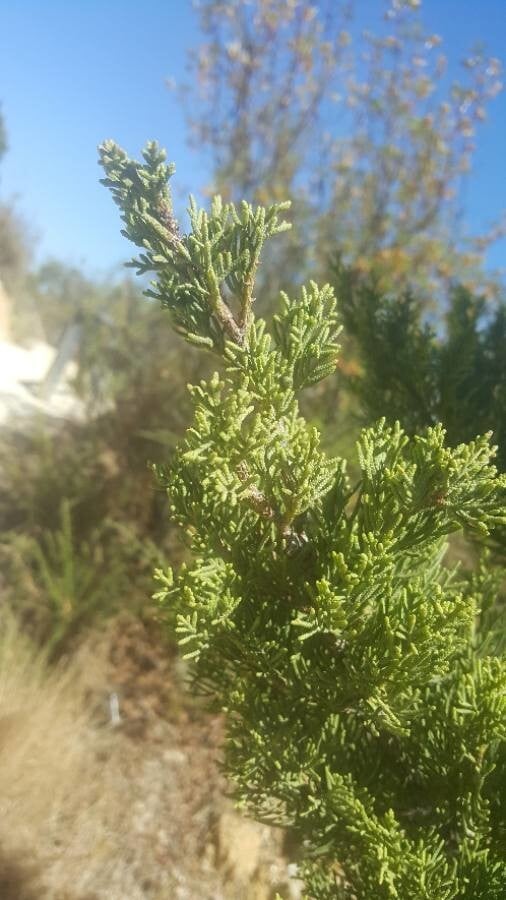
🌿 Other Cupressaceae to discover


ℹ️ Educational profile — do not use it to judge whether a plant is edible or safe.
🌱 This database is constantly evolving — species and information are added and corrected regularly. Spotted a mistake? Report it below.
© Floraneo — profile content is protected; reproduction without permission is prohibited. Photos remain under their own licence (see the credit shown on each photo).