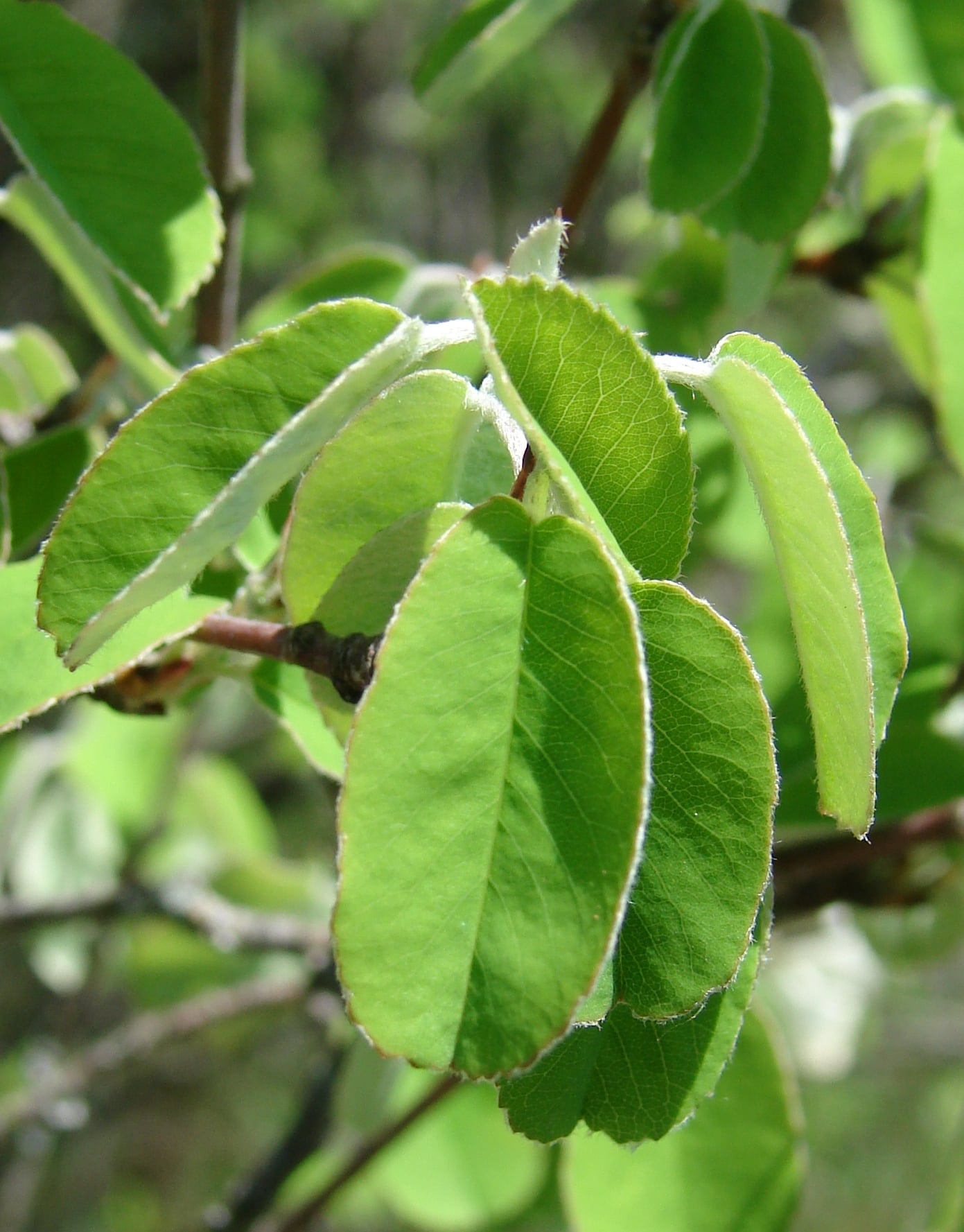
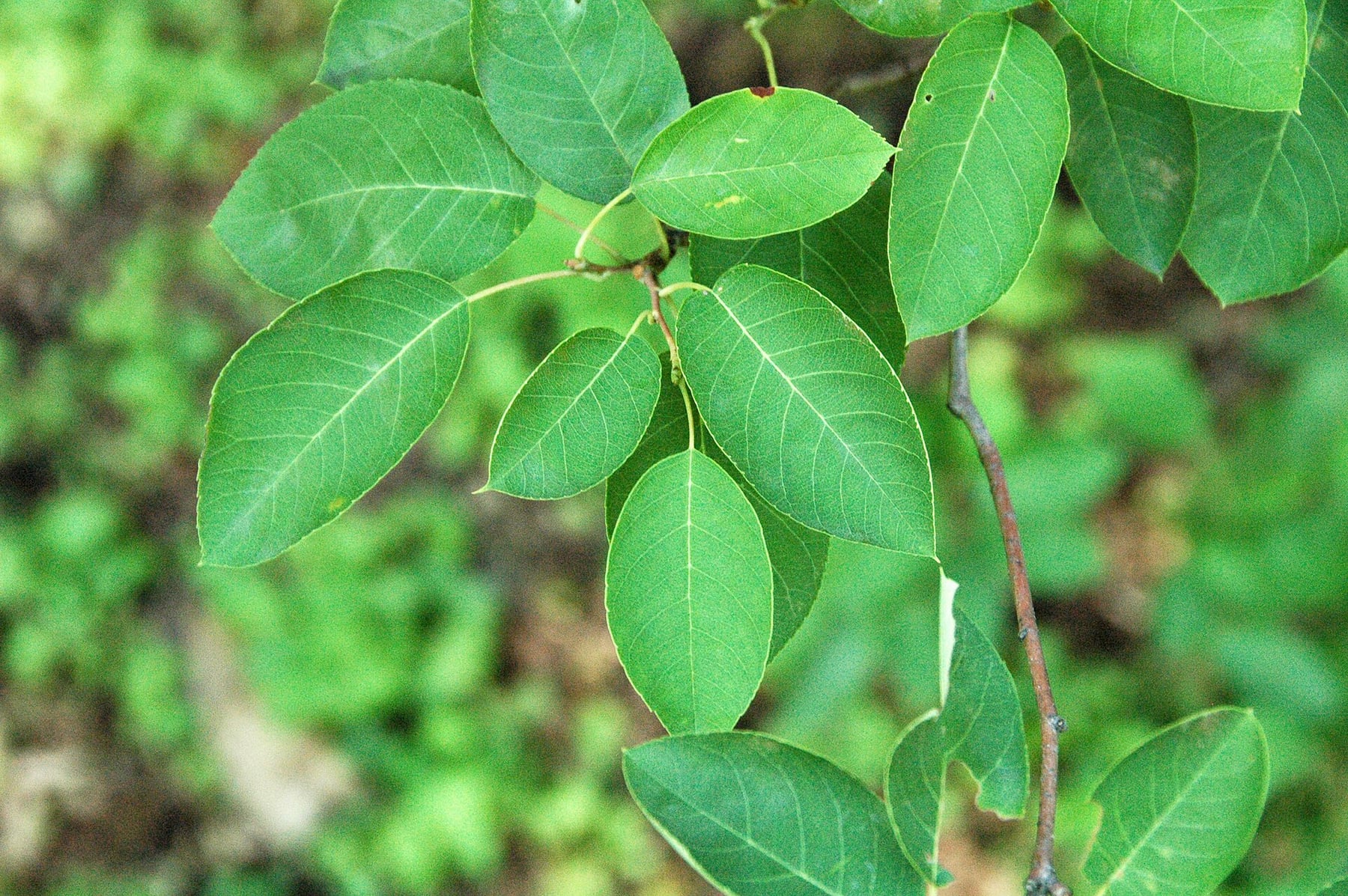
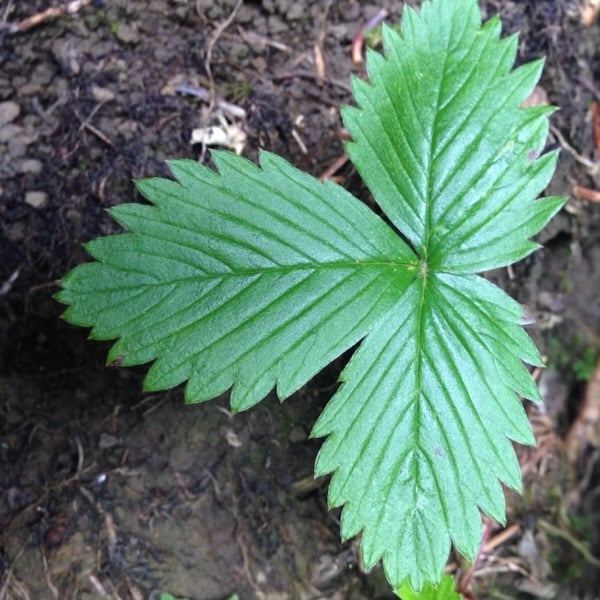
Leaf
Liliane Roubaudi, Tela Botanica · CC BY-SA 2.0
Black mulberry
Morus nigra L.
Family: Moraceae
- 6 to 12 m tall
- Gardens, hedges, often planted then self-sown
- Full sun
- -18°C
In flower from April to May
2 months❓ How do you recognise this plant?
Its fruits look like bramble blackberries but grow directly on a tree. White mulberry has fruits that stay white to pinkish even when ripe and paler bark, whereas black mulberry produces fruits that turn black when ripe.
Learn to recognise it
Wild and forgotten fruit. This plant is in the lesson “Wild and forgotten fruit”, with 11 others.


🍃 Leaves
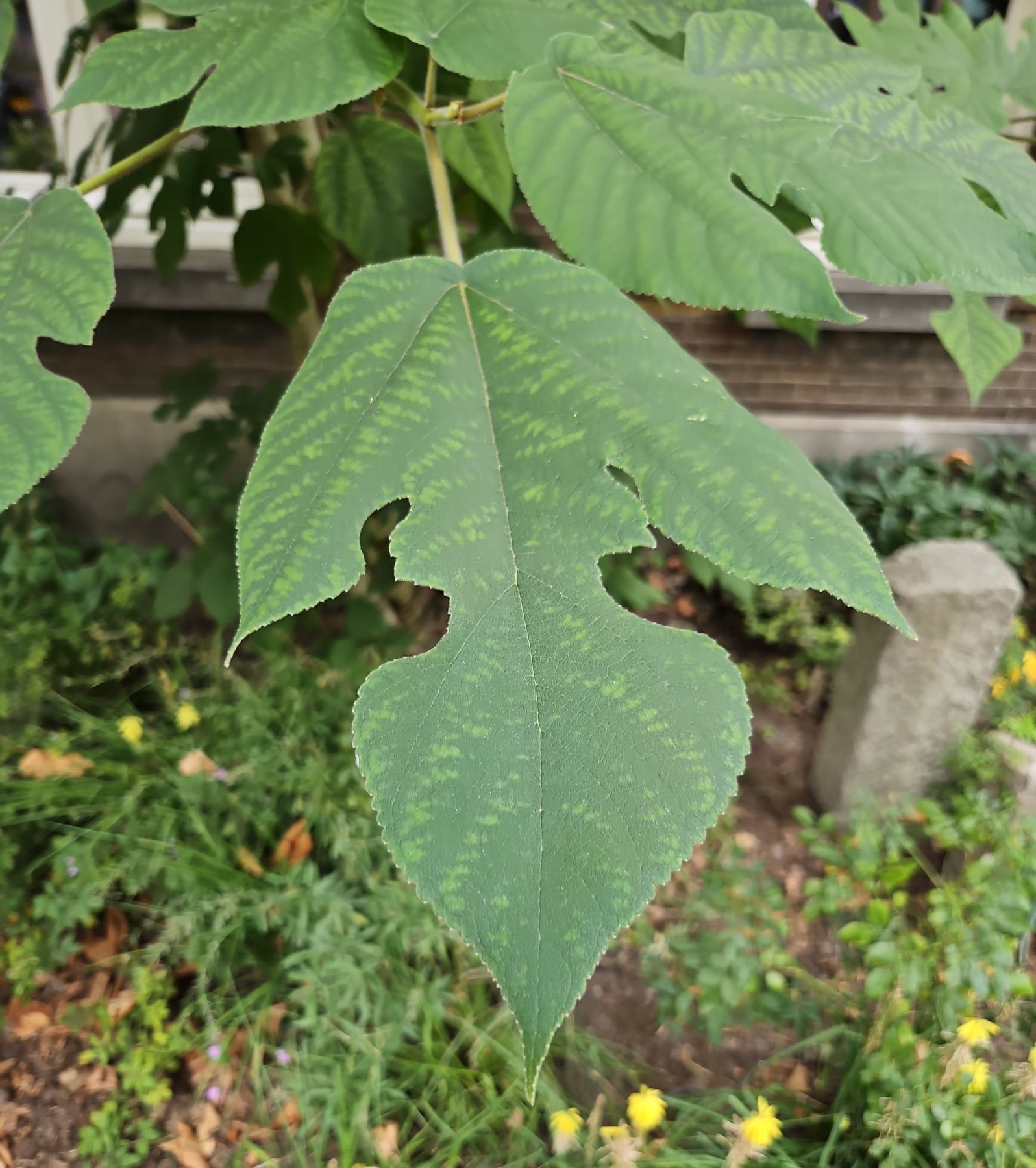
Broad, heart-shaped, toothed, sometimes lobed, rough to the touch
🌸 Flowers
Inconspicuous greenish catkins
🍎 Fruits
Fleshy mulberries, dark red to black, sweet
🪵 Bark
Orange-brown, fissured
Distribution, pollinators, uses
🗺️ Distribution
Native to western Asia, cultivated since antiquity; found throughout France, especially in the south
🐝 Value for pollinators
Mainly wind-pollinated, flowers not very attractive to pollinators
✂️ Horticultural uses
Planted as a specimen tree for its fruit (mulberries) and shade, sometimes as a street tree
⚠️ Possible toxicity
No known toxicity; unripe fruits and milky sap slightly irritant
⚠️ Look-alike species
Black mulberry
Morus nigra

White mulberry
Morus alba
White mulberry has fruits that stay white to pinkish even when ripe and paler bark, whereas black mulberry produces fruits that turn black when ripe.
🌿 Other Moraceae to discover

ℹ️ Educational profile — do not use it to judge whether a plant is edible or safe.
🌱 This database is constantly evolving — species and information are added and corrected regularly. Spotted a mistake? Report it below.
© Floraneo — profile content is protected; reproduction without permission is prohibited. Photos remain under their own licence (see the credit shown on each photo).