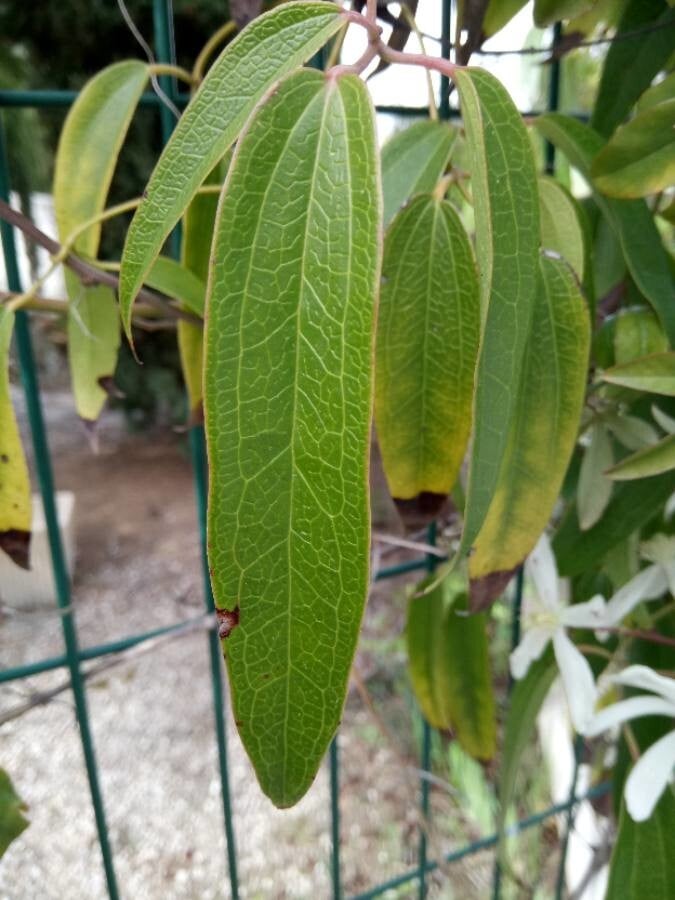
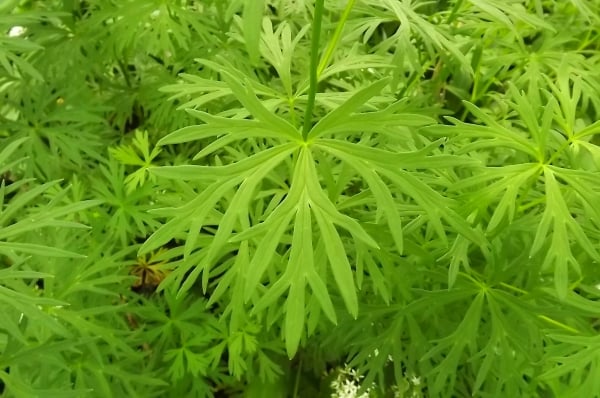
Leaf
Christophe Gorla, Tela Botanica · CC BY-SA 2.0
- Climbing vine of 6 to 9 m
- Planted on a pergola or trellis, cool, well-drained soils
- Full sun, Part shade
- Fairly hardy, to about -12°C, prefers a position sheltered from cold winds
In flower from March to April
2 months❓ How do you recognise this plant?
Unlike most clematis, which lose their leaves in winter, Armand clematis is evergreen — its leathery foliage stays green all year, in addition to its scented white flowers from the end of winter.
Learn to recognise it
Rare and exotic climbers. This plant is in the lesson “Rare and exotic climbers”, with 7 others.
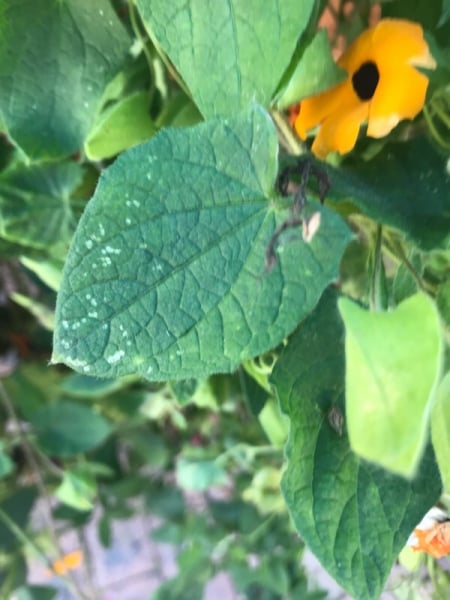
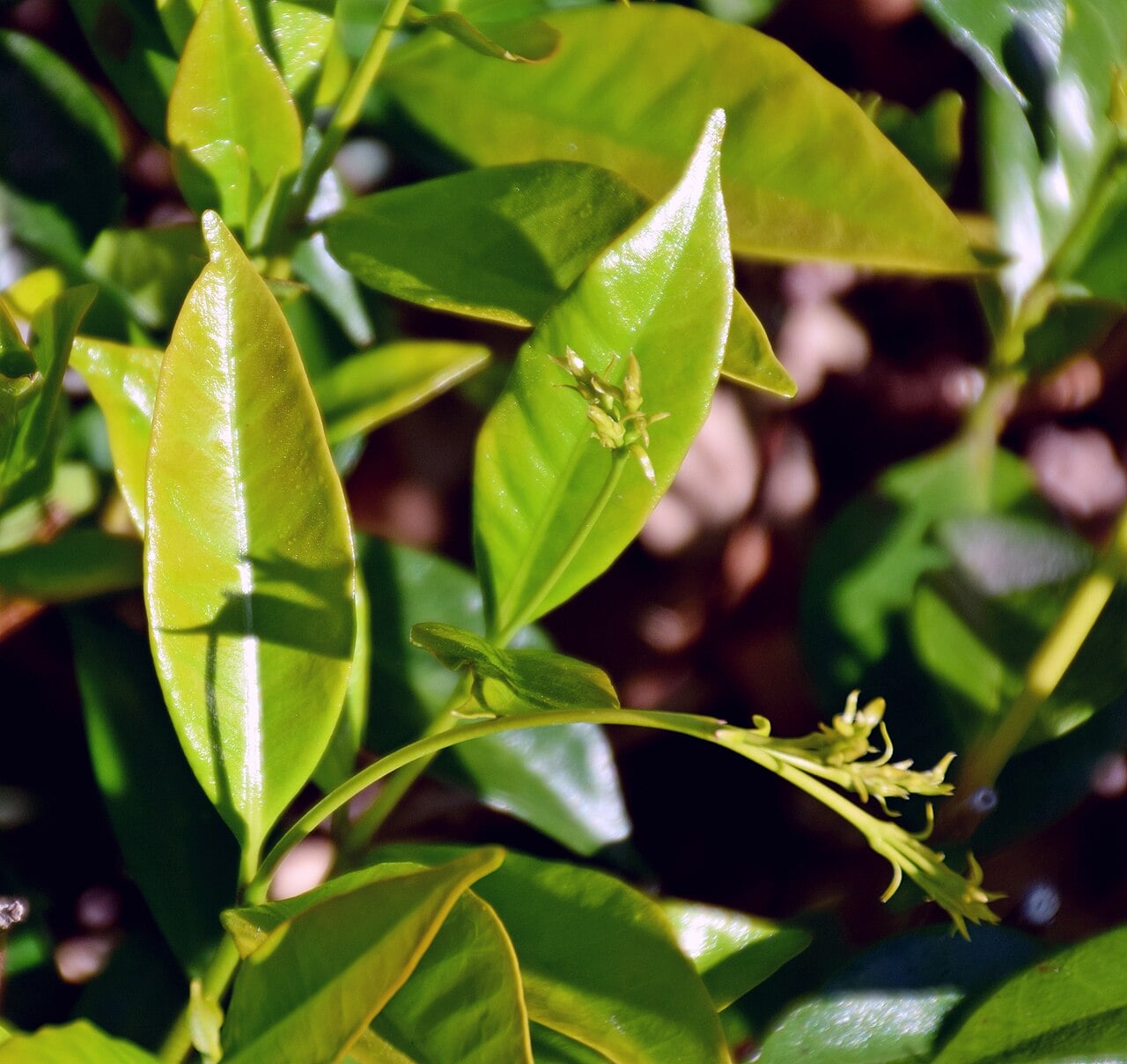
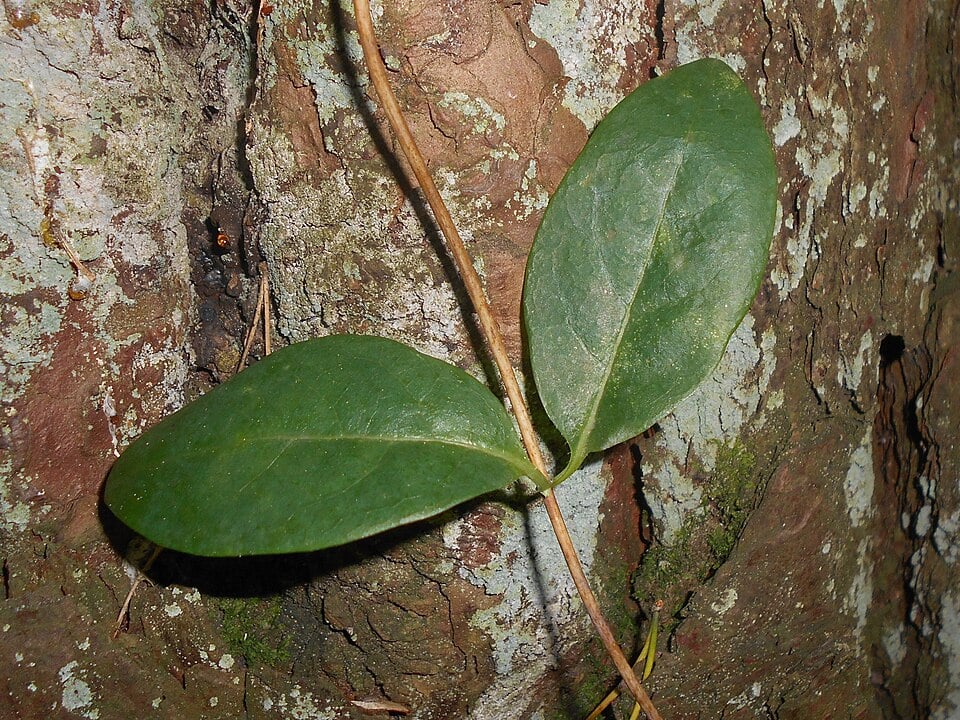
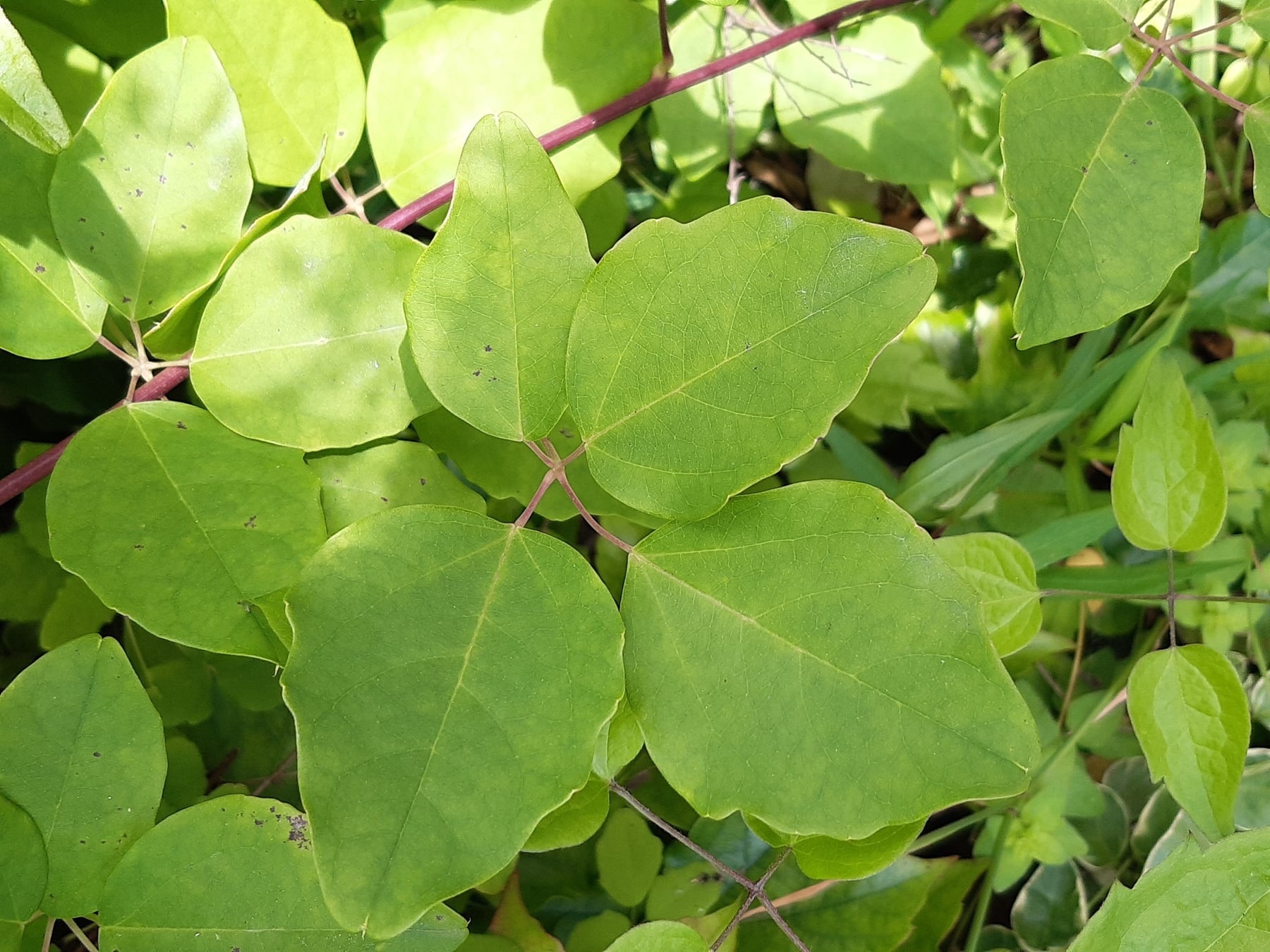
🍃 Leaves
Evergreen, leathery, elongated, glossy, borne in threes
🌸 Flowers
White, star-shaped, scented, grouped in dense clusters appearing early in spring
🍎 Fruits
Plumed achene grouped in a small silky tuft
🪵 Bark
Evergreen woody climber with twining, climbing stems.
Distribution, pollinators, uses
🗺️ Distribution
Native to China; planted in France as an ornamental climber, one of the few evergreen clematis
🐝 Value for pollinators
Early, scented flowering, an important resource for the first bees of spring
✂️ Horticultural uses
Evergreen ornamental climber with very fragrant early flowering, one of the few clematis that keep their foliage in winter
⚠️ Possible toxicity
Irritant sap: avoid prolonged contact with skin and eyes and wear gloves when pruning.
🌿 Other Ranunculaceae to discover
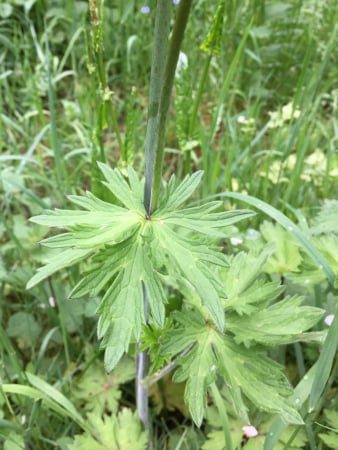
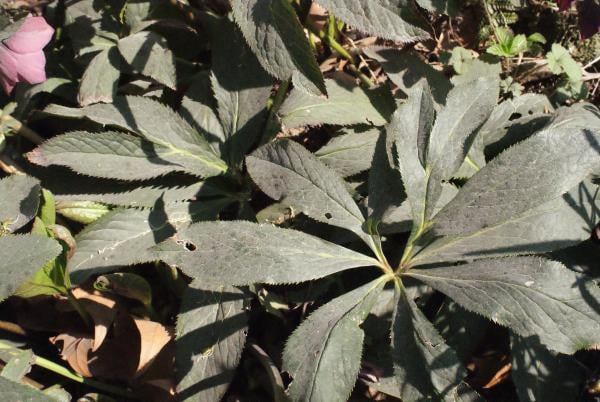
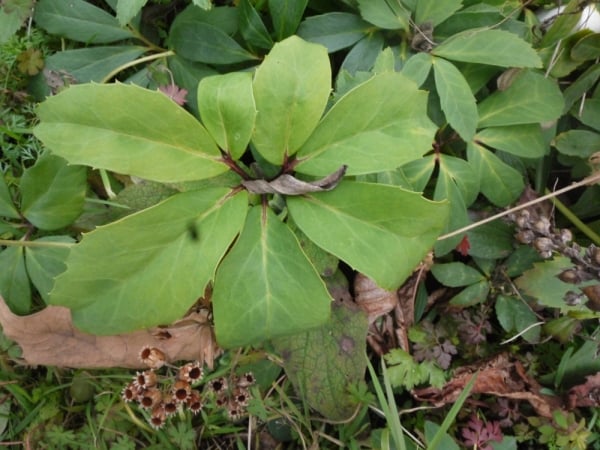
ℹ️ Educational profile — do not use it to judge whether a plant is edible or safe.
🌱 This database is constantly evolving — species and information are added and corrected regularly. Spotted a mistake? Report it below.
© Floraneo — profile content is protected; reproduction without permission is prohibited. Photos remain under their own licence (see the credit shown on each photo).