Leaf
Liliane Roubaudi, Tela Botanica · CC BY-SA 2.0
Lenten rose
Helleborus orientalis Lam.
Family: Ranunculaceae
30 to 45 cm tall
Planted in shady beds and woodland, moist, rich soils
Flowering: February – April
Part shade
Shade
Very hardy, to about -20°C
❓ How do you recognise this plant?
Lenten rose flowers from the end of winter, sometimes in deep snow, which earns it its name — an early flowering that makes it a vital resource for the very first pollinators active in the year. The Christmas rose flowers from winter with large solitary white flowers; Lenten rose flowers a little later, in clumps of flowers that are often pink, purple or spotted.
🍃 Leaves
Evergreen, leathery, palmate, cut into several toothed lobes
🌸 Flowers
Large, in a slightly nodding cup, white, pink, purple or spotted depending on variety
🍎 Fruits
Small clustered follicle
🪵 Bark
Herbaceous perennial clump formed of short rhizomes
🗺️ Distribution
Native to the Caucasus and Asia Minor; widely grown in France as a woodland perennial
🐝 Value for pollinators
Very early flowering, a precious resource for the first bees at the end of winter
✂️ Horticultural uses
Woodland perennial planted for its early flowering, sometimes as early as February, when few other plants are in flower
⚠️ Possible toxicity
All parts are toxic if eaten, notably the roots
⚠️ Look-alike species
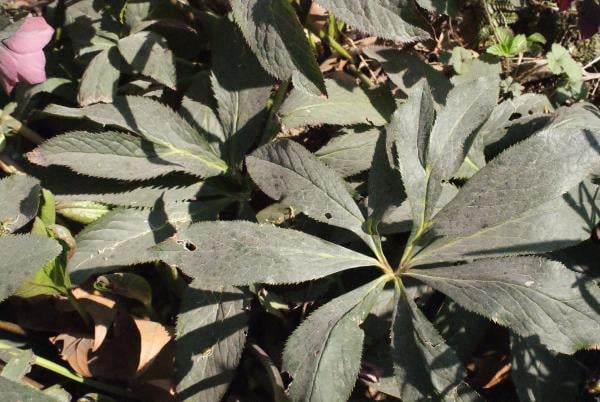
Lenten rose
Helleborus orientalis
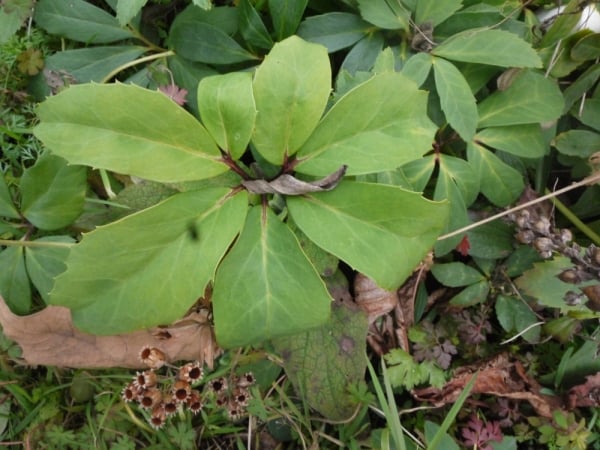
Christmas rose
Helleborus niger
The Christmas rose flowers from winter with large solitary white flowers; Lenten rose flowers a little later, in clumps of flowers that are often pink, purple or spotted.
🌿 Other Ranunculaceae to discover


ℹ️ Educational profile — do not use it to judge whether a plant is edible or safe.
🌱 This database is constantly evolving — species and information are added and corrected regularly. Spotted a mistake? Report it below.
© Floraneo — profile content is protected; reproduction without permission is prohibited. Photos remain under their own licence (see the credit shown on each photo).