Western red cedar or Chinese arborvitae: how to tell them apart?
Western red cedar and Chinese arborvitae look alike and are often mixed up. Here is how to tell them apart, feature by feature, with their photos and the details to look for.
⚡ The quick answer
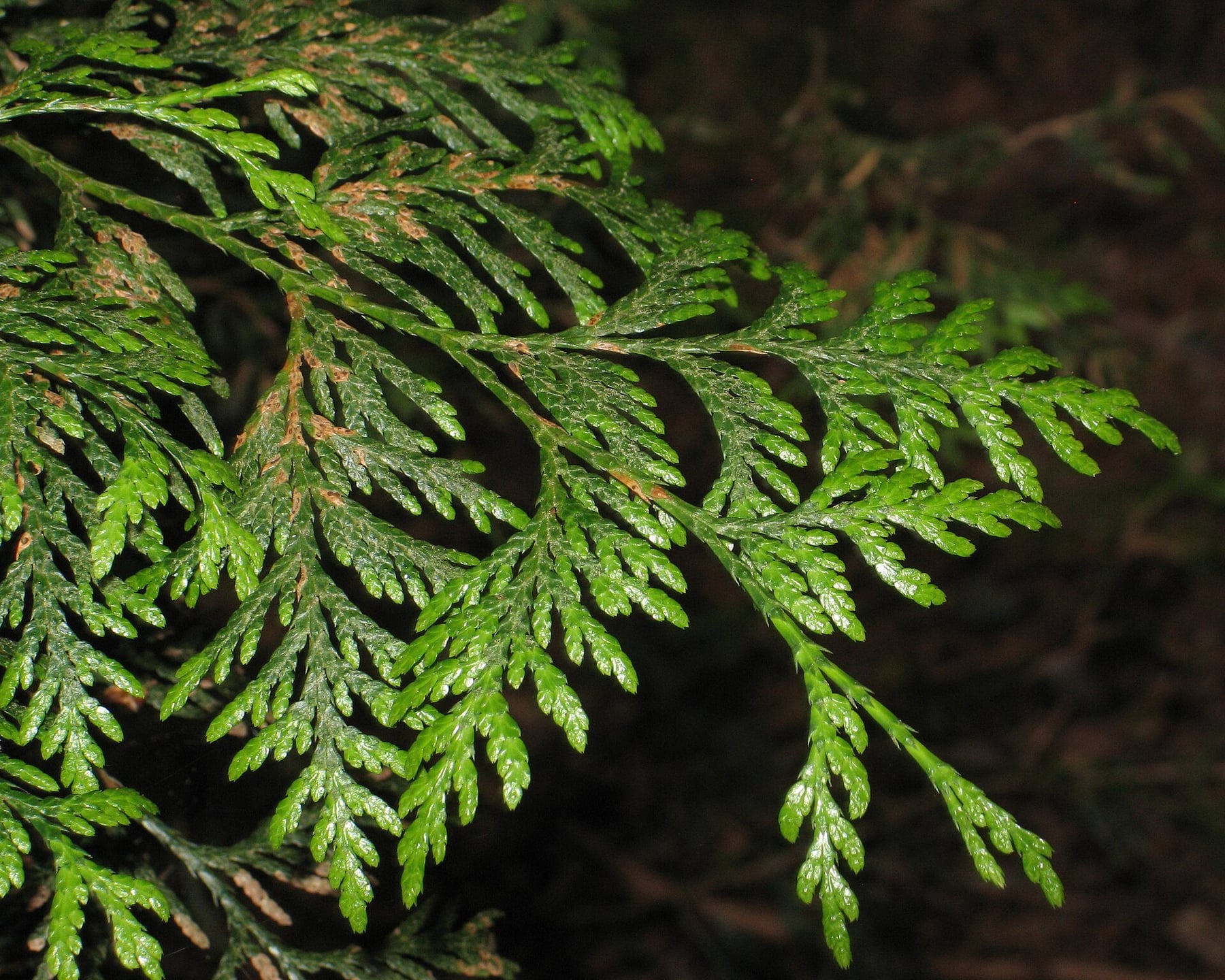
Western red cedar
Thuja plicata
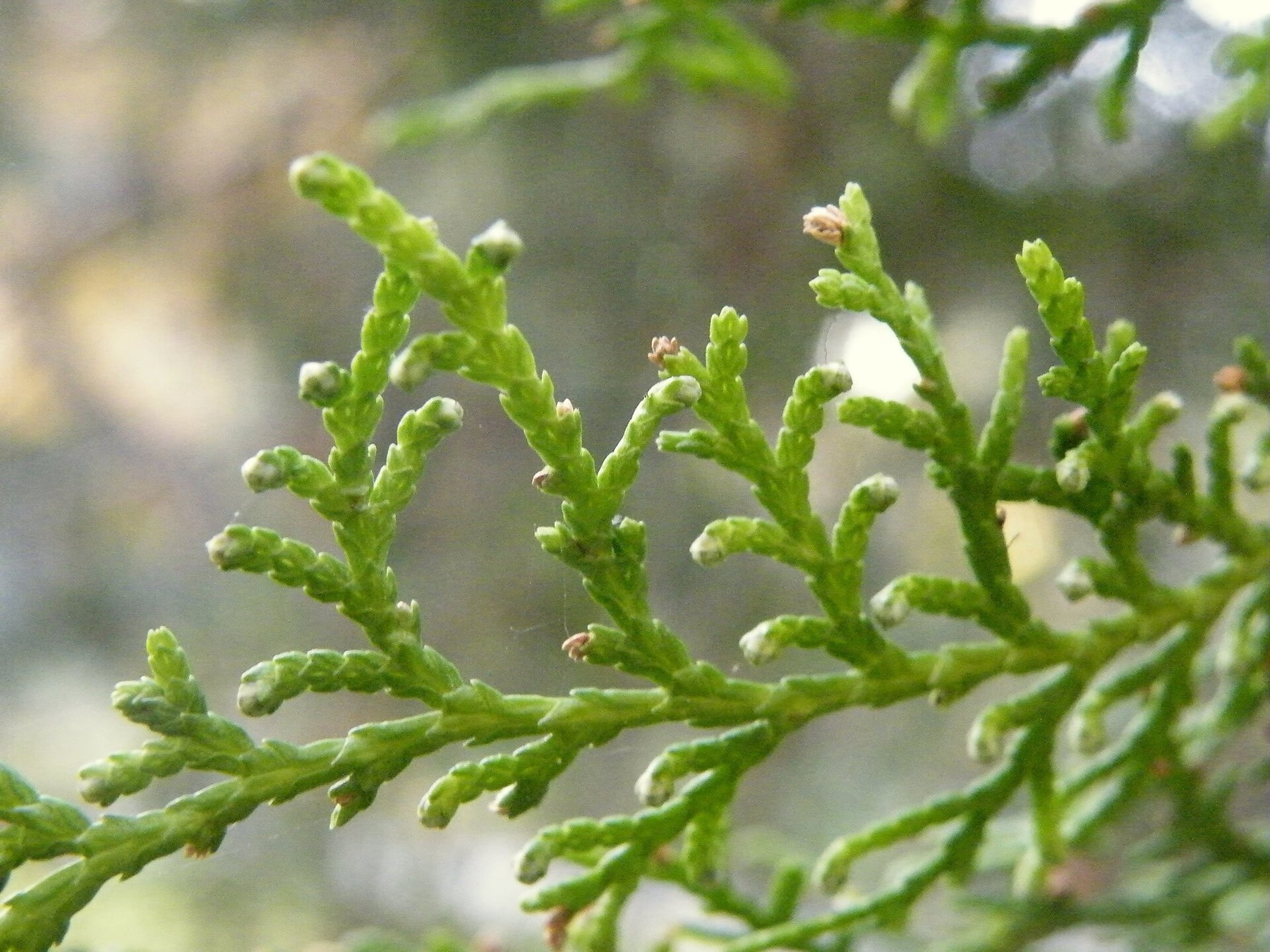
Chinese arborvitae
Platycladus orientalis
Chinese arborvitae has twigs arranged vertically in upright fans, not flattened horizontally like the true thujas, and a resinous smell when crushed, whereas Western red cedar has foliage flattened horizontally, often marked with white beneath, and a pineapple smell.
🍃 Leaves
Evergreen, flattened scales arranged in a fan, glossy dark green, giving off a pineapple smell when crushed
Foliage of fine scales arranged in vertical fans, bright green to yellow-green, unlike the flatter foliage of Eastern white cedar
🌸 Flowers
Tiny male and female cones, with no ornamental interest
Yellowish male cones and blue-green female cones, inconspicuous in spring
🍎 Fruits
Small brown ovoid cones about 1 cm long
Small ovoid woody cones with fleshy scales curved back like a 'horn', blue-green then brown when ripe
🪵 Bark
Reddish-brown, peeling in fibrous strips
Reddish-brown bark peeling in fine fibrous strips
📏 Size
15 to 30 m as a free-standing tree (often clipped to 2-4 m as a hedge)
2 to 6 m tall depending on the cultivar, sometimes more as a specimen
🗺️ Habitat
Tall, dense screening hedges, moist soil
Planted as a specimen, in a clipped hedge or as topiary in gardens, cemeteries and parks; very common in France
⚠️ Toxicity
Foliage slightly toxic if eaten in large amounts
Foliage toxic if eaten in large amounts
🔎 And from the Chinese arborvitae side
Western red cedar has foliage flattened horizontally in a fan, often marked with white beneath, and a pineapple smell when crushed, whereas Chinese arborvitae has twigs held vertically (not flattened) and a different resinous smell.
🌿 Go further
Want to practise spotting these details on real photos? Floraneo offers profiles and quizzes for dozens of look-alike species.
ℹ️ Educational profile — do not use it to judge whether a plant is edible or safe.