Wall cotoneaster or Milkflower cotoneaster: how to tell them apart?
Wall cotoneaster and Milkflower cotoneaster look alike and are often mixed up. Here is how to tell them apart, feature by feature, with their photos and the details to look for.
⚡ The quick answer
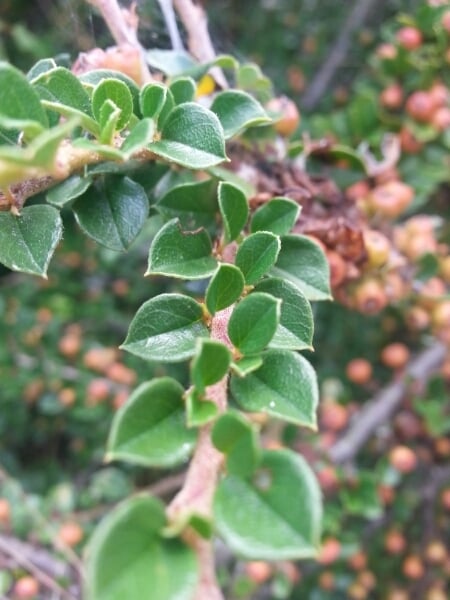
Wall cotoneaster
Cotoneaster horizontalis
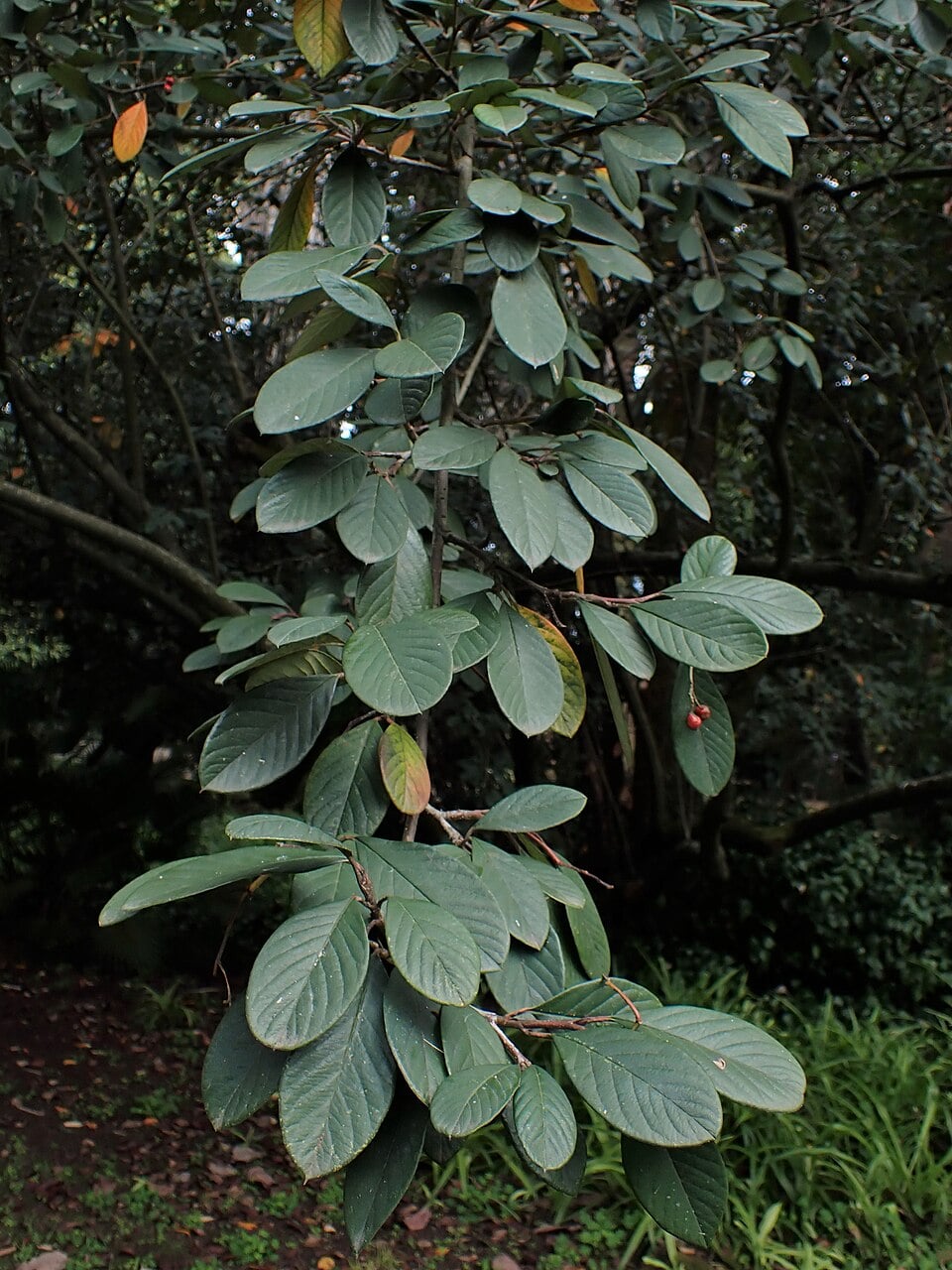
Milkflower cotoneaster
Cotoneaster lacteus
Milkflower cotoneaster is an upright, bushy shrub with large, puckered, evergreen leaves, whereas wall cotoneaster grows flat against the ground or walls, with branches arranged flat in a 'herringbone' pattern, with small round deciduous to semi-evergreen leaves.
🍃 Leaves
Small, rounded, glossy green, turning red in autumn
Evergreen to semi-evergreen, ovate, puckered, underside downy
🌸 Flowers
Tiny pink or white flowers, very rich in honey
Small, white, in dense corymbs
🍎 Fruits
Small bright red berries persisting all winter
Small orange-red berries in very full clusters, persisting all winter
🪵 Bark
Thin twigs arranged in a characteristic herringbone pattern
Grey-brown, arching twigs
📏 Size
0.5 to 1 m tall, fan-shaped spreading habit
2 to 4 m tall
🗺️ Habitat
Banks, low walls, ground cover, all well-drained soils
Informal or clipped hedges, banks; very hardy and tolerant of pollution
⚠️ Toxicity
Fruits (berries) mildly toxic if ingested, may cause digestive upset, notably in children and animals.
Berries mildly toxic in large quantity
🔎 And from the Milkflower cotoneaster side
Wall cotoneaster grows in branches spread flat, arranged in a herringbone pattern, with small round leaves, whereas milkflower cotoneaster is an upright, bushy shrub with large, evergreen, puckered leaves.
🌿 Go further
Want to practise spotting these details on real photos? Floraneo offers profiles and quizzes for dozens of look-alike species.
ℹ️ Educational profile — do not use it to judge whether a plant is edible or safe.