Red elder or Elder: how to tell them apart?
Red elder and Elder look alike and are often mixed up. Here is how to tell them apart, feature by feature, with their photos and the details to look for.
⚡ The quick answer
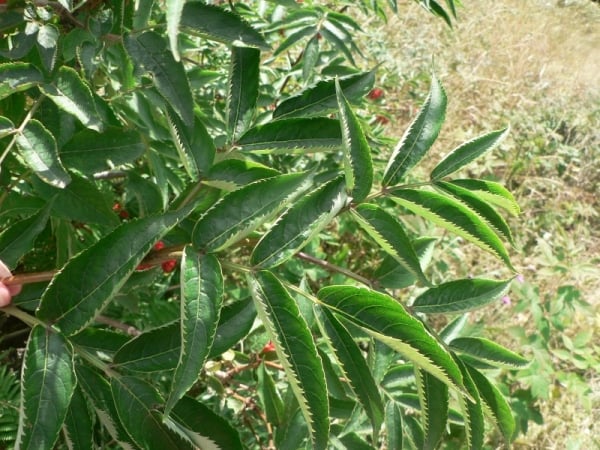
Red elder
Sambucus racemosa
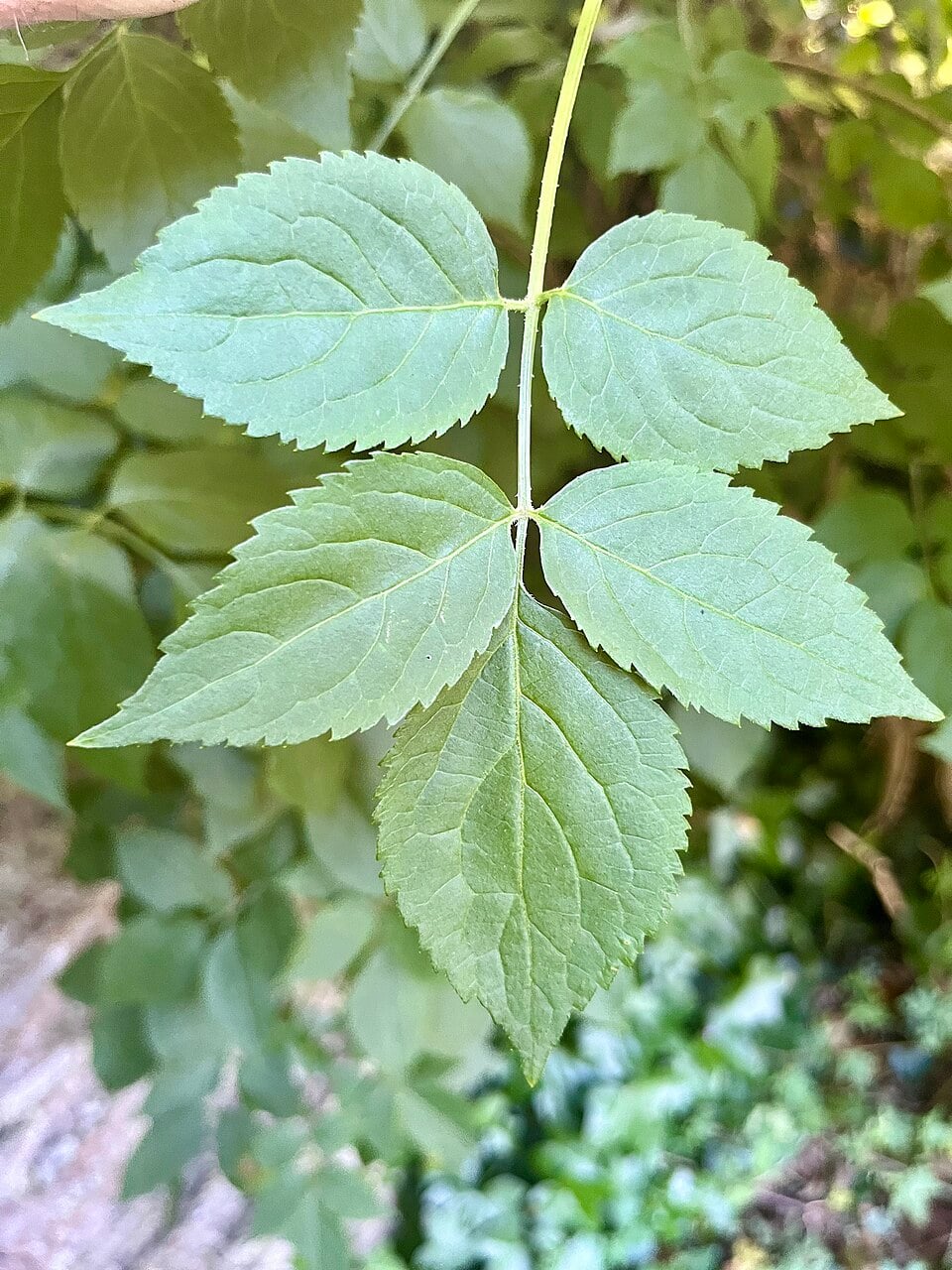
Elder
Sambucus nigra
Elder has black fruits in large drooping umbels and broader leaflets, whereas red elder has red fruits in upright pyramidal clusters and narrower, more finely toothed leaflets.
🍃 Leaves
Deciduous, pinnate compound, bright green
Compound, 5 to 7 toothed leaflets, distinctive smell when crushed
🌸 Flowers
Small cream-white flowers in upright conical panicles
Large flat cream-white corymbs, very fragrant
🍎 Fruits
Clusters of small bright red berries when ripe (toxic raw)
Small glossy black berries in drooping clusters
🪵 Bark
Light brown bark, white pith inside the twigs
Grey, corky, deeply fissured
📏 Size
2 to 4 m tall
2 to 6 m tall
🗺️ Habitat
Hedges, woodland edges, gardens, moist mountain soils
Hedges, waste ground, rubble, nitrogen-rich soils
⚠️ Toxicity
Raw berries, bark and leaves toxic if eaten (digestive upset); cooked berries are traditionally eaten.
Raw berries, bark, leaves and seeds toxic if eaten (digestive upset); the flowers and cooked berries are traditionally eaten as syrup and jam.
🔎 And from the Elder side
Elder has black fruits in large drooping umbels and broader leaflets, whereas red elder has red fruits in upright pyramidal clusters and narrower, more finely toothed leaflets.
🌿 Go further
Want to practise spotting these details on real photos? Floraneo offers profiles and quizzes for dozens of look-alike species.
ℹ️ Educational profile — do not use it to judge whether a plant is edible or safe.